
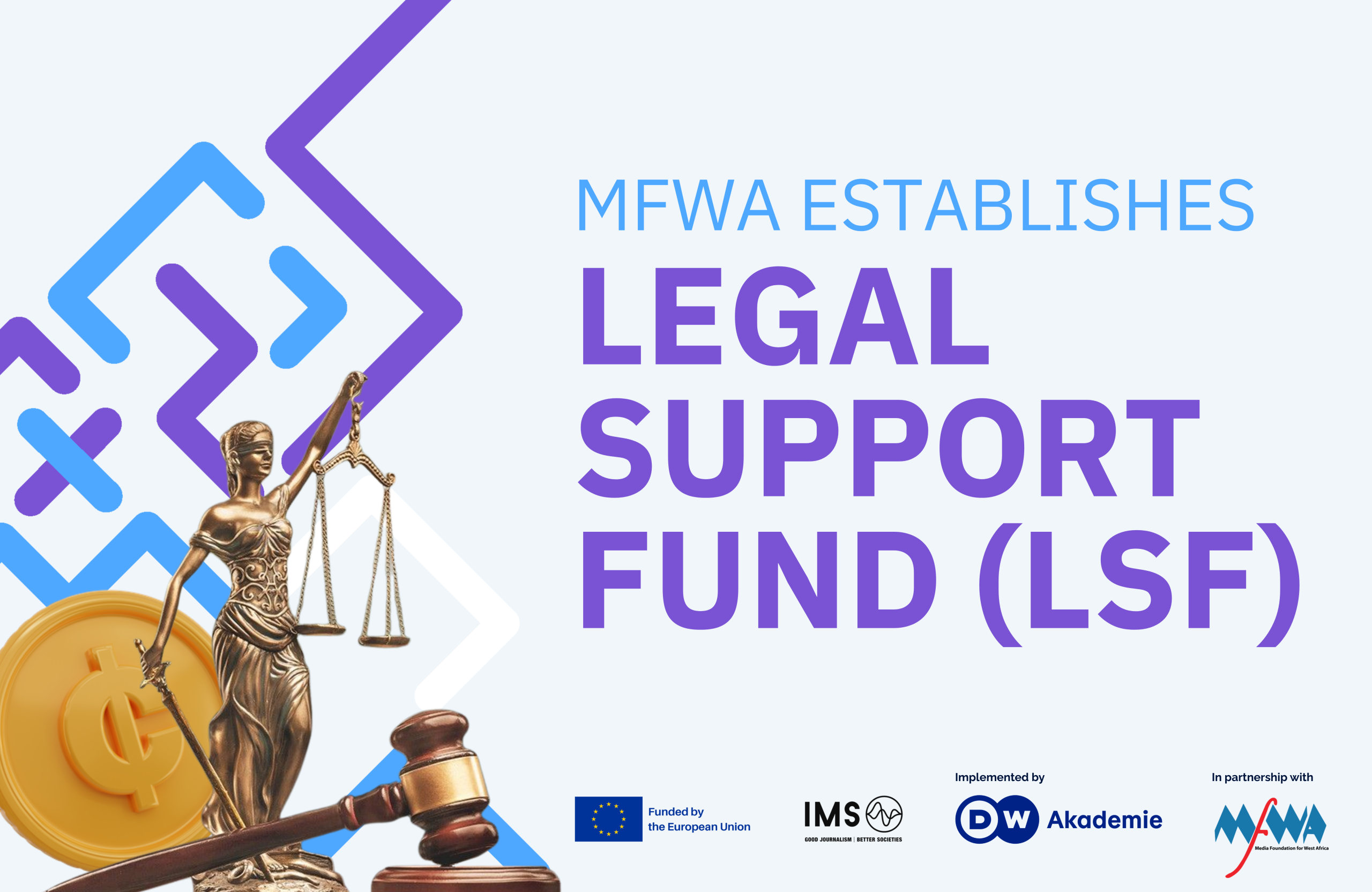
The Media Foundation for West Africa (MFWA) has established a Legal Support Fund with an allocation of approximately GHS 544,000. The Fund responds to growing concerns about the use of Strategic Lawsuits Against Public Participation (SLAPPs) against critical journalists and media organisations in Ghana. It will, therefore, provide legal assistance to journalists and media organisations who face litigation, judicial harassment and other legal threats arising from their legitimate professional work.
The Fund is established under the African Media Integrity and Resilience Programme (AMIRP) being implemented in Ethiopia, Ghana and Central African Republic with funding from the European Union. The overarching aim of AMIRP is to strengthen the capacity of public-interest media practitioners to provide ethical and fact-based information that contributes to information integrity in the implementing countries. The programme is implemented in Ghana by the MFWA in collaboration with DW Akademie Ghana through International Media Support (IMS).
The establishment of the Fund builds on the MFWA’s longstanding work of promoting freedom of expression, press freedom and the safety of journalists across West Africa. For close to three decades, MFWA has combined monitoring and reporting of press freedom violations with advocacy, capacity building and research to protect journalists and combat impunity for attacks against them.
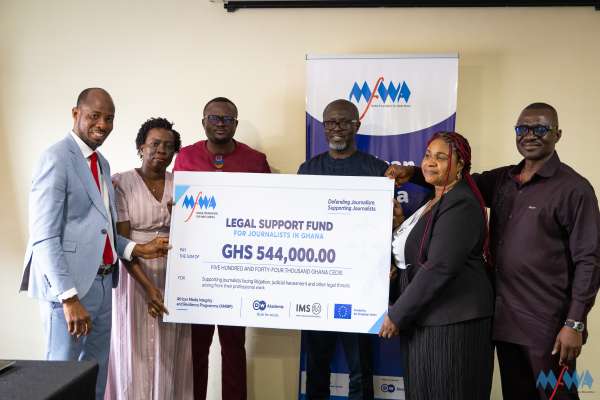
Key interventions have included the establishment of the West Africa Network of Activists and Media Defence Lawyers (WANAMDEL), a regional network of lawyers that provide legal support to journalists and activists facing legal harassment and other rights violations across West Africa. The Legal Support Fund complements these interventions by providing a dedicated mechanism through which eligible journalists in Ghana can access legal assistance when confronted with legal threats arising from their professional work.
Eligible applicants can access the application form here. All applications should be accompanied by supporting documentation including relevant court processes, police, documents, legal notices, correspondence, publications and any other material necessary to establish eligibility.
Key Activities under AMIRP
Under the AMIRP intervention five early-career female journalists are being supported through a 12-month fellowship to strengthen their knowledge and skills in public-interest journalism. The fellowship combines intensive training, professional mentorship and newsroom attachment with the MFWA’s public interest journalism newsroom, The Fourth Estate.
Beginning September 14, 2026, sixty (60) journalists, editors and media managers from across Ghana will also participate in training workshops to strengthen their knowledge and understanding of Ghana’s constitutional, legal and regulatory frameworks governing journalism, as well as relevant African and international human rights standards on freedom of expression and the safety of journalists. Participants will be capacitated to identify and manage legal risks, respond to violations and understand the national, regional and international mechanisms available for seeking redress.
The MFWA will also produce a policy research study that assesses gaps in existing journalism and media training curricula in Ghana to improve the quality of media and journalism education in Ghana. Additional research studies will examine key issues affecting the state of the media in Ghana – cutting across the following themes: Media ownership patterns and implications for pluralism and independence; Professional capacity and standards; Journalist safety and press freedom; and Policy and legislative gaps in Ghana’s media governance framework.
For further information contact MFWA via email i[email protected] or telephone: +233 302 555327 | +233 302 955213.