

My internship at the Media Foundation for West Africa (MFWA) was one of the most rewarding learning experiences in my professional journey so far, shaped by exposure, growth, and a meaningful shift in perspective. Wrapping up my time with MFWA, I can look back with a clearer and more practical understanding of media development, advocacy, and democratic governance in West Africa.
When I first came to MFWA, I only knew the organisation for one thing: its National Service Secretariat ghost names exposé. Through The Fourth Estate, MFWA had uncovered the NSS scandal, and in my mind, that was what MFWA was: an investigative journalism house. I did not know much beyond that.
Upon my entry, I was placed in the Communications Team. That placement gave me my first real view of how MFWA works beyond investigations.
Being in the Communications Team exposed me to a variety of tasks. Amongst my many tasks was supporting event planning by contacting and following up with participants for trainings and confirming attendance. I assisted with regular updates on alerts and gathered opportunities such as fellowships, grants and training programmes for journalists for the MFWA website.
Additionally, whenever colleagues from other programme teams came to the Communications Team for data, whether for social media analytics, website content, or reports, I also helped in gathering and organising that data. I was also responsible for tracking and documenting MFWA’s social media content using the organisation’s in-house Social Media Tracker.
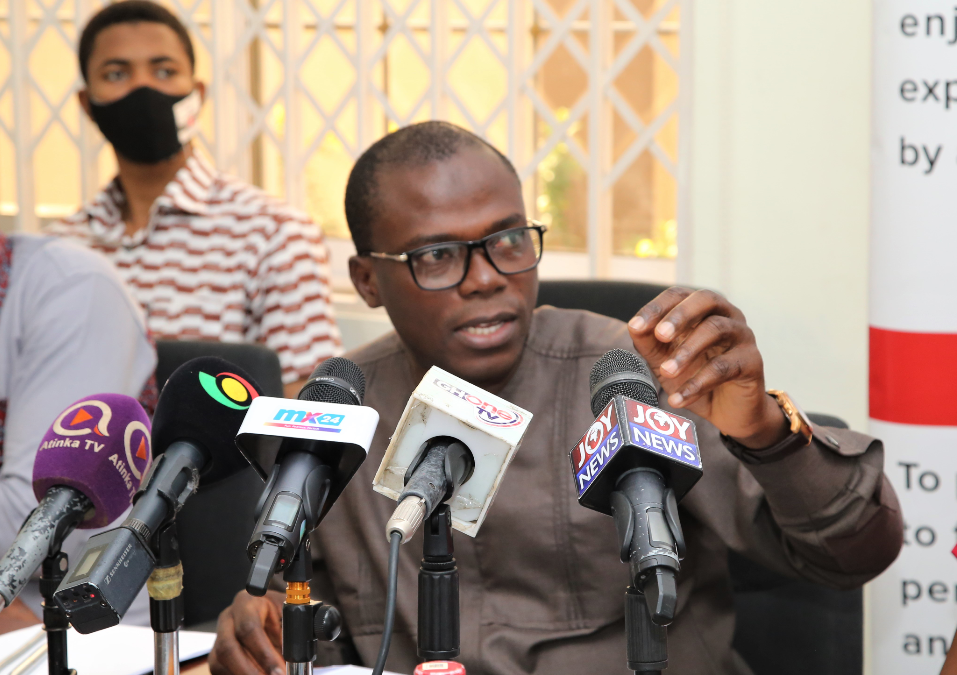
Beyond my desk work, I also participated in external forums that provided practical insight into media, governance, and accountability. One forum, themed “Media and the Fight Against Corruption,” explored the media’s role in exposing corruption and promoting transparency, while also highlighting the importance of protecting press freedom.
Another forum I had the opportunity to be a part of, themed “Restoring Citizens’ Trust in the Fight Against Corruption in Ghana: The Role of the Media,” was especially impactful. My role involved collecting quotes from speakers and participants, which required careful listening and accurate documentation.
I also had the opportunity to interview key figures from the forum, such as investigative journalist Manasseh Azure Awuni and Bishop Dr. Suzanne Nti, gaining valuable insight into anti-corruption advocacy and the role of both media and civil society in rebuilding public trust.
As time went on, my responsibilities expanded into working closely with the Freedom of Expression (FOE) Team, writing incident reports, or what we popularly call alerts.
This became the core of my internship. My main task was to monitor freedom of expression cases and violations across West Africa, with a specific focus on Nigeria. On a daily basis, I tracked incidents – attacks on journalists, arbitrary arrests and detentions, censorship, threats and shutdowns – verified details from credible sources, and drafted alerts that MFWA published to condemn these violations and call for accountability.
This shift from pure communications to FOE monitoring became the most defining part of my experience. It taught me how to report violations with accuracy, urgency, and sensitivity. I learned that these alerts are not just news items but critical advocacy tools used to pressure authorities and stand in solidarity with journalists at risk for doing their jobs.
Settling into both teams was made easier by my colleagues. The Communications Team walked me through the Tracker and MFWA’s messaging style, while the FOE Team patiently taught me MFWA’s alert-writing standard, shared templates and past alerts, and gave me detailed feedback on every draft. That mentorship helped me grow from struggling with my first alert to writing with more confidence and precision.
My experience has shown me that MFWA is much broader than just an investigative journalism house. It is a media development and advocacy organisation that promotes media freedom, builds the capacity of journalists, engages in policy advocacy, and uses strategic communication to support democratic governance across the region.
Overall, the experience proved to be highly rewarding and impactful. It provided me with valuable professional exposure, enhanced my practical skills, and reinforced the belief that there is always an opportunity to learn and develop new skills regardless of one’s stage of growth.
I look forward to building on this knowledge, taking on new responsibilities, and continuing to grow professionally.
I am sincerely grateful for the opportunity to have been part of MFWA, and I remain excited about the growth and development that lie ahead.
By Eric Amoako-Boateng
Intern, MFWA