


The Media Foundation for West Africa (MFWA) has called on government institutions, security services, law enforcement agencies and media organisations to take concrete steps to address impunity for crimes against journalists and strengthen measures to protect media practitioners in Ghana.
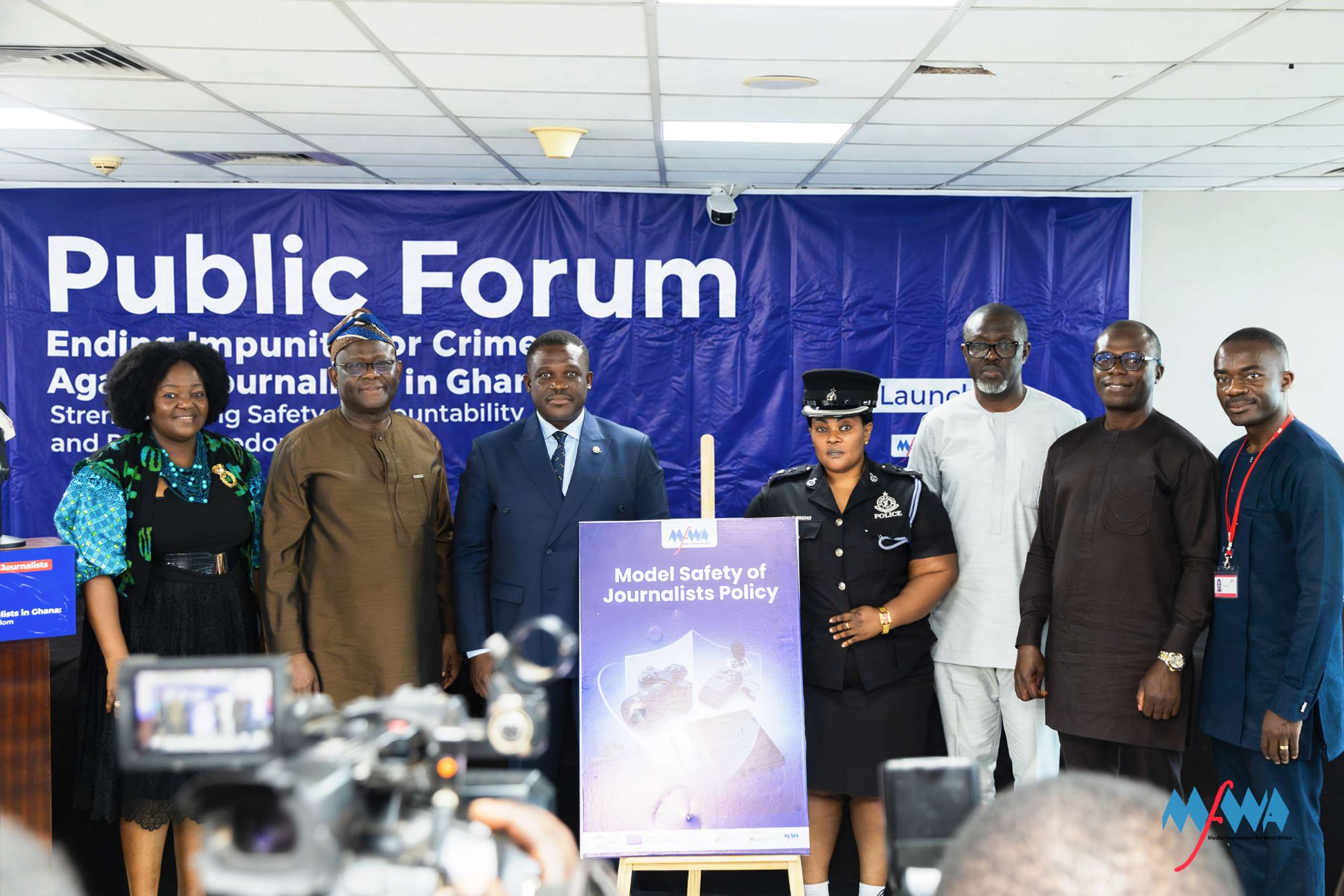
The call was made at a public forum organised by the MFWA on 2 November 2026 at the Ghana Shippers’ Authority to commemorate the International Day to End Impunity for Crimes Against Journalists. Held under the theme, “Ending Impunity for Crimes against Journalists in Ghana: Strengthening Safety, Accountability and Press Freedom,” the forum brought together government representatives, media practitioners, development partners and civil society organisations to examine the threats facing journalists and what they mean for press freedom.
The event also marked the launch of the Model Safety of Journalists’ Policy for Adoption by Newsrooms in Ghana, developed by the MFWA to provide media organisations with a practical framework for promoting journalists’ safety and well-being in the country.
Impunity remains a major concern for press freedom
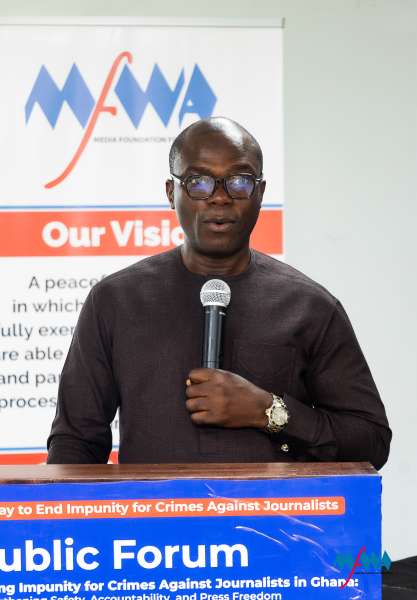
Opening the forum, Executive Director of the MFWA, Sulemana Braimah, said attacks against journalists should not be treated as isolated incidents affecting only the individuals involved.
Citing a 2024 UNESCO report, Mr. Braimah said approximately 85 per cent of killings of journalists worldwide remain unresolved. The consequences of impunity, he said, extend beyond the victims to their families, whose search for justice often remains unresolved, and communities that lose access to information when journalists are silenced.
Mr. Braimah also highlighted the MFWA’s monitoring of violations against journalists, which recorded 32 violations in the first quarter of 2026 and 44 in the second quarter. However, only about five of these 76 cases had resulted in some form of redress.
He drew attention to unresolved cases and attacks involving journalists in Ghana, including the murder of investigative journalist Ahmed Hussein-Suale, the assault on Latif Iddrisu, incidents involving Caleb Kudah and the attack on Sadiq Gariba while he was reporting live in Tamale.
Mr. Braimah called on the Office of the Attorney-General’ and Ministry of Justice and the Ghana Police Service to provide credible updates on investigations and take the necessary steps to bring perpetrators to justice.
“No one should be shielded from accountability because of a security uniform, political affiliation or position,” he said.
UNESCO highlights the need for protection, prevention and prosecution
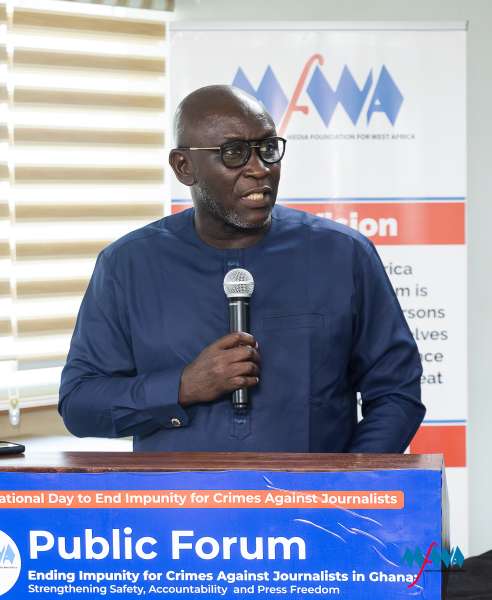
Representing UNESCO at the forum, Mr. Abdul Hamid Yakub, the organisation’s Information and Communication Officer, said: “An attack on a journalist is also an attack on freedom of expression. It restricts the public’s ability to access information and participate in democratic processes.”
According to him, attacks against journalists without accountability represent failures of justice and send a warning to other journalists about the consequences of asking difficult questions or publishing information that powerful interests may find uncomfortable.
Mr. Yakub said UNESCO’s work on the safety of journalists is guided by three pillars – prevention, protection and prosecution – and outlined the organisation’s interventions in promoting journalists’ safety in Ghana. He disclosed that UNESCO had trained more than 50 members of the judiciary on freedom of expression and the safety of journalists, including most Supreme Court judges.
UNESCO is also working with the Ghana Police Service on a review of its training module on journalists’ safety, with plans for further technical work and training.
GIZ stresses the shared responsibility for journalists’ safety
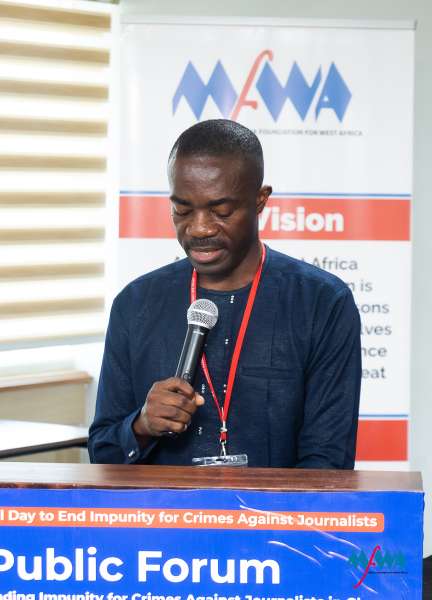
Mr. Kweku Lartey Obeng, Component Manager for the PAIReD Programme at GIZ, said journalists’ safety depends on both the protection provided within media organisations and the broader environment in which journalists work.
He said newsroom protection should include risk assessments before assignments, legal support when journalists face pressure, secure communication channels for sources and appropriate care following difficult assignments.
He encouraged media owners and editors to adopt the policy, assign responsibility for its implementation and provide the resources required to make it effective. He reaffirmed GIZ’s commitment to supporting media freedom, investigative journalism and initiatives that strengthen the protection of journalists.
Gifty Afenyi-Dadzie calls for preventive newsroom safety measures
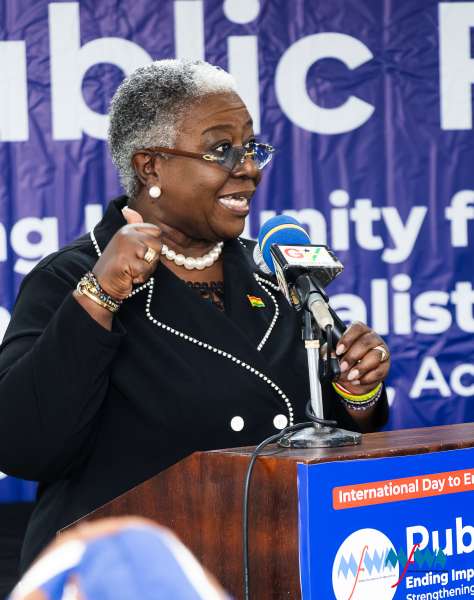
Guest speaker Gifty Afenyi-Dadzie Esq. said the safety of journalists should be regarded as a public interest and democratic responsibility, rather than a concern limited to the media industry.
She said that when journalists investigating corruption, illegal mining, environmental destruction and other forms of wrongdoing are threatened or attacked, the public also loses access to information that could help hold institutions and individuals accountable.
Ms. Afenyi-Dadzie said safety measures should be preventive rather than introduced only after an incident has occurred.
She also pointed to the risks faced by women journalists, especially online harassment and gender-based attacks, which she said can affect their well-being and ability to carry out their professional duties.
She described the newly developed Model Safety of Journalists’ Policy as a practical opportunity for media organisations to strengthen their internal protection systems. “The value of the policy will depend on whether newsrooms adopt and consistently implement it, not simply endorse it,” she said.
Communications Minister calls for accountability and a multi-stakeholder review mechanism
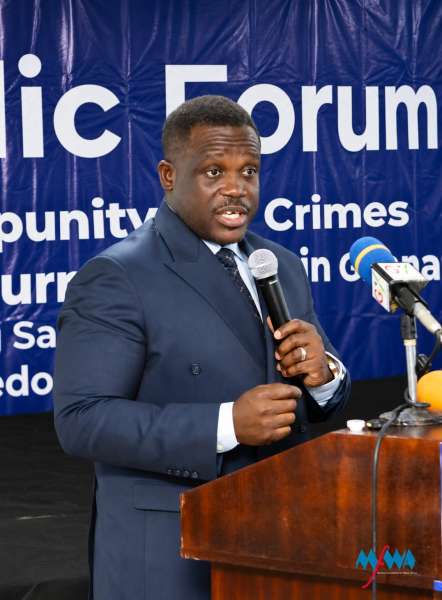
The Minister for Communication, Digital Technology and Innovations, Hon. Samuel Nartey George Esq., said the safety of journalists should be measured by whether they can pursue sensitive stories, report on public emergencies and question powerful officials without fear of harm.
He reaffirmed the constitutional guarantees of freedom of expression and media freedom. “Journalists should not be regarded as enemies of government for asking difficult questions,” he said. He said media scrutiny provides an opportunity for public institutions to identify and correct mistakes.
Mr. George also addressed the growing threats journalists face in the digital space, including doxxing, impersonation, coordinated harassment, gender-based attacks and the circulation of manipulated content. Efforts to address misinformation and digital threats, he said, must not be used to suppress legitimate criticism, investigative journalism, satire or dissent.
He welcomed the Model Safety of Journalists’ Policy and urged media owners to adopt it.
The Minister further proposed a regular multi-stakeholder review mechanism involving the police, security services, the National Media Commission, the Ghana Journalists Association, the MFWA and civil society organisations to track reported attacks, the progress of investigations and accountability gaps.
Launch of the Model Safety of Journalists’ Policy
A major highlight of the forum was the launch of the Model Safety of Journalists’ Policy for Adoption by Newsrooms in Ghana by Prof. Amin Alhassan, Director-General of the Ghana Broadcasting Corporation (GBC). The policy provides a practical framework that media organisations can adapt to their operational contexts to address the physical, digital, legal and psychological risks journalists encounter in the course of their work.
Speaking at the launch, Prof. Alhassan announced that GBC would adopt the framework and incorporate it into its existing policy measures for protecting staff.
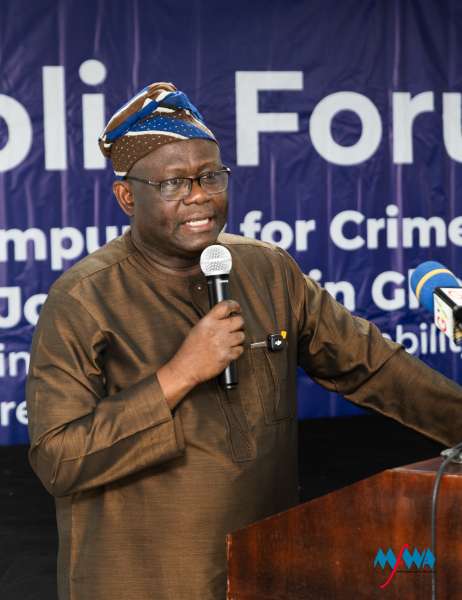
After the launch, Dr. Martin Thompson Ntem, a research expert, presented the findings of the study that informed the development of the Model Safety of Journalists’ Policy.
A key finding was the limited availability of formal, comprehensive and institutionalised safety policies within news organisations. Dr. Ntem said that while some media organisations have employment letters, administrative guidelines and other internal documents, these generally do not provide adequate procedures for managing the risks journalists face in the course of their work.
The study also found that newsroom safety arrangements often depend on individual judgement, editors’ discretion and informal briefings rather than established institutional procedures. This leaves journalists exposed, particularly when covering politically sensitive assignments, elections, demonstrations, land disputes, illegal mining and investigative stories involving powerful individuals or groups.
He said the policy would help newsrooms move from informal and reactive safety practices to a more structured approach. To this end, the framework outlines procedures for assessing risks before assignments, briefing journalists, responding to incidents and providing support after an attack. It also clarifies the responsibilities of newsroom management, editors, journalists and security personnel.
Panel highlights accountability gaps and newsroom responsibility
A panel discussion on the topic “From Threats to Justice: Protecting Journalists and Ending Impunity in Ghana” saw panellists examine the role of state institutions, media organisations and professional bodies in addressing attacks on journalists in Ghana.
Mr. William Jalulah, Associate Editor of The Fourth Estate, raised concerns about attacks involving state actors and the lack of justice for affected journalists. He cited the case of photojournalist Pius Asiedu, who was shot during the 2020 election collation period and continues to require medical support. He questioned the support available to journalists injured in the line of duty and called for greater accountability.
The President of the Ghana Independent Broadcasters Association (GIBA), Mr. Abdulai Awudu, urged media organisations to examine their own practices, saying weak editorial structures, inadequate training and limited resources also undermine journalists’ safety. Media owners, he said, must recognise their responsibility to protect journalists and ensure that newsrooms have the resources to implement safety measures.
Mr. Richard Amoani, Chairperson of the Ghana Community Radio Network, called for the policy to reflect the realities of community radio, where some practitioners work as volunteers and may lack formal journalism training. He also called for continuous capacity building to support its adoption.
With GBC already committed to the Model Safety of Journalists’ Policy, the challenge now is for other newsrooms to follow suit and for state institutions to show that attacks on journalists in Ghana will no longer go unpunished.


