
In the 2026 World Press Freedom Index published by Reporters Without Borders, Ghana climbed from 52nd to 39th out of 180 countries, ranking fourth in Africa. Yet attacks against journalists persist and mostly go unpunished.
Our monitoring of attacks on journalists in 2025 shows that more than 16 journalists were assaulted in the line of duty. By the start of 2026, only one of those cases, involving three environmental journalists attacked by illegal miners in February 2025, had been fully redressed. The rest remained unresolved or under investigation.
The attacks have continued this year. In January, officers of the Ghana National Fire Service assaulted Samuel Addo, a journalist with the Class Media Group, while he reported on a fire at Kasoa New Market. In June, officials and supporters of the ruling National Democratic Congress stormed Obaatanpa Radio in Kasoa and forced it off air for nearly three hours with a producer being assaulerd in the process.
Impunity is most glaring in the case of Ahmed Hussein-Suale, the investigative journalist shot dead near his home in Accra in January 2019. Nearly eight years on, no one has been held responsible.
Sadly, our research on Safety Policies, Mechanisms and Practices in Ghanaian News Media Organisations shows that most newsrooms have no clear safety policies and no budget line for journalists’ safety.
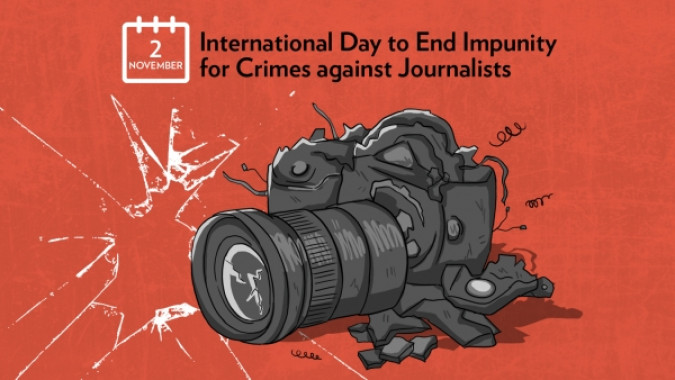
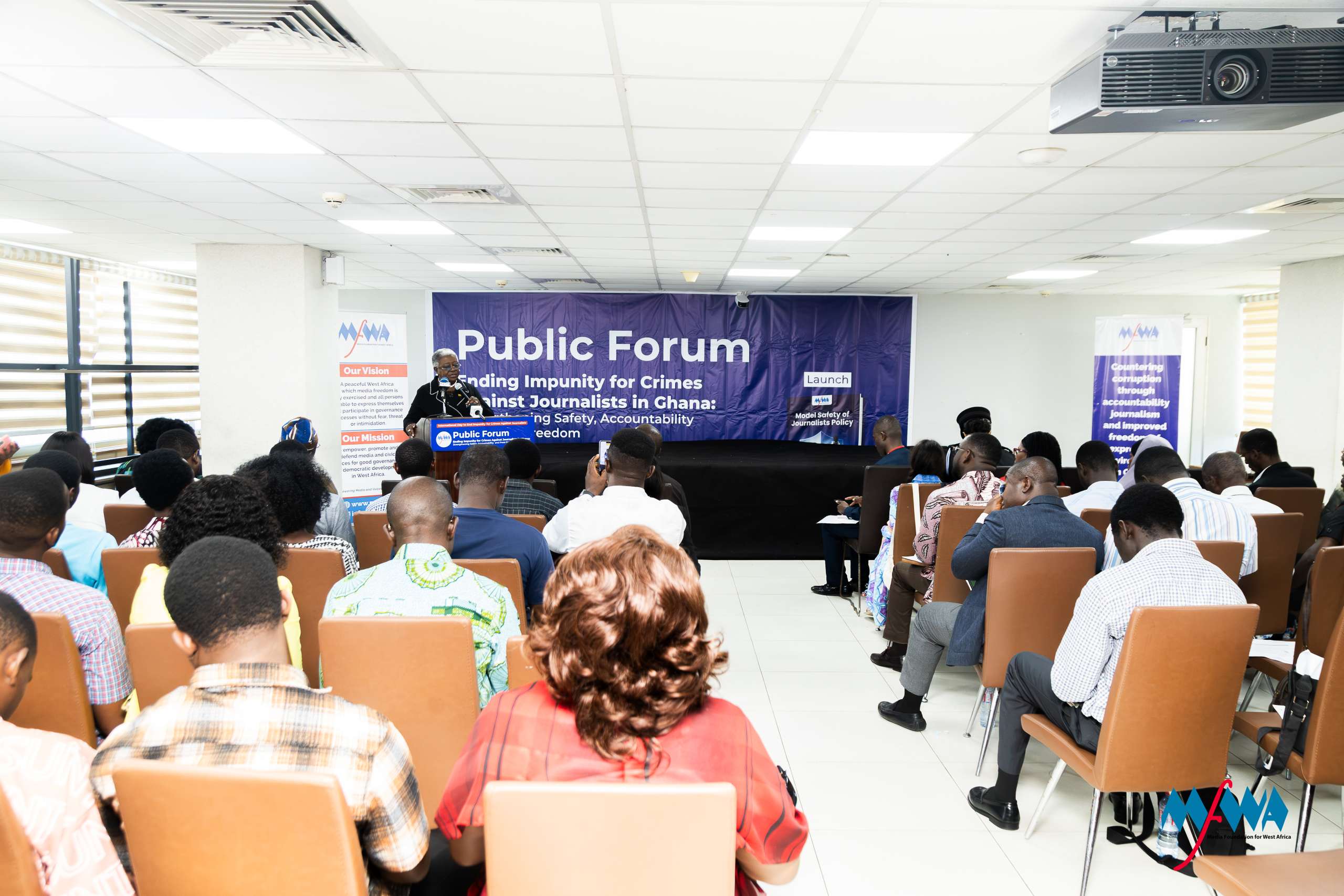
Against this backdrop, we organised a public forum on 2 November 2026 to commemorate the International Day to End Impunity for Crimes against Journalists.
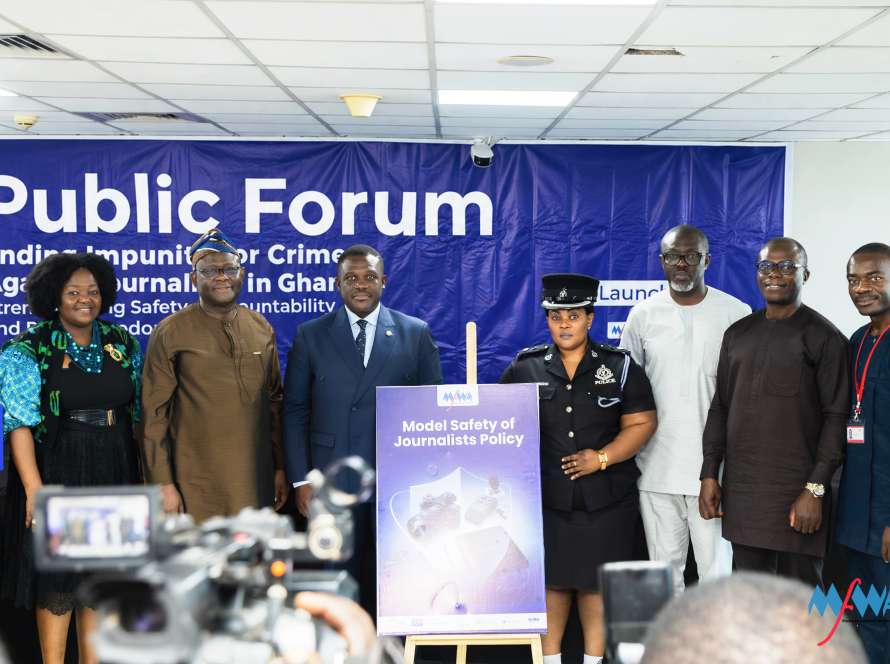
Held under the theme “Ending Impunity for Crimes against Journalists in Ghana: Strengthening Safety, Accountability and Press Freedom,” the forum brought together government representatives, media practitioners, development partners and civil society organisations.
Discussions centred on the responsibility of media organisations to protect their staff, the role of state institutions in ensuring justice and the growing threats to journalists’ safety in physical and digital spaces.
The forum also marked the launch of our Model Safety of Journalists’ Policy for Adoption by Newsrooms in Ghana, a practical framework to help media organisations promote the safety and well-being of journalists.
Below are 10 key recommendations from the forum for state institutions, media organisations, media professional bodies, civil society and citizens.
State institutions
- The Ghana Police Service and the Office of the Attorney General and Minister of Justice should investigate attacks on journalists quickly and fairly, keep victims informed, and take attackers to court when there is enough evidence.
- State institutions should lead a joint mechanism with media bodies and civil society to track attacks on journalists and the progress of cases.
- The Judicial Service and the Attorney General and Minister of Justice should train judicial officers and prosecutors on freedom of expression and crimes against journalists, in line with international standards.
Media organisations
- Media owners and newsroom managers should adopt or adapt the Model Safety of Journalists’ Policy, assign clear responsibility for implementing it, and give it the funding and staff it needs.
- Media organisations should build safety into newsroom operations by assessing risks before high-risk assignments, setting emergency procedures, providing safety equipment and giving journalists access to legal and psychosocial support.
- Media organisations should extend safety measures to all journalists and media workers, including freelancers, regional correspondents, camera operators and online journalists. They should also address the specific threats and gender-based harassment women journalists face.
- Media organisations should protect journalists against online threats, doxxing, impersonation and coordinated harassment, and train them to identify manipulated content and verify information.
Media professional bodies
- Media professional bodies should strengthen self-regulation by consistently enforcing their codes of ethics through transparent disciplinary processes.
- Media professional bodies and relevant institutions should provide accessible, timely and credible channels for public complaints about media content and require member organisations to give corrections prominence comparable to the original reports.
Civil society and development partners
-
- Civil society organisations, media associations, journalism training institutions and development partners should support safety training, document violations, advocate for accountability, promote newsroom protection measures and help citizens identify manipulated content and verify information.