
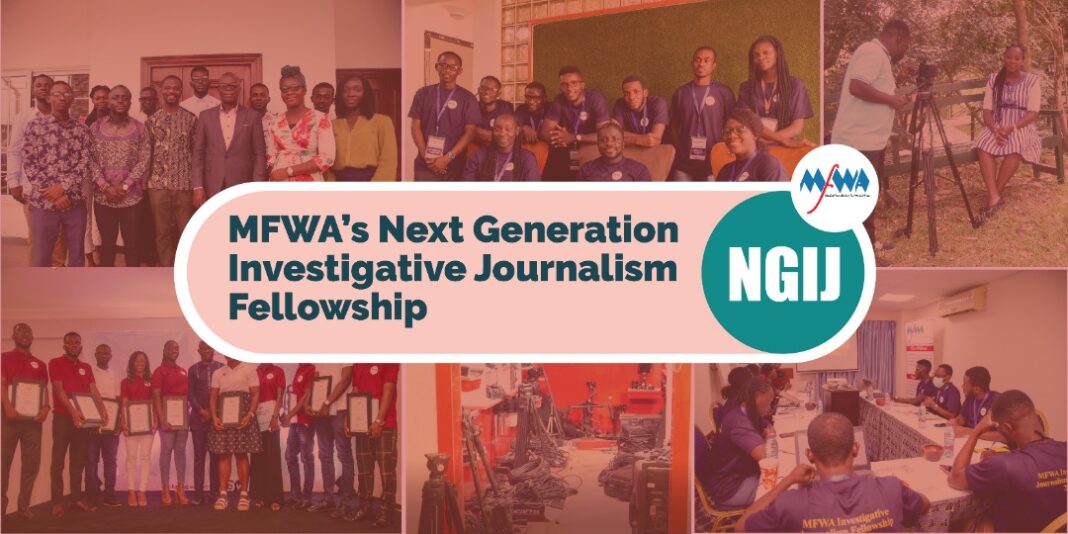
An investigation into illegal charges at Ghana’s Ministry of Foreign Affairs’ document attestation service, produced by a Fellow of our Next Generation Investigative Journalism (NGIJ) Fellowship, has prompted the Ministry to sanction the individual implicated and announce reforms to the service.
The story, published by The Fourth Estate on September 2, 2026 and titled ‘Illegal charges rock Foreign Affairs Ministry’s travel document attestation process’, found that applicants were being charged between GHS900 and GHS1,200 by unofficial intermediaries for a service for which the approved fee was GHS200.
The Fellow, Prinsella Vera Aidoo, produced the investigation while participating in the eighth cohort of our NGIJ Fellowship.
From an allegation to an evidence-based investigation
The story began with complaints from applicants who said they had been directed to individuals within the Ministry’s premises who offered to facilitate the attestation process for additional fees.
To verify the allegations, Prinsella went undercover as an applicant seeking attestation for documents required for a visa application. A receptionist directed her to an individual who appeared to be affiliated with the Ministry, who charged her GHS900 to facilitate the process. The documents were returned with an official receipt showing a much lower payment, attested on the Ministry’s official letterhead and signed by the Director of the Consular and Humanitarian Affairs Bureau.
The investigation raised questions about how unofficial payments were being collected within the Ministry’s premises and how documents, including the forged documents used in the undercover test, could successfully pass through the attestation process.
In a letter dated May 12, 2026 responding to the investigation, the Ministry clarified that the approved fee for attestation and validation services was GHS200 and that payments to unauthorised persons or intermediaries were not sanctioned. It also said it had introduced safeguards including the publication of approved fees, the issuance of official receipts and channels for reporting suspected misconduct.
Investigation leads to institutional action
The impact of the investigation became evident a day after its publication.
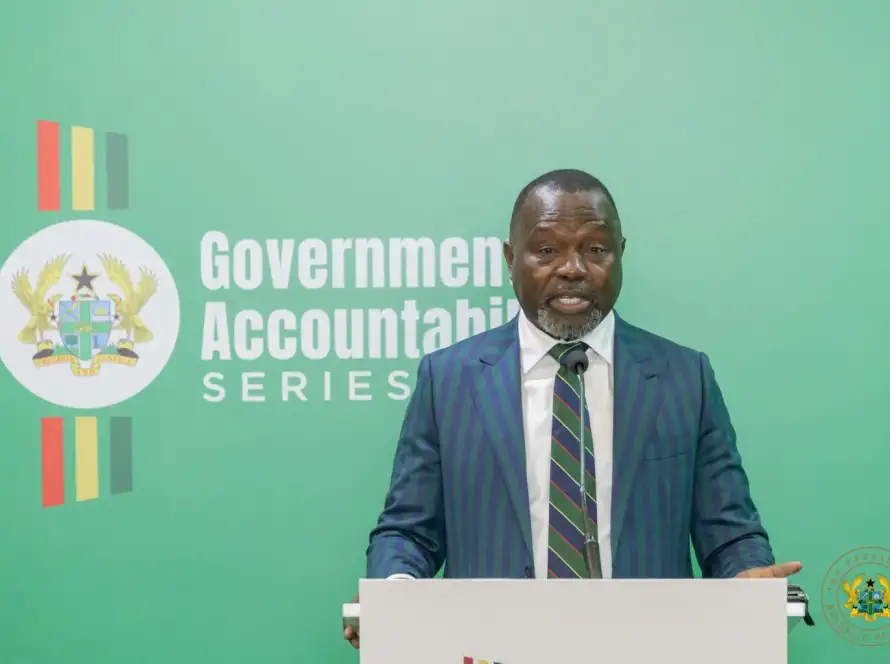
The Ministry of Foreign Affairs issued a statement on September 3, 2026, announcing reforms to its attestation services, including the introduction of cashless payments and the development of digital platforms to reduce human interaction in the process.
The Ministry also confirmed that the individual implicated in the investigation had been sanctioned, reported to law enforcement for further investigation and prosecution, and prohibited from entering the Ministry’s premises. It reiterated that the approved fee is GHS200 and warned citizens against engaging middlemen.
While the Ministry indicated that reforms to its consular and attestation services were already being pursued, its statement came directly in response to The Fourth Estate’s investigation and specifically commended the publication for its work. The Ministry said the findings would help improve governance and accountability.
Building journalists who make a difference
Prinsella says the training she received during the Fellowship shaped the way she approached the story.
“The fellowship training enabled me to look at the investigation in a more systematic way, rather than just a routine news story. The emphasis was on verification, documentation and accountability from the initial information to the final publication,” she said.
Rather than stopping at the allegation that applicants were being charged excessive fees, she applied the skills gained through the Fellowship to verify the approved fees, test the process through undercover reporting, gather evidence and seek a response from the institution concerned.
She also credits the mentorship she received with pushing her to look beyond the immediate allegation to the broader accountability dimensions of the story.
“The mentorship was especially helpful, as it made me think about the less obvious angle. I learned to ask more probing questions about the system, the people impacted and the accountability mechanisms involved, rather than simply reporting there was an issue with document attestation fees,” she said.
“It taught me to ask questions more deliberately, to follow the evidence and to verify information before drawing conclusions,” she added.
About the NGIJ Fellowship
The Next Generation Investigative Journalism (NGIJ) Fellowship is a training and mentorship programme of the Media Foundation for West Africa (MFWA) that equips young and early-career journalists across West Africa with practical skills in investigative journalism, data journalism, fact-checking and multimedia storytelling.
Fellows receive practical training and mentorship from experienced journalists, including journalists from The Fourth Estate and public-interest journalism organisations. The Fellowship is designed to strengthen the capacity of a new generation of journalists to produce credible, evidence-based journalism on issues of public interest.
Since its inception in 2021, the Fellowship has supported journalists to produce public-interest investigations that contribute to transparency, accountability and good governance. Previous NGIJ Fellows have gone on to produce impactful investigations, win journalism awards and take on roles in fact-checking and other areas of public-interest journalism.
Through the Fellowship, MFWA is building a new generation of journalists with the skills, support and confidence to produce credible, evidence-based journalism whose value extends beyond publication to greater transparency and accountability in West Africa.