

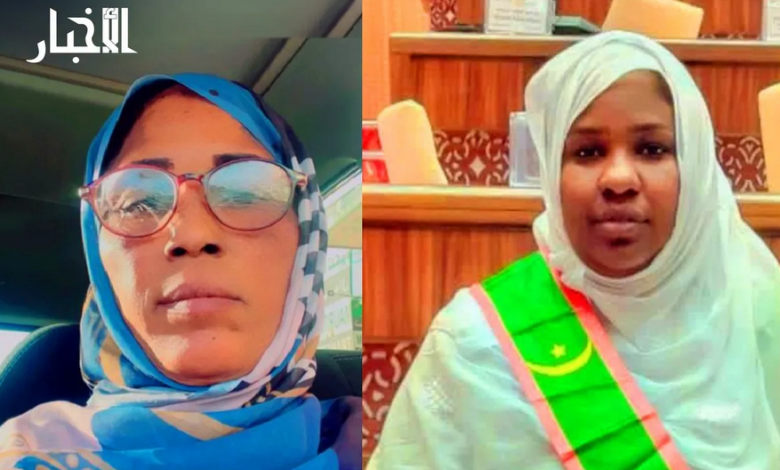
A court in the Mauritanian capital Nouakchott sentenced two members of parliament to four years in prison without parole on May 4, 2026, following charges arising from content they published on social media. The verdict, delivered by the Criminal Division of the Nouakchott West Court of First Instance, has drawn sharp condemnation from the MPs’ defence team, which described the trial as procedurally irregular and fundamentally unfair.
The two MPs, Mariem Cheikh Jink and Gamo Achour, are members of the Initiative for the Resurgence of the Abolitionist Movement (IRA), an organisation that has been at the forefront of anti-slavery and human rights advocacy in Mauritania.
They were arrested on April 9 and 10, 2026, respectively, and charged with desecration of national symbols, dissemination of remarks deemed racist, incitement to violence, calls for gatherings, and insults and defamation via digital platforms. In addition to the custodial sentences, the court ordered the removal of the contested content from their pages, the seizure of their phones, and the closure of their social media accounts.
The defence team raised several procedural objections concerning the right to a fair trial. Under Mauritanian law, lawyers must be notified at least three days before any hearing involving charges of the nature faced by the two MPs. In this case, the lawyers were informed by telephone the night before the hearing, severely limiting their ability to prepare an adequate defence.
This falls short of the standard set by Article 14(3)(b) of the International Covenant on Civil and Political Rights, which guarantees every accused person sufficient time and facilities to prepare their defence and to communicate with counsel of their choosing.
The defence also raised a jurisdictional objection centred on the application of the flagrante delicto procedure, which was used to justify the lifting of the MPs’ parliamentary immunity.
The lawyers argued that the concept of flagrante delicto in the National Assembly’s rules of procedure, which requires that a member be apprehended at the very moment an offence is committed, differs materially from the broader definition found in the Code of Criminal Procedure, which identifies four distinct instances.
According to the defence, invoking the Code of Criminal Procedure’s definition to bypass parliamentary immunity constitutes a procedural irregularity that the court failed to address.
When the court rejected these objections, the defence team withdrew from the proceedings in protest. The court nonetheless proceeded in their absence and delivered a verdict in under two hours.
The Media Foundation for West Africa calls on the Mauritanian government to secure the immediate and unconditional release of the two MPs.