
The Media Foundation for West Africa (MFWA) promotes and defends press freedom and freedom of expression in West Africa to help create an enabling environment for the media and other voices to participate in governance processes. Under its Freedom of Expression and Digital Rights Programme, the MFWA documents evidence of freedom of expression issues, both offline and online, to inform and guide advocacy interventions.
Although all 16 countries are parties to binding international human rights frameworks, and their national constitutions provide safeguards for expression, attacks against expression (including activism and protests) persist. The MFWA documents the assault on the right to expression and potential threats to freedom of expression and the civic space, and uses them as evidence to spotlight the situation in the region, advocate for reparations and policy reforms.
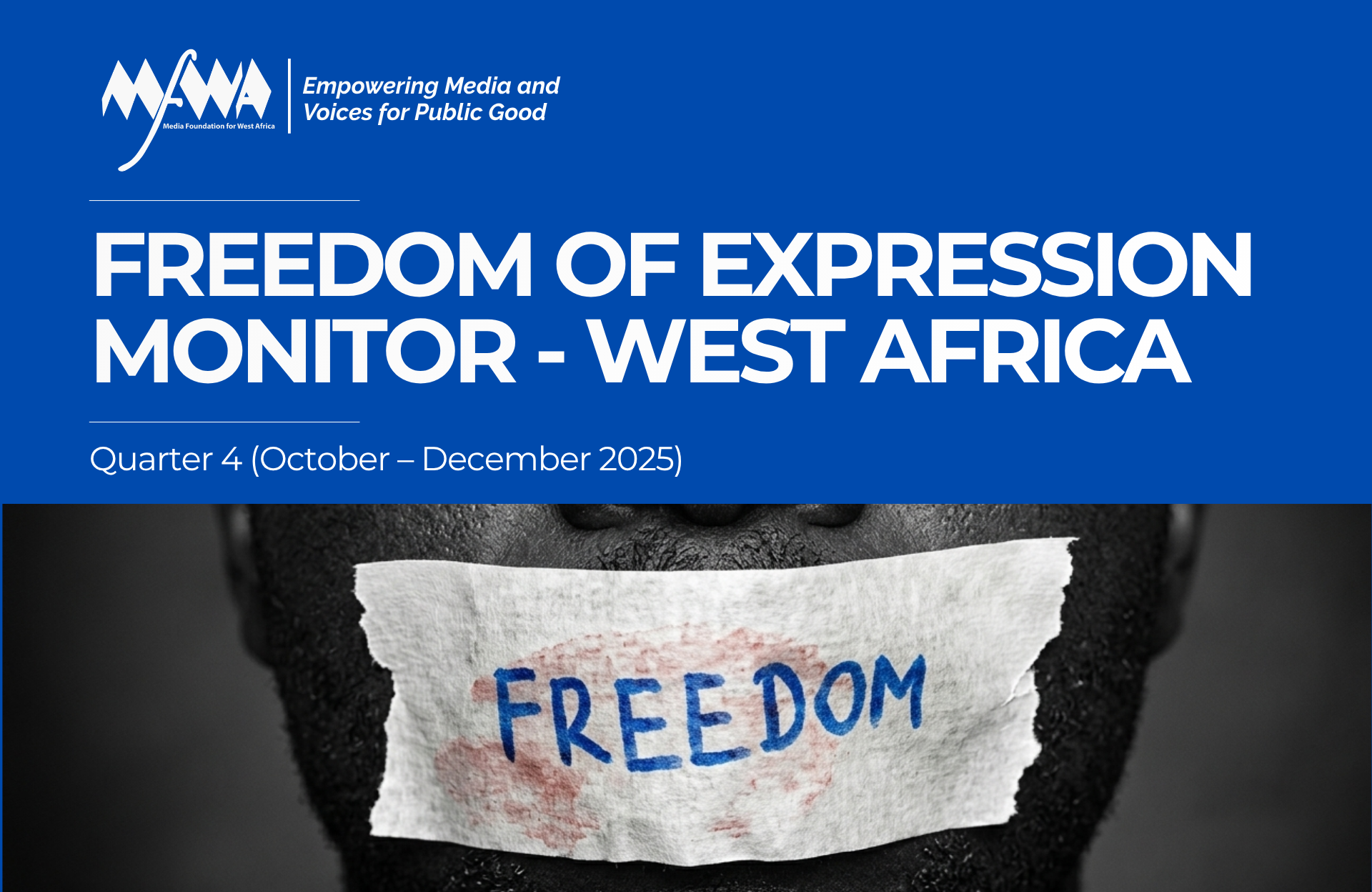
This report documents freedom of expression violations and related developments recorded between October and December 2025 across eleven countries. It records 20 violations, 65 percent of which were attributed to state security agents. A total of 172 victims were affected, 85 percent of them journalists.
Although arrests and detentions, a violation category type, was cited as the type of violation with the most frequencies, the killing of a female TikTok influencer in Mali was the worst violation recorded. Also concerning was the withdrawal of the press cards of 130 journalists and the suspension of eight media outlets by Benin’s media regulator, the High Authority for Audiovisual and Communication (HAAC). Despite the worrying violations reported, eight remedial actions were recorded in five countries.
The report ends with recommendations to governments, media regulators, state security agents, ECOWAS and the Special Rapporteur on Freedom of Expression and Access to Information in Africa at the African Commission on Human and Peoples’ Rights. The recommendations call on these stakeholders to ensure accountability for violations perpetrated, recourse to dialogue instead of sanctions, capacity building for security agents and the need for diplomatic pressures on governments to uphold freedom of expression rights.
Please click the button below to access the report.
Access File