
The Media Foundation for West Africa (MFWA), under its Freedom of Expression and Digital Rights Programme, monitors, documents and reports on threats and attacks against the right to freedom of expression, including press freedom, activism and protests, across the 16 countries of West Africa.
This forms part of the MFWA’s broader effort to promote and defend media freedom, civic expression and civil liberties in the region, helping to create an enabling environment for the media and other voices to participate in governance processes.
While nearly all 16 countries in West Africa have ratified international and regional instruments guaranteeing freedom of expression, the right remains poorly respected in practice. MFWA’s monitoring reports serve as evidence-based tools for advocacy and redress, documenting violations to inform national and regional interventions.
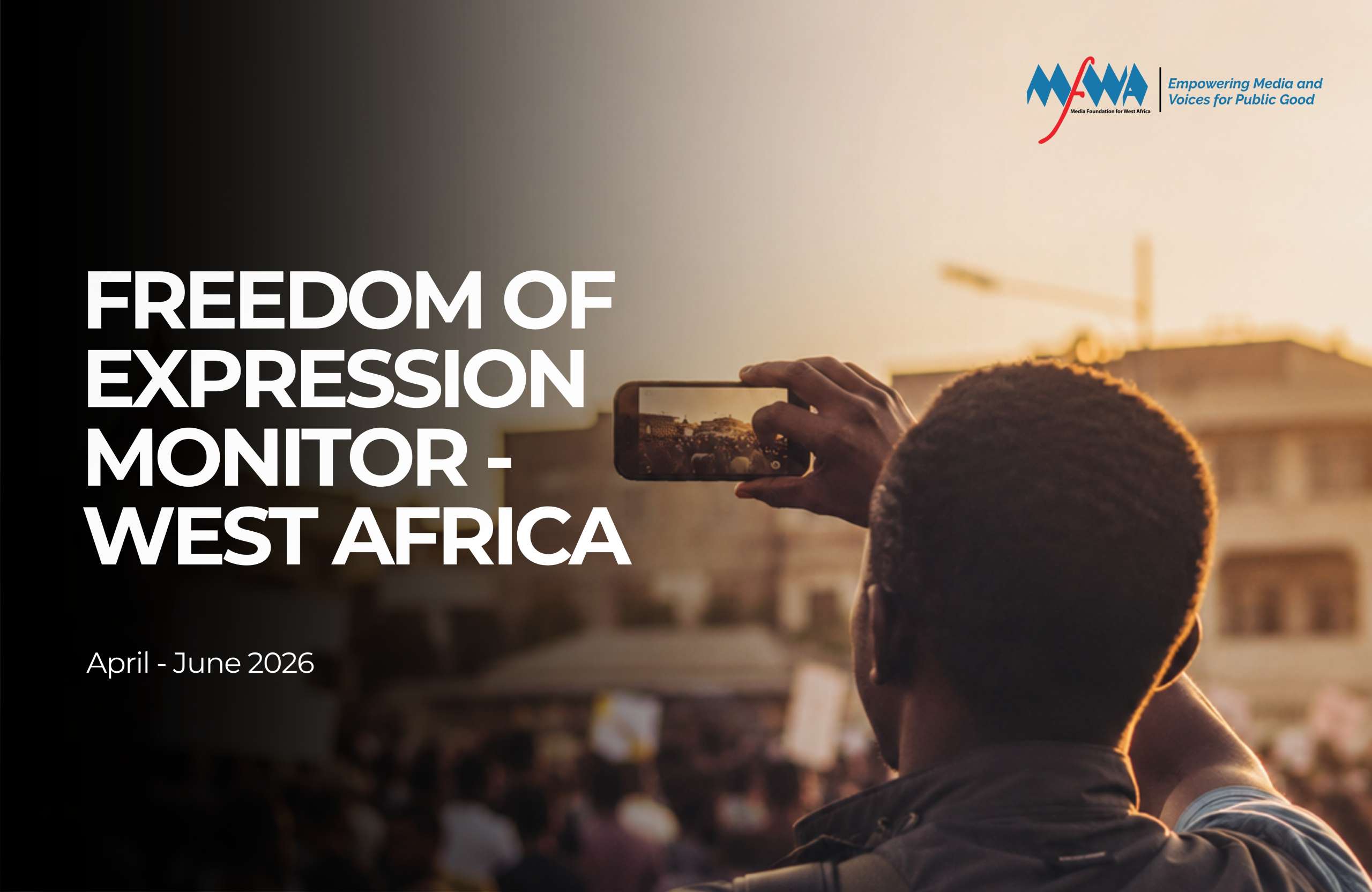
This report covers the freedom of expression situation in West Africa for the second quarter of 2026 (April to June). It documents 44 violations recorded in 11 of the region’s 16 countries, a 37.5 percent increase from the 32 violations recorded in the first quarter.
Arrest and detention remained the most frequent violation, accounting for 17 of the 44 cases, followed by the suspension of media outlets and the denial of assembly during protests. Other violations included the destruction of equipment, abduction, and the closure of a newsroom.
State security agencies and media regulatory bodies remained the leading perpetrators of these violations, a pattern that has now held for two consecutive quarters and points to the institutional nature of repression in parts of the region, where journalists, activists and other critical voices continue to be treated as adversaries.
Mauritania recorded the highest number of violations, tripling from three in the first quarter to nine in the second, while Ghana’s violations rose from three to seven. Nigeria, Burkina Faso and Mali also recorded significant numbers of violations.
Among the most serious incidents recorded was the disappearance of Mountaga Tall, a prominent Malian lawyer and opposition figure, who was forced from his Bamako home by masked men in May and has not been seen or heard from since. Authorities have given no explanation for his abduction or his whereabouts.
Despite the scale of violations recorded, only five, received some level of redress during the quarter, largely in the form of release from detention, with additional progress recorded on cases from the first quarter. This limited redress points to a persistent accountability gap that leaves perpetrators with little incentive to change their conduct.
The report ends with recommendations to relevant stakeholders, including governments, media regulators, security agencies, news media organisations, ECOWAS and the African Commission on Human and Peoples’ Rights. The recommendations call on these stakeholders to take proactive and reparative action to address the violations cited, while putting in place measures to mitigate future violations and ensure that perpetrators are held to account.
Please click the button below to access the report.
Loading Viewer...
Access File