
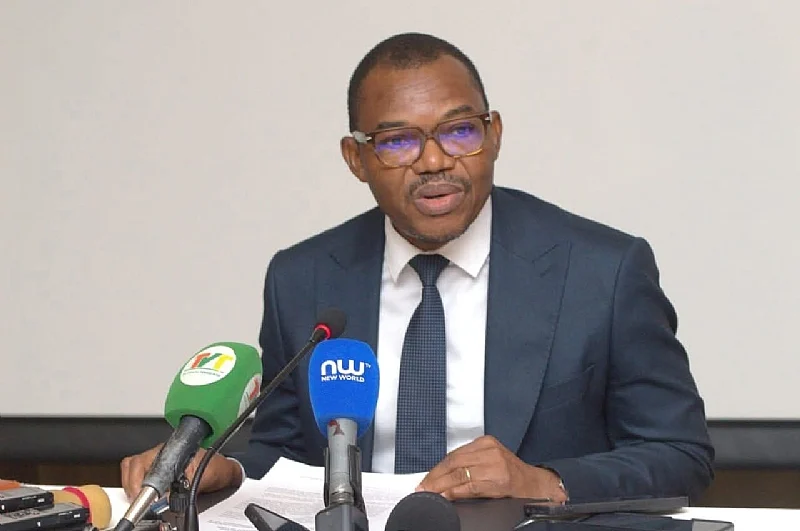
On October 3, 2025, the Public Prosecutor of Togo, Talaka Mawama, announced a tightening of prosecutions related to the use of social media platforms, including Facebook, YouTube, WhatsApp, Instagram, TikTok, Snapchat, and X. Speaking at a press conference, he warned that publishing, sharing, or even endorsing certain online content could attract criminal sanctions. The measure was justified on the grounds that it served as a way to curb defamation, hate speech, invasion of privacy, and protect minors.
A tense political context
This legal reinforcement does not occur in isolation; it follows a wave of popular protests that began in June, marked by massive demonstrations and violent repression that left several deaths and many injured. Authorities have also implemented restrictive measures, including internet disruptions amidst protest periods, arbitrary arrests, and violations of freedom of expression in recent months.
The most recent arrests include those of former Minister of Justice, Essozimna Marguerite Gnakadé, Armand Agblézé and Oséi Agbagno, two members of the Tournons la Page movement and that of midwife and activist Grace Koumayi Bikoyi among others.
While one could argue that public security requires limiting online abuses, the timing of this new initiative by the executive and the judiciary to extend online surveillance and repression raises serious concerns, given the current political context and the government’s institutional practices.
A repressive response to the recent protests
Following the demonstrations that took place from 26 to 28 June 2025, which tragically claimed seven lives, the Togolese government, through the Minister of Human Rights, did not hesitate to categorically place the blame on cyber-activists. According to the minister, these individuals were the instigators of the events due to their online mobilisation and activism. This accusation was made without any consideration for the deeper causes that may have driven the population to rise up: the demand for better living conditions and the opposition to the constitutional changes adopted in May 2025.
For public opinion, this new decision announced by the Public Prosecutor is widely seen as an instrumentalisation of the law to silence critical voices. Indeed, the reinforcement of sanctions announced on October 3, 2025, may have a dire effect on public discourse.
“Anyone who produces, reproduces, disseminates, publishes, or shares through a digital platform any act outside the existing legal framework will face criminal prosecution without compromise or leniency,” declared the Togolese Public Prosecutor.
He later added, referring to what he called complicity by approval:
“The same applies to anyone who publishes a comment validating an illicit post. Complicity by approval also exposes one to prosecution, since the law obliges every citizen to report any crime or offense, they become aware of.”
If the threat of prosecution extends not only to the authors of allegedly “illicit” content but also to those who share or comment on it, then the space for freedom among citizens, journalists, and whistleblowers will narrow even further.
The Media Foundation for West Africa (MFWA) is concerned that the expansion of criminal sanctions for online expression, in the current context, may be used to target critical voices. While addressing harmful content is legitimate, such measures must be proportionate and clearly defined.
MFWA calls on the Togolese authorities to uphold freedom of expression, ensure that any restrictions on online content comply with international standards, and refrain from using these provisions to silence dissenting voices.