
Police in The Gambia used tear gas and made arrests to disrupt protests over prolonged electricity and water shortages that spread from Banjul, the country’s capital, to other towns between September 7 and 10, 2026.
The protests began overnight from Monday, September 7, into Tuesday, September 8, 2026, as residents experienced power outages lasting up to 48 hours.
Demonstrators gathered in several locations, including near President Adama Barrow’s official residence and facilities belonging to the National Water and Electricity Company (NAWEC). Some protesters burned tyres, erected barricades and blocked roads while calling for President Barrow’s resignation.
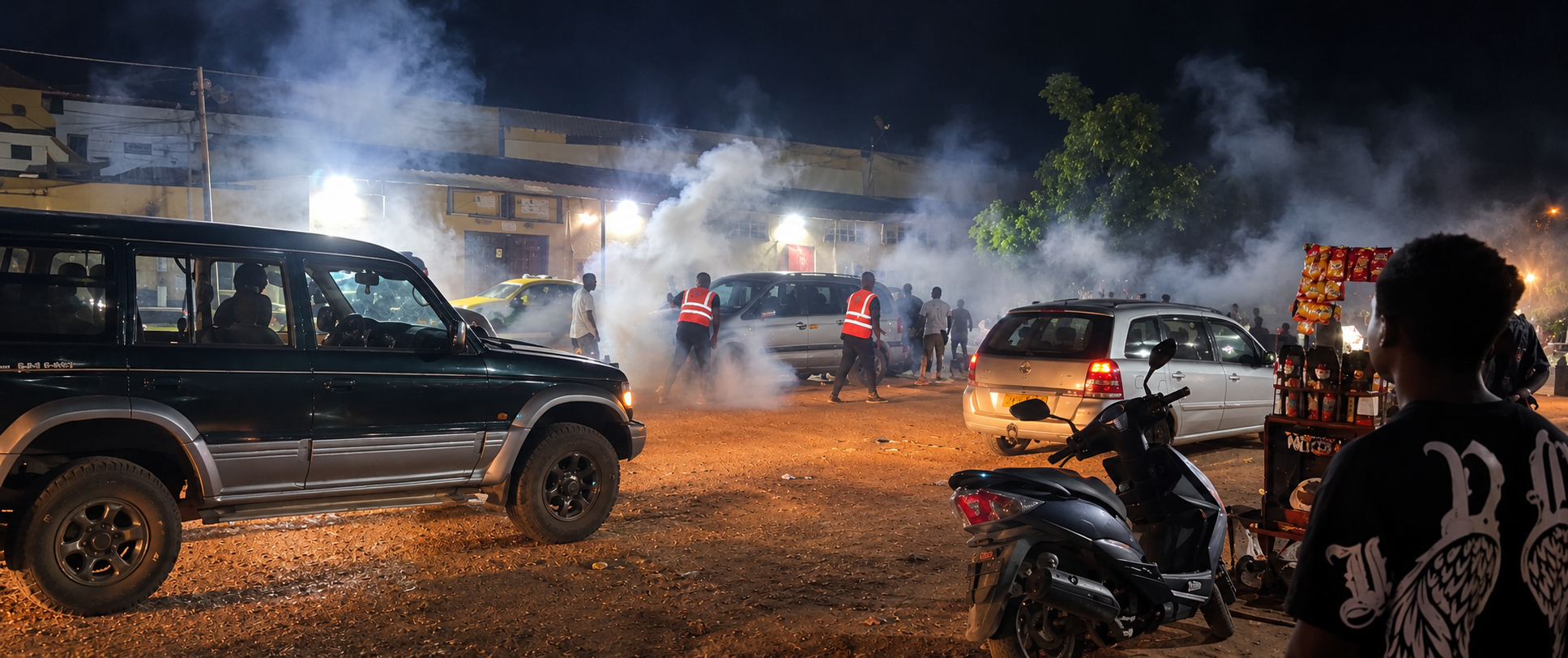
A video posted online showed officers from The Gambia Police Force dispersing the protest using tear gas, while some protesters ran to avoid inhaling it. According to the National Human Rights Commission, 20 people, including four minors, had been arrested and detained in connection with reports of vandalism and damage to public infrastructure.
In a televised address on September 8, 2026, President Adama Barrow acknowledged the current electricity challenges in The Gambia, expressing empathy for the public’s suffering due to power outages. Barrow also announced the creation of a Presidential Task Force on Electricity Supply, chaired by Vice President Muhammad B. S. Jallow. The task force was expected to report directly to the President and provide public updates every two weeks.
By September 10, after two more nights of protest, Inspector General of Police Seedy Mukhtar Touray announced that no further protests would be allowed without prior approval. He stated that demonstrations held without permits would face law enforcement action.
The Media Foundation for West Africa (MFWA) calls on the government to ensure that permit requirements for public demonstrations are not used to impose a blanket restriction on peaceful assembly, a right guaranteed under The Gambia’s Constitution. MFWA further urges the authorities to open a prompt, independent and transparent investigation into the use of tear gas, the arrests and the conduct of security forces during the protests.
MFWA also calls on protesters to reject violence, vandalism and attacks on security personnel. Citizens should pursue their demands only through peaceful protest and other lawful forms of civic participation.