

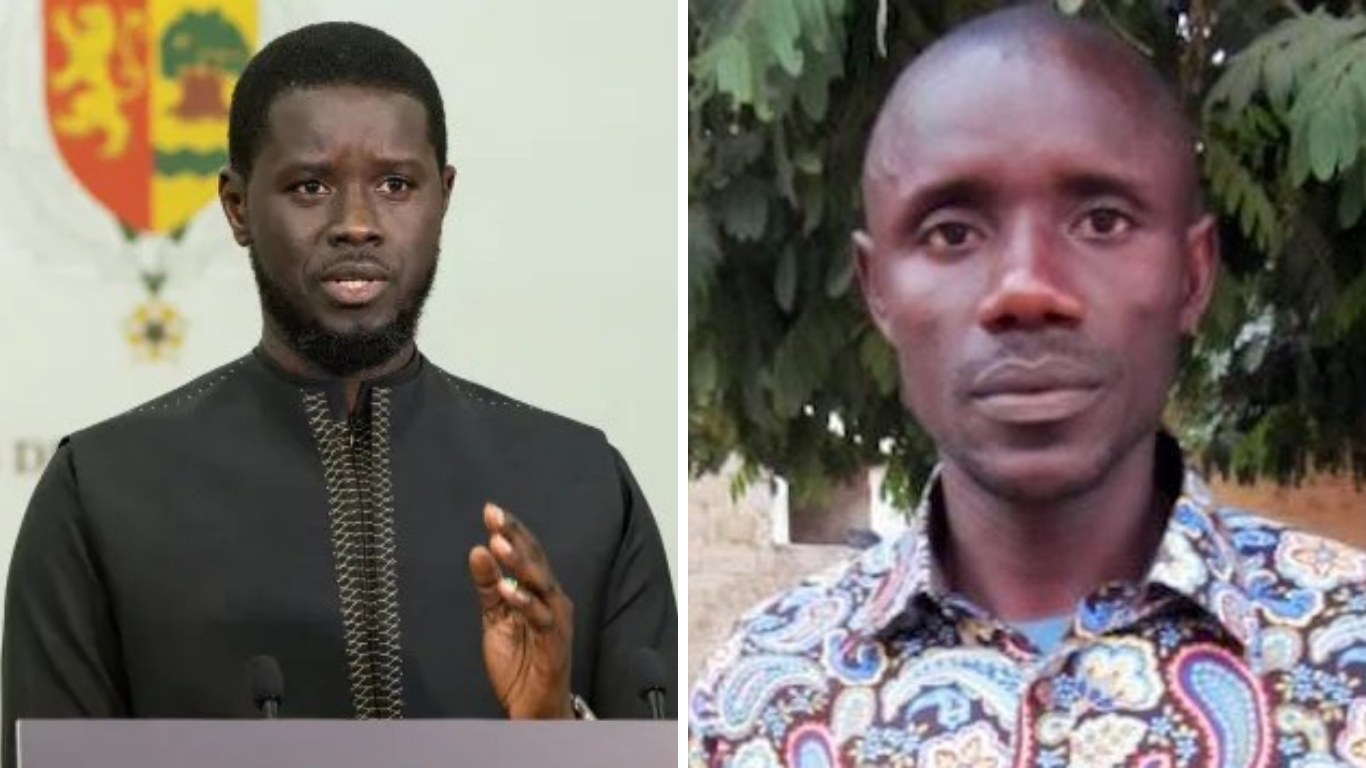
Senegalese journalist and author René Capain Bassène was released from prison in Dakar on May 27, 2026, after President Bassirou Diomaye Diakhar Faye granted him a presidential pardon. Bassène had spent more than eight years in detention over the killing of 14 wood collectors in the Boffa-Bayotte forest in Casamance, southern Senegal, in a case widely criticised by press freedom organisations as a miscarriage of justice.
The killings took place on January 6, 2018, when armed assailants believed to be affiliated with the Mouvement des Forces Démocratiques de Casamance (MFDC), a separatist group that has waged an insurgency in the region since 1982, attacked a group of people gathering wood in the protected forest near Ziguinchor, close to the border with Guinea-Bissau. Fourteen people were killed and seven others injured.
Bassène, an investigative journalist and author of three books on the Casamance conflict, was arrested at his home in Ziguinchor on January 14, 2018, alongside more than 20 other suspects. At the time, he was finalising a fourth book, “Un conflit qui nourrit plus qu’il ne tue” (A Conflict That Feeds More Than It Kills), which examined how individuals on both sides had allegedly profited from the prolonged insurgency.
Prosecutors accused him of being the “planner” and “instigator” of the massacre, alleging he had a commanding relationship with MFDC faction leader César Atoute Badiate. A review of court documents found that prosecutors cited Bassène’s journalistic work as part of their arguments for conviction, reinforcing concerns that his reporting was treated as evidence of criminality.
On June 13, 2022, a Ziguinchor court convicted Bassène of complicity in murder, attempted murder, and criminal association, sentencing him to life imprisonment. His lawyer, Ciré Clédor Ly, appealed the conviction, but the Ziguinchor Court of Appeal upheld the sentence on August 29, 2024, and Senegal’s Supreme Court dismissed his final appeal on May 2, 2025. By that point, all other suspects arrested in connection with the case had been released or acquitted, leaving Bassène as the sole remaining detainee.
The prosecution’s case has faced sustained scrutiny. An investigation published in January 2025 found that seven former co-defendants, all of whom were acquitted in 2022, said they had been forced through beatings and electric shocks to falsely implicate Bassène. The investigation also documented altered witness transcripts, disputed phone geolocation evidence, and inconsistencies in emails allegedly sent from the journalist’s account.
Four witnesses, including Bassène’s wife, Odette Victorine Coly, and a neighbour who said he was watching a football match with the journalist, told investigators that Bassène was in the Kandialang neighbourhood of Ziguinchor, approximately 10 kilometres from the forest, at the time of the killings. The prosecution relied on geolocation data from Bassène’s phone to place him at the scene, but his legal team’s request for call transcripts was refused.
In a significant development, Badiate, who heads one of the main MFDC factions, publicly rejected the prosecution’s claims in his first statement on the case. “René Capain Bassène is neither an MFDC representative nor a leader to give me orders,” Badiate said, adding that Bassène “was neither a member nor a spokesman for the MFDC.” While Bassène spent eight years behind bars, Badiate, who holds his own in-absentia life sentence for the same killings, moved freely, meeting Senegalese government officials and signing peace agreements in 2022 and 2025.
Bassène also reported being subjected to torture during interrogation, including being stripped, beaten until he lost hearing in one ear, and electrocuted. Despite these concerns, and despite his lawyers filing multiple appeals, all legal avenues were exhausted before the presidential pardon intervened.
The Media Foundation for West Africa (MFWA) welcomes the release of journalist René Capain Bassène. His prolonged detention raised serious questions about due process, the integrity of evidence, and the treatment of journalists covering sensitive conflicts. Bassène devoted his career to documenting and analysing the Casamance crisis through rigorous journalism, and his imprisonment sent a chilling signal to reporters working on security issues across the region.
The MFWA calls on the Senegalese authorities to ensure that the pardon is accompanied by concrete measures to safeguard press freedom and to prevent the criminalisation of journalism. We urge a thorough and transparent review of the judicial processes that led to Bassène’s conviction, and we call for the protection of all journalists covering conflict and security matters in West Africa.
Beyond his release, the MFWA calls on the Senegalese government to provide full reparations for the injustice Bassène has endured. Eight years of wrongful imprisonment, documented torture during interrogation, and the destruction of his professional career and family life demand meaningful redress. This should include financial compensation, access to medical and psychological care, and the formal rehabilitation of his record as a journalist.
A presidential pardon, while welcome, does not annul the conviction or restore the years, health, and livelihood that were taken from him. Senegal’s credibility as a champion of press freedom in West Africa requires that the state not only free Bassène but also account for the failures that put him behind bars.