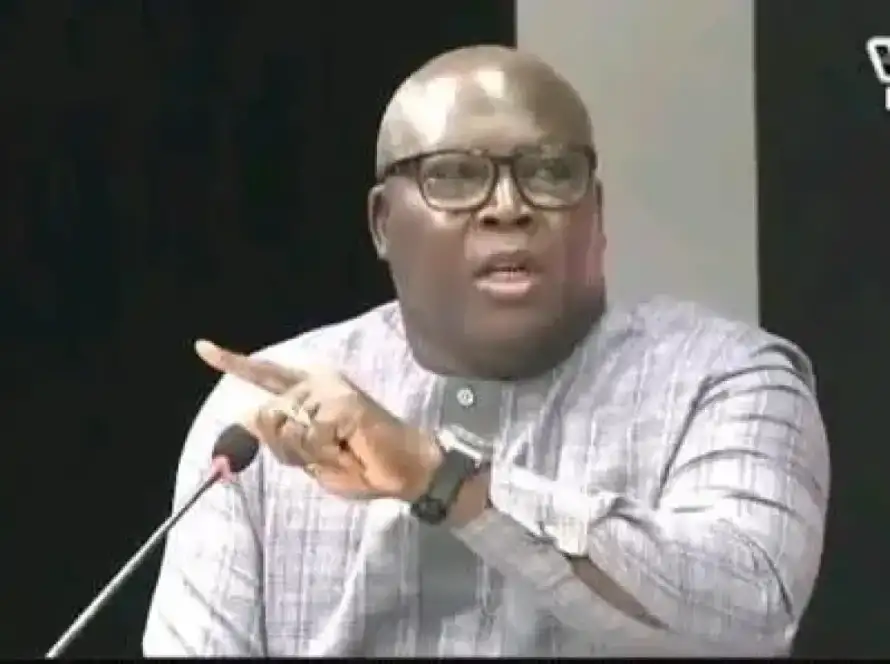

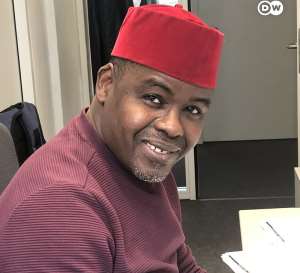
Gazali Abdou Tasawa, a Hausa-language correspondent for German international broadcaster Deutsche Welle (DW), was granted provisional release on May 8, 2026, after 105 days in detention in Niamey, Niger.
Tasawa was arrested on January 23, 2026, and placed in detention at Niamey civil prison following a brief police interrogation. His arrest was linked to a report he produced in Hausa for DW on January 15, which documented the living conditions of some Nigerian refugees sleeping in the open near a cemetery in the capital after their informal shelters were demolished. The report featured dozens of displaced people, mostly women and children, some of whom had fled Boko Haram attacks in northern Nigeria.
Tasawa was accused of “disseminating reports that could disturb public order” under Niger’s cybercrime law, which the military government amended in June 2024 to reinstate prison sentences of up to five years for such offences. DW said at the time that it had not been informed of the reasons for his arrest and immediately sought legal assistance. “It must be ensured that our employees can carry out their journalistic work freely and without intimidation,” stated Nadja Scholz, DW’s Managing Director of Programming.
The authorities’ failure to publicly disclose formal charges throughout Tasawa’s 105-day detention raises serious concerns about due process and the lawfulness of his prolonged imprisonment. Under international human rights standards, including the International Covenant on Civil and Political Rights to which Niger is a party, detained persons must be promptly informed of the charges against them and brought before a judicial authority within a reasonable time.
Tasawa’s arrest forms part of an intensifying crackdown on the press under Niger’s military government, which seized power in a July 2023 coup. Niger’s deteriorating media environment is reflected in the 2026 World Press Freedom Index, where the country recorded the steepest fall of any nation globally, dropping 37 places to 120th out of 180 countries. Neighbouring Mali ranked 121st and Burkina Faso 110th, as all three military-led Sahel states continue to severely restrict independent media in the name of national security.
On the same day as Tasawa’s release, Niger’s newly established media regulator, the National Communications Observatory (ONC), suspended nine France-based news outlets, including France 24, Radio France Internationale (RFI) and Agence France-Presse (AFP), citing “repeated dissemination of content likely to seriously undermine public order.” The measure deepened concerns that the regulatory body, ostensibly created to safeguard press freedom, is being deployed as an instrument of censorship.
The Media Foundation for West Africa (MFWA) welcomes the provisional release of Gazali Abdou Tasawa but notes with concern that his freedom remains conditional while proceedings continue. The MFWA calls on the Nigerien authorities to drop all charges against Tasawa, and cease the use of the cybercrime law and other legal instruments to criminalise legitimate journalism.