
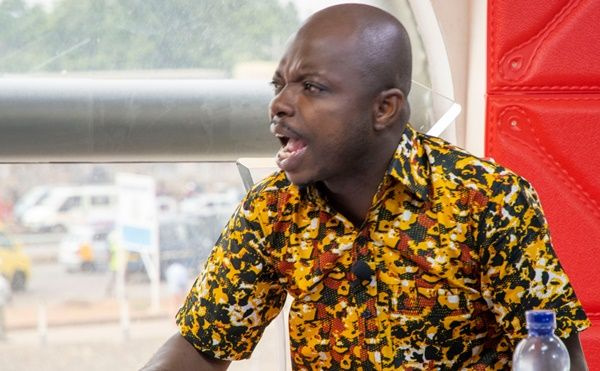
On May 21, 2026, an Accra High Court granted bail to opposition figure Kwame Baffoe, popularly known as Abronye DC, ending nine days of detention over criminal charges arising from his public criticism of a judge. The court set bail at GH₵100,000 (US$8,576) with two sureties, after the prosecution, led by Deputy Attorney-General Dr Justice Srem-Sai, did not oppose the application.
Baffoe, the Bono Regional Chairman of the New Patriotic Party (NPP), must report to the Criminal Investigations Department (CID) headquarters fortnightly, surrender all travel documents, and obtain written permission from the court registrar before travelling abroad. His defence team was led by former Attorney-General Godfred Yeboah Dame and former Information Minister Kojo Oppong Nkrumah.
The bail followed sustained political and legal pressure after Baffoe was denied bail by Circuit Court 9 in Accra on May 13, 2026. His lawyers raised concerns about his deteriorating health in custody, with Oppong Nkrumah alleging on May 19 that the defence team had been denied adequate access to their client.
The NPP petitioned the diplomatic community over the arrest and detention, with National Organiser Henry Nana Boakye describing the move as part of broader efforts to resist what the party called the suppression of democratic freedoms. The party also announced plans to petition Chief Justice Paul Baffoe-Bonnie over alleged misconduct by the Circuit Court 9 judge who denied bail.
Arrest, charges, and denial of bail
According to reports, Baffoe was re-arrested on May 13, one month after being granted police enquiry bail following his initial arrest on April 13, 2026, and was arraigned before Circuit Court 9 presided over by Judge Joseph Yenuban Kunsong.
He faces two charges: offensive conduct conducive to a breach of peace under Section 207(1) of the Criminal Offences Act, 1960 (Act 29), and publication of false news under Section 208(1) of the same statute.
The charges relate to remarks he made about a judge of the Adenta Circuit Court, whom he accused of bias and incompetence in handling politically sensitive cases. In a viral social media video, Baffoe described the judge as a “political judge” and called the Adenta Circuit Court “an intimidation court.”
At his May 13 appearance, the court initially remanded him into prison custody. His lawyers successfully petitioned for this to be changed to Bureau of National Investigations (BNI) custody. However, the court denied bail on the grounds that Baffoe was likely to commit similar offences given the nature of the charges against him. As of May 17, Baffoe’s lawyers reported that no signed and certified remand order had been produced by the court registry, raising questions about the legal basis of his detention.
The May 13 remand sparked intense debate over the use of criminal law to sanction political speech. The NPP also criticised the transfer of the case from Criminal Court Two to General Jurisdiction Two, describing the move as “mind-boggling” and alleging it was an attempt to frustrate the bail process.
On May 17, 2026, Minority Leader Alexander Afenyo-Markin, the NPP MP for Effutu Constituency, speaking at a press conference, described the arrest, prosecution, and remand of Kwame Baffoe as unconstitutional. According to him, the remand risks having a chilling effect on political speech, particularly as criminal provisions on false publication and offensive conduct are increasingly invoked against opposition figures and commentators.
Afenyo-Markin further alleged that no signed remand order had been produced and questioned the legal basis for Baffoe’s transfer to BNI, a state intelligence agency, over what he called a matter unrelated to national security.
Baffoe’s case reflects a broader pattern in Ghana of criminal laws being used to sanction political speech and social media commentary. Similar concerns arose in May 2025 following the arrests of Baffoe himself and Alfred Ababio Kumi over a petition to the President calling for the dissolution of a committee investigating the Chief Justice.
The Media Foundation for West Africa (MFWA) calls on Ghanaian authorities to ensure that any legal action against Baffoe fully respects his constitutional right to freedom of expression and complies with Ghana’s obligations under regional and international human rights law. The MFWA further urges the state to pursue less restrictive measures that protect both the administration of justice and the fundamental right to free expression.