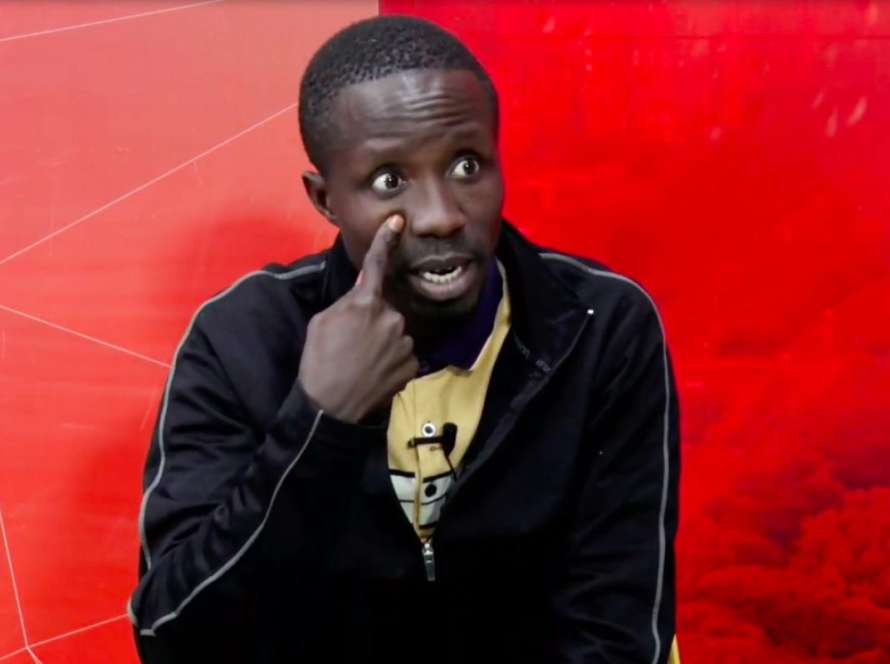


Ghana’s Bureau of National Investigations (BNI) on May 12, 2026, released David Essendoh, the Agona West constituency organiser of the opposition New Patriotic Party (NPP), a day after armed security operatives arrested him over a Facebook post about intermittent power outages.
Essendoh, popularly known as “Sam Toys,” was picked up on the evening of May 11, 2026, at Agona Swedru in the Central Region by approximately ten armed, masked officials believed to be from the BNI and National Security. The arrest, which eyewitnesses described as a “Rambo-style” operation, followed a social media post in which Essendoh claimed that “dumsor” — a widely used Ghanaian term for persistent power outages — had returned. The post included a photograph of a billboard featuring President John Dramani Mahama alongside the words “dumsor is back.”
The arrest was linked to an investigation under Section 208(1) of the Criminal Offences Act, 1960 (Act 29), which criminalises the publication of statements “likely to cause fear and alarm to the public.” The provision, a colonial-era relic dating to 1893, has been widely criticised by legal scholars, press freedom organisations and civil society groups as vague, disproportionate and incompatible with constitutional protections on free expression under Article 21(1)(a) of Ghana’s 1992 Constitution.
Days before the arrest, Essendoh had received a message from the Ghana Police Service’s Criminal Investigations Department (CID), directing him to report to the Special Investigations Unit in Accra. The message stated he was being investigated in connection with the publication of false news on April 24, 2026, and warned that failure to present himself by April 30 would result in an arrest warrant.
Essendoh’s lawyer, Enoch Afoakwa, contacted the CID and indicated he would bring his client in to honour the invitation. Before he could do so, security personnel arrested Essendoh. The NPP said Essendoh was neither informed he was under arrest nor told the charges against him, and was instead taken directly to Accra.
For several hours after the arrest, neither the party, Essendoh’s family nor his lawyers could establish his whereabouts. He was eventually traced to BNI offices at Kawukudi in Accra, where his caution statement was taken in the presence of his lawyer.
Speaking on Asaase Radio on May 13, Afoakwa questioned the legal basis for the arrest. “What makes the statement false? It does not meet the threshold for false publication,” he argued, maintaining that his client’s remarks were made as a citizen expressing concern over governance issues. He described the manner of the arrest as “high-handedness” that should not occur in a democratic society.
Essendoh was subsequently granted inquiry bail and is expected to report to the BNI as investigations continue.
At a press conference, NPP National Organiser Henry Nana Boakye accused the government of criminalising free speech.
“All is signaling one thing: that democracy is under threat in Ghana. Democracy is under serious suppression. This wanton criminalization of free speech is becoming very excessive in Ghana,” he said.
Essendoh’s arrest forms part of a broader pattern. The NPP’s Bono Regional Chairman, Kwame Baffoe, also known as Abronye DC, was remanded into BNI custody on May 13, 2026, on charges of offensive conduct and false publication under Sections 207 and 208 of the Criminal Offences Act after allegedly making derogatory remarks about a circuit court judge in an online video.
An Accra Circuit Court initially denied him bail, but the Accra High Court granted bail on May 21 in the sum of GH₵100,000 (approximately US$9,300) with two sureties. The party’s Sunyani East constituency communications officer, Abubakar Yakubu, also known as Baba Amando, faces similar charges.
On May 21, 2026, a citizen filed a constitutional challenge at the Supreme Court seeking to strike down Section 208(1) of the Criminal Offences Act and related provisions of the Electronic Communications Act, arguing they violate fundamental freedoms guaranteed under the 1992 Constitution.
The Media Foundation for West Africa (MFWA) is concerned by the increasing use of false publication laws to criminalise free expression in Ghana. Arresting citizens over social media commentary about power outages, a matter of legitimate public concern, raises serious questions about proportionality, due process and the state’s commitment to the democratic freedoms on which Ghana’s reputation rests.
The MFWA calls on the government to repeal Section 208 of the Criminal Offences Act and to ensure that security agencies do not weaponise criminal law provisions to suppress legitimate political speech and public discourse. Ghana abolished criminal libel in 2001; the continued application of adjacent provisions to punish commentary and criticism risks reversing decades of democratic progress on press freedom and free expression.