


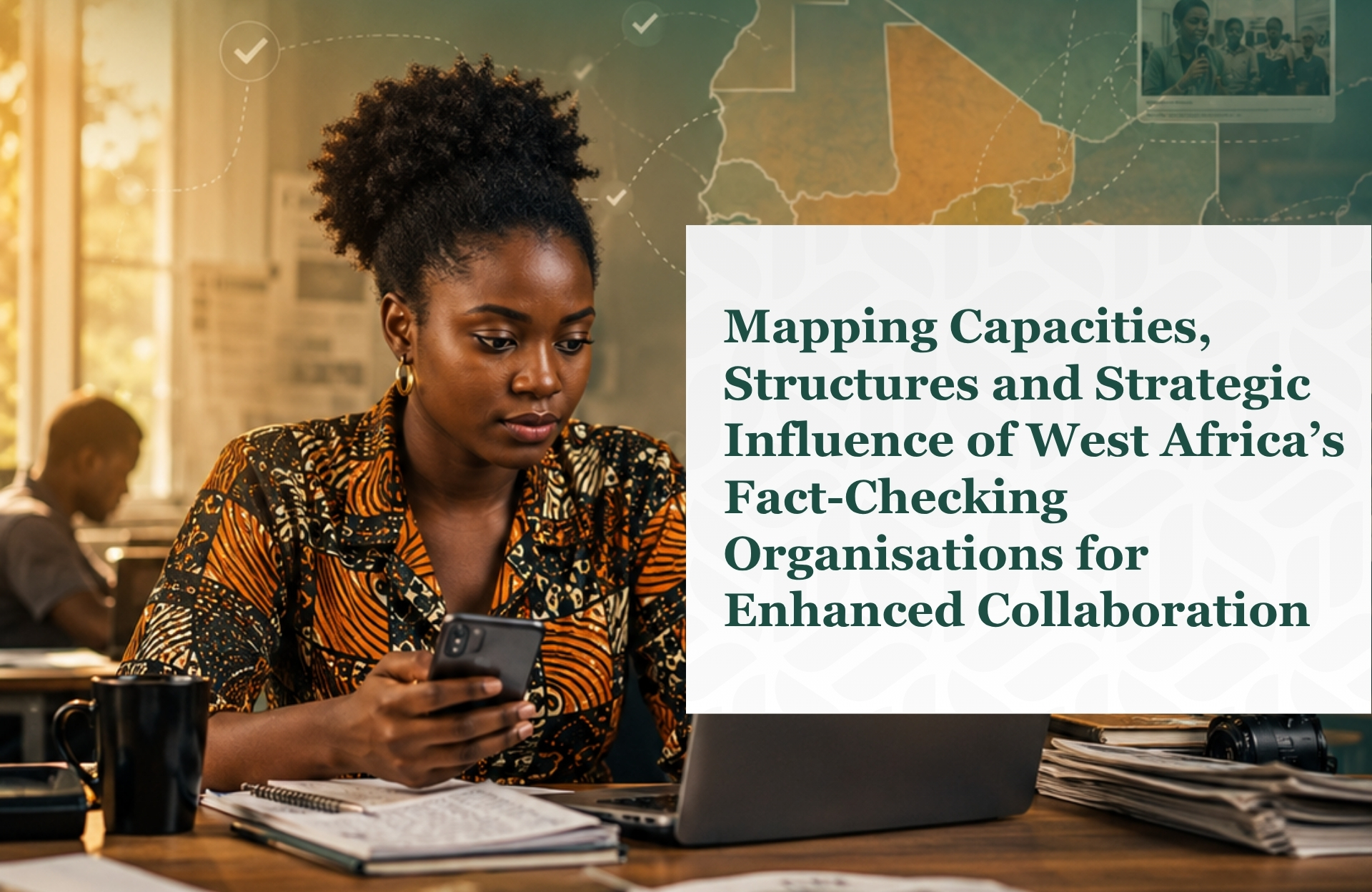
This study provides a comprehensive mapping of the capacities, structures, and strategic influence of fact-checking organisations (FCOs) within the West African information ecosystem.
Recognising the critical role that credible fact-checking plays in safeguarding information integrity amidst growing digital threats, the study aims to inform targeted strategies to enhance regional collaboration and resilience against misinformation and disinformation.
Key findings revealed that, despite the increasing presence of individual fact-checking initiatives, there remains a significant gap at the regional level, notably the absence of a dedicated regional framework for collaboration among FCOs to counter digital threats.
Furthermore, most existing FCOs operate with limited or inconsistent funding, which constrains their operational capacities and sustainability. Moreover, the organisational models and governance structures of the FCOs vary, leading to operational gaps and limited coordination across borders, languages, and media platforms.
The analysis discovered that the operational scope of West African FCOs covers multiple countries, diverse linguistic contexts, and a range of media platforms. This amplifies their strategic role in shaping public knowledge and countering digital harms. However, their collective impact remains constrained by inadequate formal networks, limited funding, limited resource sharing, and strategic alignment.
Understanding how the FCOs operate, coordinate, and influence public discourse is essential for developing sustainable and scalable strategies to combat digital threats. Strengthening their capacities, fostering regional cooperation, and integrating their efforts into national and regional policy frameworks are vital for addressing these threats, promoting social cohesion, and safeguarding democratic values.
Based on these insights, the study recommends the establishment of a formal regional network of FCOs to coordinate and counter digital threats. The network should align with the Vision 2050 of the Economic Community of West Africa (ECOWAS), and other regional initiatives such as the memorandum of understanding (MoU) between the ECOWAS and the Media Foundation for West Africa (MFWA). Such a regional framework for cooperation would enable resource sharing, joint capacity building, and coordinated responses to information crises.
Promoting media and information literacy and advocacy is essential to empowering citizens, and reinforcing the integrity of the information ecosystem. Therefore, strengthening the collective operational, strategic, and advocacy capacities of West African FCOs will contribute significantly to information integrity and governance, resilient democracies, social stability, and informed citizenry across the region.
Download and read the full report below.
Loading Viewer...


