


Mali’s media regulator has ordered the immediate suspension of the Saudi-owned television channel Al Arabiya, pulling it from all licensed broadcast packages in the country over a news report about the security situation in the northern Kidal region. The move deepens an established pattern of restrictions on international media by the military-led government in Bamako.
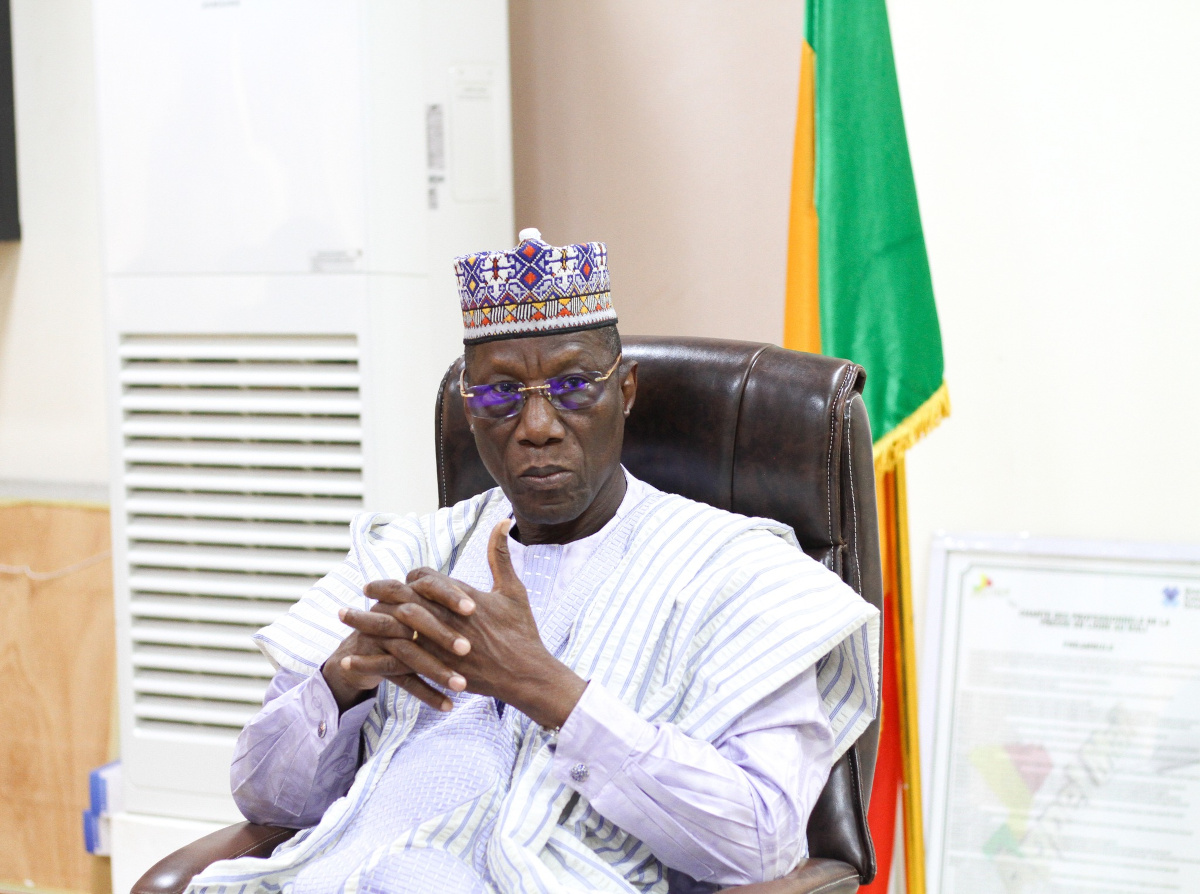
The decision, issued on May 19, 2026, by the President of the High Authority for Communication (HAC), Gaoussou Coulibaly, suspends the channel’s broadcast “until further notice.” Al Arabiya is now inaccessible to Malian viewers. Its sister channel, Al Hadath, is also covered by the order.
The suspension follows a report broadcast on May 8, 2026, by Al Arabiya and also aired by Al Hadath. The report stated that the Amachach camp (a strategic military base near Tessalit, in Mali’s far northeast near the Algerian border) had fallen under the control of the Azawad Liberation Front (FLA), a northern Malian armed group, and the Group for the Support of Islam and Muslims (GSIM), a jihadist organisation linked to al-Qaeda. It attributed this to the withdrawal of the Malian Armed Forces (FAMa) and their Russian allies from the area.
The HAC said the report contained several breaches of professional journalistic standards and Malian law. It accused Al Arabiya of presenting unverified claims as established facts, without citing official Malian sources or seeking comment from the relevant authorities.
The regulator further argued that the coverage portrayed the armed groups as militarily superior to the FAMa, which it said amounted to an attack on the honour of the national armed forces. It also accused Al Arabiya of broadcasting images of identifiable prisoners of war, which it said violated international humanitarian law on the treatment and protection of persons deprived of liberty during armed conflict.
The Malian authorities also characterised the report as constituting an apology for terrorism, arguing that it gave a platform to armed groups and potentially lent them legitimacy.
In support of its decision, the HAC cited Article 4 of Law No. 2012-019 of March 12, 2012, on private audiovisual media services, which prohibits the use of broadcast media to incite hatred or violence, or to undermine territorial integrity, national unity, or state security. The regulator did not explain how the specific content of the report met the legal threshold for these prohibitions.
The suspension followed a government statement issued on May 16, 2026, in which the Malian authorities publicly condemned the report, describing the information broadcast by Al Arabiya as “false” and contrary to national sovereignty.
The Ministry of Foreign Affairs and International Cooperation said it had formally protested to the Kingdom of Saudi Arabia. In its statement, the ministry accused Ibrahim Moustapha, an Al Arabiya correspondent, of entering Malian territory illegally and of having ties with armed groups operating in the north. Bamako characterised the journalist’s presence as “a blatant violation of national sovereignty” and alleged “complicity with terrorist groups.” At the time of publication, neither Al Arabiya nor the Saudi government had issued a public response to the Malian authorities’ accusations.
The suspension forms part of a broader pattern of restrictions on international media in Mali since the military seized power in 2020. It follows the suspension of TF1 and LCI in November 2025, TV5Monde in September 2024 and again in May 2025, France 24 in February 2024, and France 24 and RFI in 2022. In each case, the authorities accused the outlets of broadcasting information deemed false, biased, or likely to undermine national security. Al Arabiya is the first non-French international broadcaster to be targeted.
The Media Foundation for West Africa (MFWA) is concerned by this latest restriction on an international media organisation. The suspension of Al Arabiya, imposed indefinitely and without any apparent opportunity for the channel to be heard, raises serious questions about due process and the proportionality of the HAC’s intervention.
Whilst recognising the right of states to protect their national security and territorial integrity, the MFWA reiterates that any restriction on freedom of expression and press freedom must comply with the principles of legality, necessity, and proportionality as enshrined in international human rights law, including Article 19 of the International Covenant on Civil and Political Rights.
The MFWA calls on the Malian authorities to ensure that regulatory mechanisms conform to international standards on freedom of expression and to uphold the public’s right of access to diverse and independent information on matters of public interest, including those pertaining to the security situation in the country.


