
Just one week after World Press Freedom Day 2026, Niger’s authorities have intensified restrictions on the media landscape with the suspension of nine French international media outlets across the country.
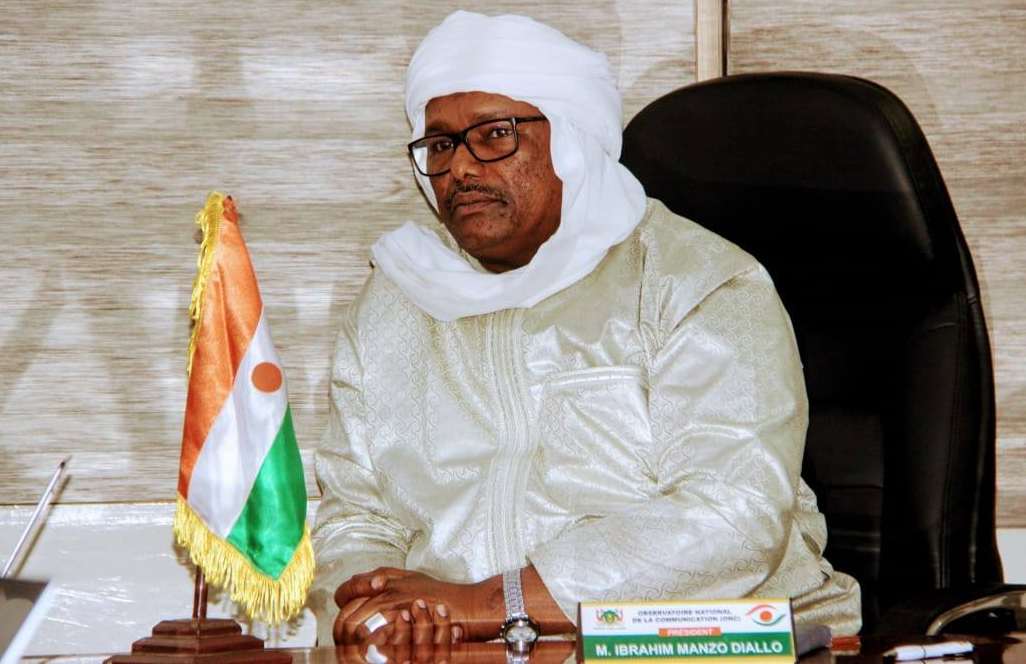
On May 8, 2026, the National Communications Observatory (ONC), Niger’s media regulatory authority, announced the nationwide suspension in a statement delivered by its president, Ibrahim Manzo Diallo, on the state broadcaster Télé Sahel.
The affected outlets are France 24, Radio France Internationale (RFI), France Afrique Media, LSI Africa, Agence France-Presse (AFP), TV5 Monde, TF1 Info, Jeune Afrique, and Mediapart. Together, they constitute a substantial segment of the French-language international media accessible to audiences in Niger.
The ONC justified the decision on the grounds that the outlets had disseminated content “likely to seriously undermine public order, national unity, social cohesion, and the stability of the Republic’s institutions.” Yet the regulator did not cite any specific reports, broadcasts, or publications to substantiate these allegations.
The absence of identifiable evidence or clearly articulated violations raises serious concerns about transparency, due process, and the proportionality of the sanctions imposed. Without publicly disclosing the contested content or providing the affected outlets with an opportunity to respond, the decision appears arbitrary and inconsistent with international standards governing freedom of expression and media regulation.
This latest measure is not an isolated development. On August 3, 2023 amid serial press freedom violations in Niger, two weeks after the coup, the junta suspended two French media channels, France 24 and RFI from broadcasting in the country. On December 12, 2024, Niger’s Minister of Communication, Raliou Sidi Mohamed, ordered the suspension of the BBC following its reporting on jihadist attacks.
The recent suspension of the nine French-language media outlets reflects a broader trend across the Sahel, where authorities in Niger, Mali and Burkina-Faso, have increasingly targeted foreign, particularly French-language, media organisations through suspensions, restrictions, and censorship measures.
On World Press Freedom Day 2026, the Media Foundation for West Africa (MFWA) warned about the rapid decline of media freedom in the region and the growing closure of civic and information spaces.
The media environment in Niger has continued to deteriorate under mounting political and regulatory pressure. Journalists and media practitioners increasingly operate in a climate marked by intimidation, threats, arbitrary arrests, and growing self-censorship. Several media professionals have reportedly fled the country over fears for their safety.
These concerns are reflected in the 2026 World Press Freedom Index, in which Niger fell 37 places to rank 120th out of 180 countries. The sharp decline highlights the extent of the country’s deteriorating press freedom environment and growing hostility toward independent journalism.
The Media Foundation for West Africa (MFWA) condemns the suspension of the nine media outlets as a disproportionate and opaque restriction on press freedom and the public’s right to information.
The MFWA calls on the Nigerien authorities to immediately reverse the suspensions, ensure that all regulatory actions are based on clear, transparent, and verifiable legal grounds, and uphold an environment in which journalists and media organisations can operate freely, independently, and safely without fear of censorship or reprisal.