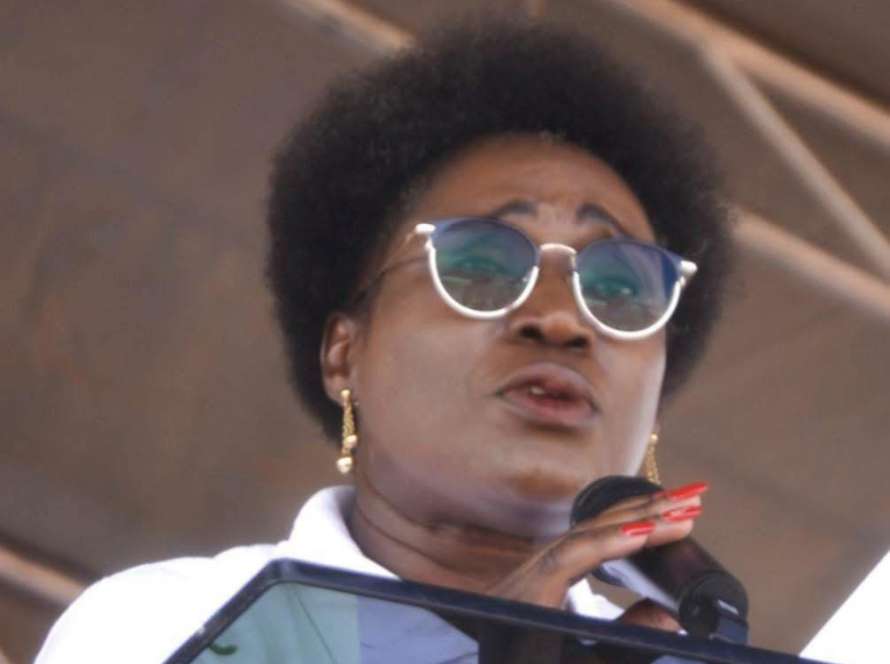


On April 14, 2026, Zainab Sheriff, Chairperson of the Wi Duti civic movement and a flagbearer aspirant of the opposition All People’s Congress (APC), was sentenced to four years and two months’ imprisonment on two counts, incitement and threatening language, under the Public Order Act 1965. The sentences, are to run concurrently, meaning she will serve a total of four years in prison.
Sheriff, who is also a model and a musician, was declared wanted on February 13, 2026, and arrested on February 20 over remarks she allegedly made during an APC gathering in Freetown on January 31, 2026 criticising election rigging. Authorities argued that her statements were capable of inciting public disorder.
Sheriff pleaded not guilty but remained in detention at the Pademba Road Female Correctional Facility throughout the trial, following eight separate bail denials.
In a related development, Lasana Dumbaya, Secretary-General of the APC, was detained on February 4 after delivering a public address during a gathering of APC supporters at the Atouga Stadium in Freetown on January 31, 2026. In his speech, he reiterated the party’s longstanding concerns about the conduct and outcome of the 2023 general elections, particularly the failure to publish disaggregated polling-station results.
Dumbuya maintained that his remarks were intended to highlight issues of transparency and accountability within the electoral process, rather than to incite unrest or undermine national stability. However, the Criminal Investigations Department (CID) of the Sierra Leone Police summoned Dumbuya for questioning over remarks he made in the speech.
He reported to the CID alongside other senior party officials but was detained after several hours of interrogation. He spent the night in custody and was released the following day, February 5, 2026. His release came after lawmakers from the All People’s Congress (APC), announced they were suspending their participation in parliamentary proceedings and demanded the unconditional release of their party’s secretary-general.
Sheriff first appeared in court on February 23, 2026, before Magistrate Mustapha Brima Jah, when she was formally charged. The prosecution, led by Yusif Isaac Sesay, requested an adjournment to review the case file. A bail application by the defence, on the basis that the offences were bailable, was denied, and the matter was adjourned to February 26.
At her second appearance, the defence renewed the bail request, citing her role as a mother and her contributions to society, but the magistrate again refused bail. Subsequent hearings on March 5 and March 11 followed the same pattern, with bail applications rejected.
On March 18, Sheriff’s legal team applied to the High Court for bail while proceedings continued in the Magistrates’ Court, arguing that the offences were minor, that she had spent a prolonged period in detention, and that she was not a flight risk. That same day, at her fifth appearance before the magistrate, bail was again denied and the case adjourned to March 25.
At the sixth hearing on March 25, bail was refused once more and the matter adjourned to March 31. During that session, lead defence counsel RSV Wright and co-counsel Basita Michael exited the courtroom for undisclosed reasons.
At the seventh hearing on March 31, the court dismissed the defence’s no-case submission, finding that the prosecution had established a prima facie case. Sheriff was called upon to open her defence, while bail remained denied, and the matter was adjourned to April 7.
Meanwhile, on April 2, the High Court, presided over by Judge Mark Ngegba, also denied her bail application, with the prosecution arguing that she had previously been declared wanted and might abscond. The judge held that the case was close to judgment and it was not appropriate to grant bail at that stage.
At the eighth hearing on April 7, proceedings were tense as defence counsel Roland Wright clashed with the magistrate while attempting to revisit earlier arguments. The court ruled that those issues had already been addressed and adjourned the matter to April 14 for judgment. On that date, the court found Sheriff guilty on both counts and sentenced her to four years and two months’ imprisonment.
The APC initially distanced itself from Sheriff’s remarks, stating she spoke in her personal capacity. Following her conviction, however, the party criticised the sentence as politically motivated and raised concerns about the fairness of the judicial process. Gender activist Naasu Fofanah also called on President Julius Maada Bio to grant a pardon, stating that civil society groups do not wish to see Sheriff imprisoned.
The Media Foundation for West Africa (MFWA) is concerned about the arrest, repeated bail denials, and conviction of Sheriff. The MFWA notes that the Public Order Act 1965 has long been criticised by civil society groups, including Amnesty International, for being outdated and open to abuse, particularly in its provisions on incitement and threatening language.
While acknowledging that the judiciary operated within existing laws, MFWA warns that the case may have a chilling effect on political speech and democratic participation, and calls for legal reform, fairer bail practices, and stronger protections for freedom of expression.