
Ghana’s tax effort is low (about 12–13% between the period 2000 and 2023) compared to peer countries both in the subregion and among lower middle-income group. Existing tax gap analyses show a substantial gap which means the country is not fully exploring its tax potential. At the same time, illicit financial flows (IFFs) are draining the country’s resources.
Preliminary estimates indicate that between 2000 and 2012, Ghana lost over US$8 billion from trade-related IFFs in terms of trade between Ghana, the United States and the European Union (ECAUNCTAD, 2023). This amount is close to three times the total amount Ghana would receive under the current International Monetary Fund Extended Credit Facility programme.
Unrealised revenue through tax gap and revenue leakage through IFFs have repercussions on growth and development. Unfortunately, low-income groups and women would be disproportionately affected given that they rely on public provision of social services the most. This further has implications on inequality.
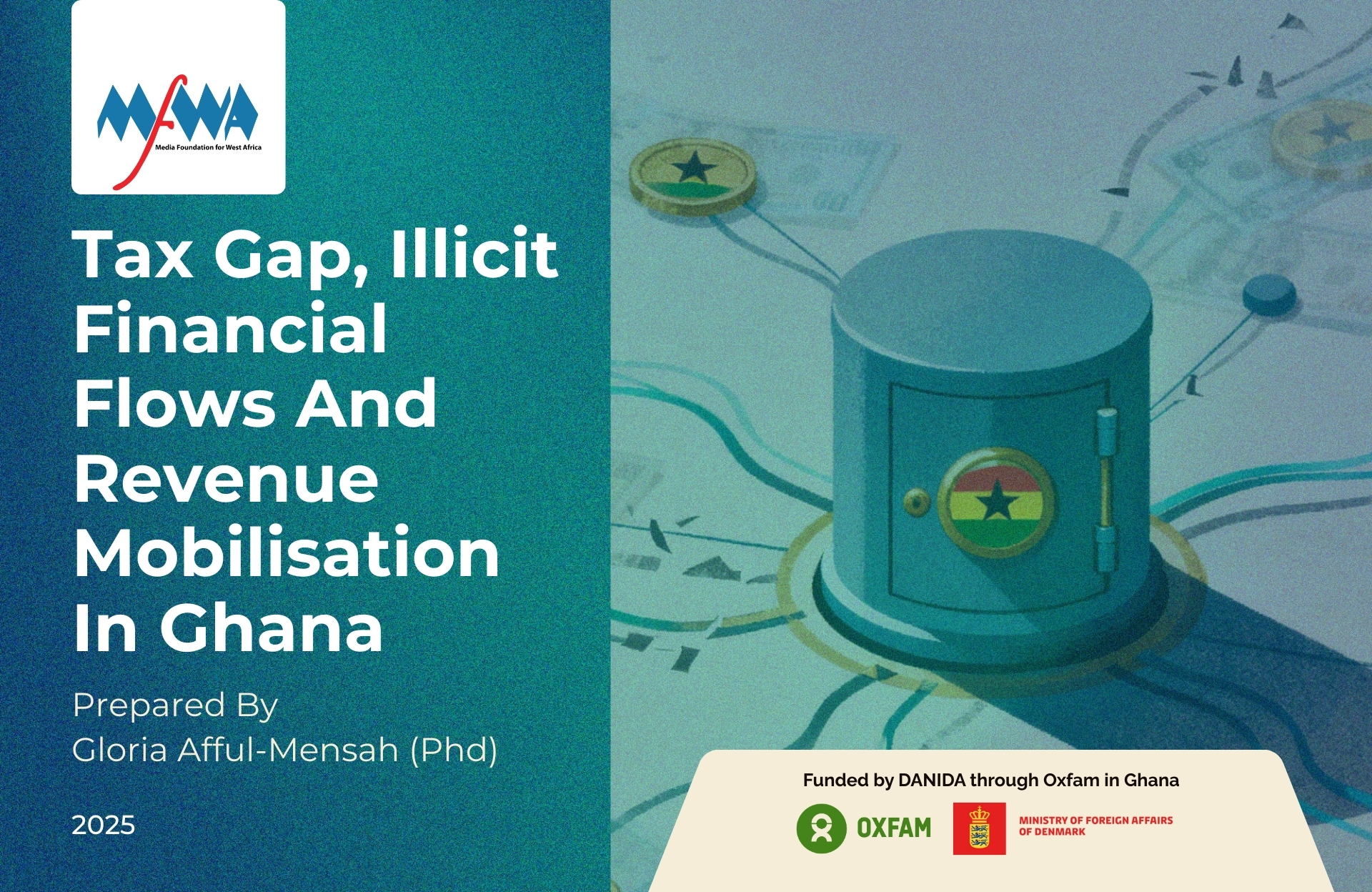
The Medium-Term Revenue Strategy (2024 – 2027) targets 18–20 percent tax-to-GDP ratio. Significantly reducing the tax gap and curbing IFFs seem to the best strategies given that the mood in the country show less appetite for new taxes. The current study provides insights into Ghana’s tax gap and IFFs and makes some recommendations on how to improve domestic revenue mobilisation.
The study forms part of activities under the MFWA project titled “Strategic Partnership Initiative for Ghana and West Africa”. The project is being funded by DANIDA through Oxfam in Ghana.
Click here to access the report.