


The Sierra Leone Association of Journalists (SLAJ), the Sierra Leone country partner of the Media Foundation for West Africa (MFWA), has advocated stronger constitutional protections for press freedom in the country.
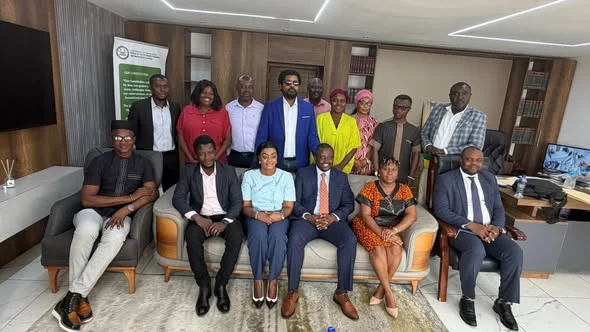
On 26 February 2026, SLAJ, together with other media stakeholders, engaged Attorney General and Minister of Justice, Alpha Sesay, on proposals to introduce a stand-alone constitutional chapter dedicated to press freedom, freedom of expression and access to information. The engagement forms part of ongoing consultations for a review of the Constitution of Sierra Leone.
SLAJ has proposed the creation of a new chapter (envisaged as Chapter 12) in the Constitution that would explicitly guarantee these rights and secure stronger protections for media rights.
The association first submitted the proposal in 2016 to the Justice Cowan Constitutional Review Committee, but it was not included in the Government’s subsequent White Paper. SLAJ has since continued advocacy for more robust constitutional protections for media freedom.
Speaking on behalf of media stakeholders, SLAJ President Alhaji Manika Kamara stressed Sierra Leoneans deserve clear constitutional guarantees protecting freedom of expression, especially as Parliament debates the current Constitutional Amendment Bill.
He noted that the absence of detailed constitutional protections has sometimes created an atmosphere where citizens feel reluctant to express independent views on national issues for fear of political backlash. Kamara cited the Constitution of Kenya as an example of a legal framework that provides detailed and enforceable safeguards for fundamental rights and freedoms.
Responding to the proposal, Attorney General Sesay described the engagement as constructive and acknowledged the important role of journalists in the constitutional reform process.
“Journalists have accompanied Sierra Leone’s constitutional review process and remain a crucial part of this national exercise,” he said.
Sesay also referenced earlier reform initiatives, including recommendations from the Truth and Reconciliation Commission and the Lomé Peace Agreement, both of which called for constitutional reforms after the country’s civil war.
He noted that past efforts included the Peter Tucker Committee established under former President Ahmed Tejan Kabbah and the Cowan Committee established during the administration of former President Ernest Bai Koroma.
According to the Attorney General, the constitutional review process is expected to continue until the end of 2026. Proposed reforms include strengthening the Bill of Rights under Chapter III of the 1991 Constitution and introducing new provisions on citizenship, local governance, land, and environmental management.
He added that the Constitutional Amendment Bill currently before Parliament focuses largely on electoral reforms ahead of the next general elections. Sesay said his office would work with SLAJ to carefully draft provisions if the proposal for a stand-alone chapter on press freedom is adopted.
The meeting was attended by members of the SLAJ executive, former SLAJ presidents Ahmed Sahid Nasralla and Umaru Fofana, as well as representatives from media organisations; including the Independent Media Commission, the Independent Radio Network, and the Sierra Leone Broadcasters Association.
Civil society representatives, including Abdul M. Fatoma of the Campaign for Human Rights and Development International, also participated. Media stakeholders said they will continue to engage in the constitutional reform process and advocate for stronger legal protections for freedom of expression and press freedom in the country.


