


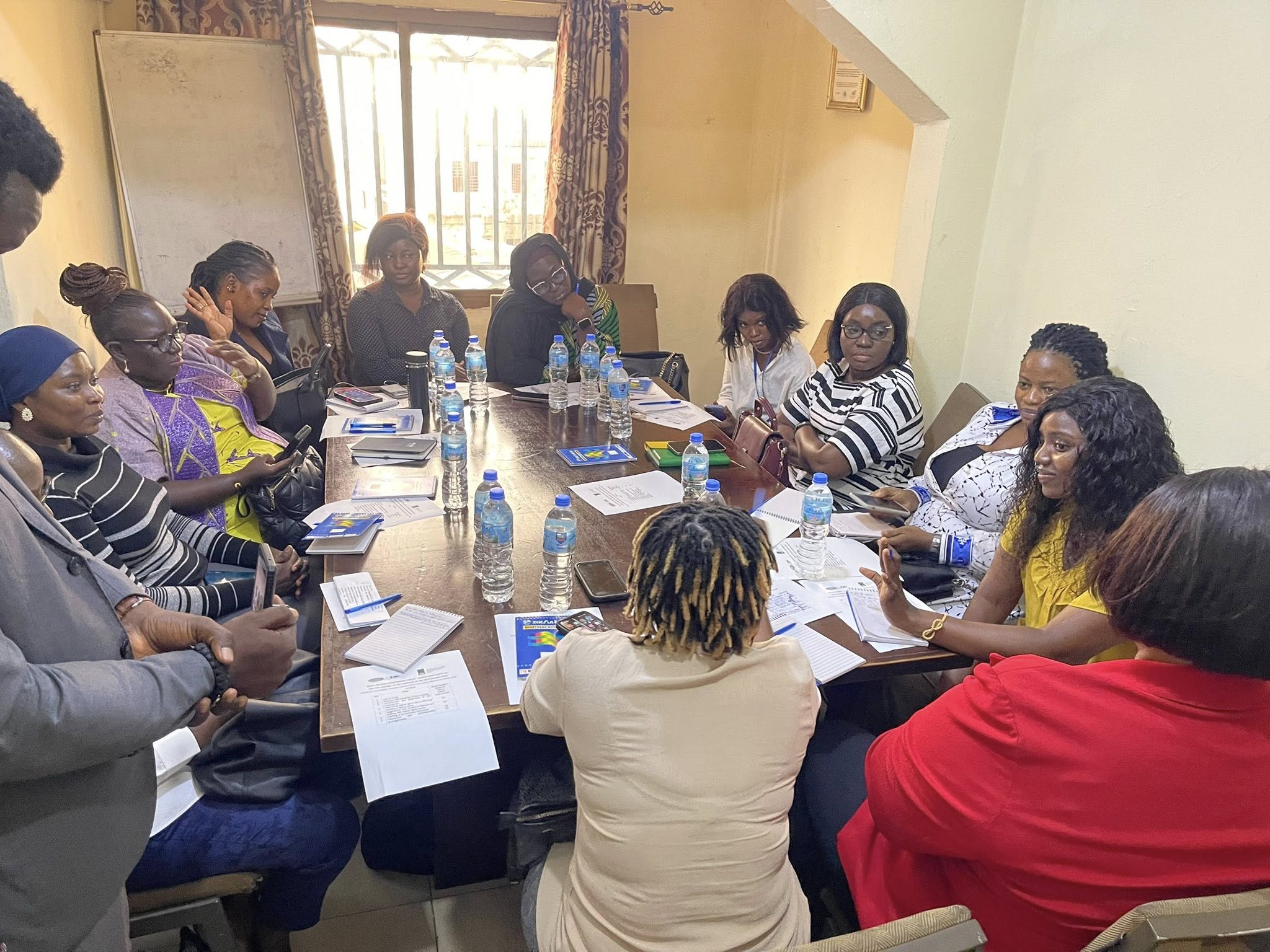
A meeting convened by Media Foundation for West Africa’s (MFWA) country partner in Sierra Leone, the Media Reform Coordinating Group (MRCG), has called on authorities to expedite the enactment of a data protection law that also specifically addresses women’s digital rights abuses.
The advocacy meeting, held in Freetown on 27th January, 2026 with funding support from the Embassy of the Kingdom of the Netherlands in Ghana, brought together 15 media and free expression rights activists representing the broad spectrum of stakeholder organisations in Sierra Leone.
The event forms part of MRCG’s ongoing project, “Enhancing Press Freedom, Women’s Rights, and Accountability Governance in Sierra Leone.”
Participants included representatives from the Sierra Leone Association of Journalists (SLAJ), Sierra Leone Broadcasting Corporation (SLBC), Sierra Leone Reporters Union (SLRU), Center for Accountability and the Rule of Law (CARL), Sierra Leone Association of Women in Journalism (SLAWIJ), Sierra Leone Broadcasters Association (SiLBA), Women in the Media Sierra Leone (WIMSAL), and the Faculty of Communication Media and Information Studies (FCMIS) of the University of Sierra Leone (USL).
The initiative builds on years of collaboration between MRCG and MFWA to strengthen online rights protections for women and promote press freedom.
Participants identified a range of challenges requiring urgent legislative attention and redress. They noted, in particular, the mental and emotional distress that women continue to experience due to the persistence of gendered online abuse; including harassment, cyberbullying, online intimidation and privacy violations— particularly the non-consensual sharing of intimate images.
Participants also cited low digital literacy levels, cultural and religious pressures that shape women’s online participation, a widening digital gender divide that limits their access to technology and digital resources.
Although cybersecurity laws exist, participants noted that they are not sufficiently specific to address gender-based online violence. They pointed to a “trust deficit” in enforcement mechanisms and limited confidence in the effective implementation of existing legal frameworks. In professional settings, current laws were considered to offer inadequate protection against unauthorized recordings and digital exploitation.
To address these gaps, participants called for accessible reporting mechanisms for digital rights violations, expanded digital education for women and girls, and reforms to, and effective enforcement of, existing laws.
