
Introduction
Ghana actively engaged in the World Summit on the information Society (WSIS)+20 process; including involvements in the Africa Regional Review Meeting on WSIS+20 held in Benin in May 2025. At that meeting, Ghana, along with other participating countries, reaffirmed commitments to implementing the WSIS Action Lines and Targets and to fully engage in WSIS reviews through continuous evaluation, policy refinement, and the sharing of best practices, ensuring a common digital agenda that “remains adaptive, transparent, and result-driven.”
The country sustained its commitment to the WSIS+20 process through active participation in key engagements at the global level, including the WSIS+20 High-Level Events in Geneva in July 2025 and New York in December 2025. At the Geneva meeting, Ghana delivered statements and actively participated – including moderating – in sessions on the implementation of the WSIS Action Lines.
In his statement, the Minister for Communication, Digital Technology and Innovations, Sam George, highlighted ways in which the country is leveraging the affordances of public-private partnerships to drive digital-sector growth. He urged other developing countries to similarly advance multi-stakeholder governance in accordance with with the WSIS Action Line
Country’s Position on Key Issues
Ghana’s position throughout the WSIS+20 review was guided by a clear set of priorities and a rights-respecting approach to digital development. As a member of the Group of 77 + China, Ghana negotiated collectively while also actively advancing its national priorities.
Development and Digital Transformation
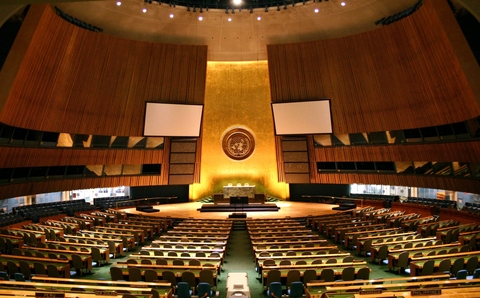
Ghana recognises the WSIS framework as central to digital transformation and technology-driven development. In a statement delivered at the United Nations General Assembly High-Level Meeting on the WSIS+20 Review in New York on December 16, 2025, the Minister reaffirmed Ghana’s commitment to building a people-centred, inclusive, and development-oriented digital society anchored in the WSIS Action Lines. He enumerated key policies and investments, including expanded fibre infrastructure, nationwide 4G coverage, and rural telephony initiatives aimed at achieving universal access and extending meaningful connectivity to unserved communities as a foundation for sustainable development.
The Minister also highlighted Ghana’s progress in digital public infrastructure (DPI), citing platforms such as the Ghana.gov, the Ghana Electronic Procurement System, the National Health Information Exchange, and the Ghana Health Information Management System. This focus on DPI is consistent with Ghana’s long-standing position, as reflected in its country report, and remains an area for continued engagement during the implementation phase of WSIS+20 outcomes.
In global forums, including the AI for Good Global Summit in July 2025, Ghana emphasised the imperative of African data sovereignty and inclusive artificial intelligence. The country highlighted efforts to develop large language models in local languages such as Twi, Ga, and Nzema to address linguistic barriers to AI adoption. This approach aligns with the position advanced by the G77 + China during the review, which called for AI applications that promote cultural and linguistic diversity and support locally generated data for national and community development.
Human Rights
The government of Ghana, alongside civil society, advocated for stronger human rights commitments in the WSIS+20 process. This should include the protection of human rights online, the safeguarding of freedom of expression, and the development of frameworks to address misinformation and disinformation.
Internet Governance
Ghana supports a multi-stakeholder model of internet governance that promotes collaboration among government, civil society, the private sector, academia, and other stakeholders to develop inclusive, rights-based digital policies. This position was reaffirmed by the Minister at the WSIS+20 High-Level Review Meeting.
Review Modalities and Stakeholder Engagement
Ghana consistently expressed strong support for inclusive stakeholder participation in the WSIS+20 process. However, this support was not reflected at the national level, as non-governmental actors were not known to have been included Ghana’s delegations to global WSIS+20 convenings or discussions. Notably, the 10-member delegation to the WSIS+20 High-Level Meeting in Geneva in July 2025 was not known to have included any non-governmental actors.
Linkages between WSIS and the Global Digital Compact (GDC)
Ghana maintained a consistent position on the relationship between WSIS+20 and the Global Digital Compact, advocating for policy coherence and harmonization to avoid duplication and ensure coherent digital policy development. The country also strongly supported the continuation of the Internet Governance Forum (IGF), calling for a permanent mandate and emphasising that an inclusive, secure, and sustainable digital future depends on partnerships among governments, civil society, the private sector and development partners. This reflects Ghana’s position that a permanent IGF must be multi-stakeholder-led. As implementation of the WSIS+20 outcomes begins, it remains to be seen how Ghana will engage in efforts to strengthen the IGF under its permanent mandate.
Opportunities for Engagement
Civil society and public interest groups in Ghana actively engaged government officials involved in the WSIS+20 process, sharing priorities, evidence and analysis to help shape the country’s position. The Media Foundation for West Africa (MFWA) played a key role in these engagements, regularly briefing officials on positions taken by other states and advocating for alignments that advanced human rights and public interest outcomes.
The MFWA also engaged the global WSIS+20 process directly. Through the SWIUM project, the organisation met with the WSIS+20 Co-Facilitators at the Global Internet Governance Forum in Norway, participated in multiple WSIS+20-related sessions, and fed insights from these discussions back to national officials. The MFWA also contributed to the GDRC-WSIS process and supported cross-stakeholder statements calling for stronger human rights protections in the WSIS+20 outcome document.
At the regional level, the MFWA supported the mobilisation of stakeholders in Ghana to participate in the Africa Internet Governance Community Consultation on WSIS+20 held on September 25, 2025. The consultation examined the WSIS+20 zero draft, articulated Africa’s priorities, and explored pathways for meaningful stakeholder engagement in the global review process.
The MFWA also amplified awareness of the WSIS+20 process at the 2025 Forum for Internet Freedom in Africa (FIFAfrica), contributing to a dedicated session informed stakeholders, built support, and strengthened civil society engagement across the region.
Future Outlook
Ghana’s approach signals a strong commitment to effective implementation of the WSIS+20 outcomes. The country’s active interest and engagement to align the WSIS Action Lines with the Global Digital Compact and international human rights norms and standards suggest that the WSIS+20 outcome document will shape Ghana’s future digital policies and actions.