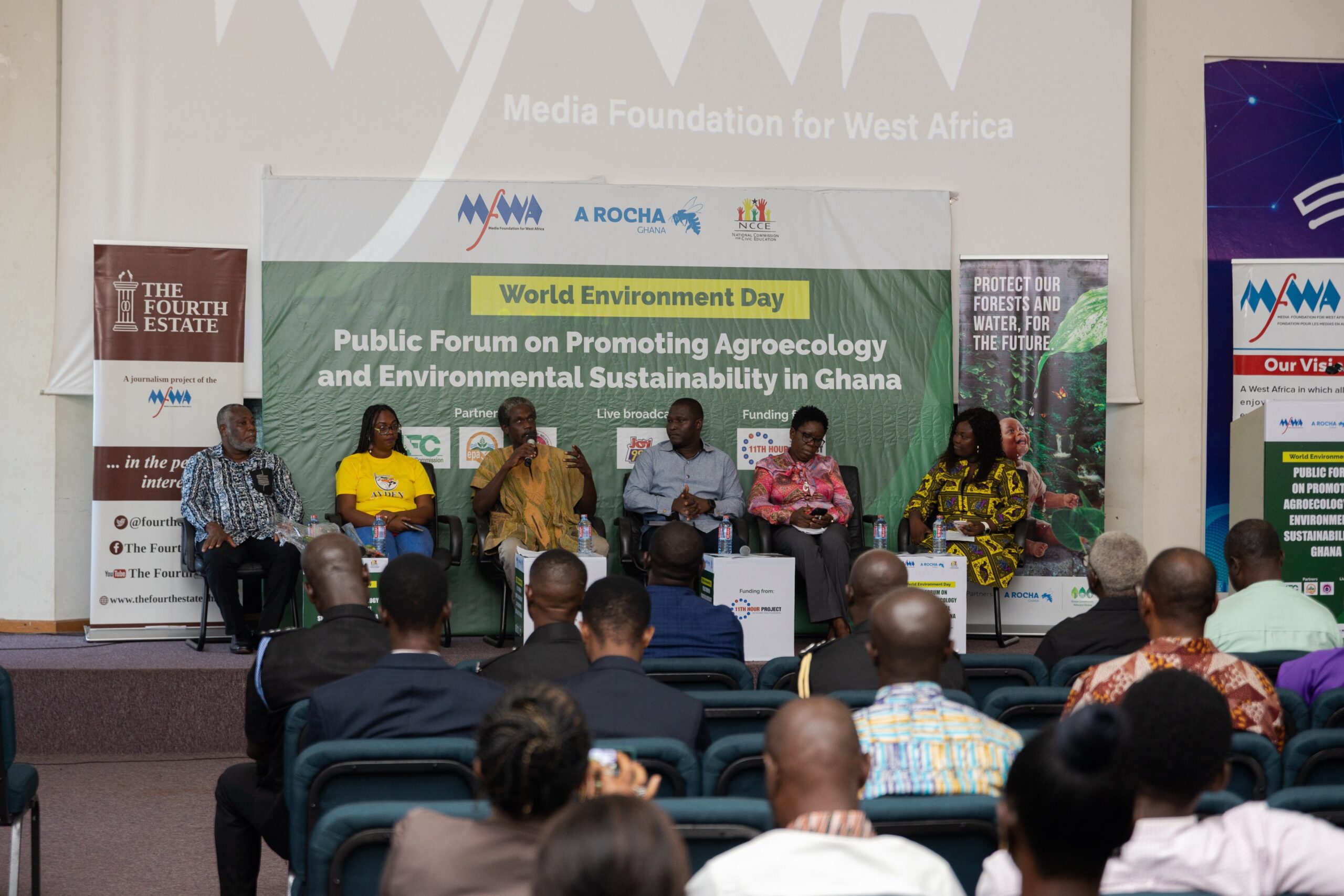


Stakeholders at a tax dialogue organised by the Media Foundation for West Africa (MFWA) have called for more intentional collaboration between the media and the Ghana Revenue Authority (GRA) to improve public education on Ghana’s tax gap and its implications for national development.
The dialogue, held in Accra on December 4, 2025, brought together researchers, tax experts, policymakers, civil society actors, and academics. Dubbed the Tax Dialogue on Strengthening Domestic Revenue Mobilisation in Ghana, the event formed part of MFWA’s Strategic Partnership Initiative for Ghana and West Africa Project, implemented with funding support from DANIDA through Oxfam in Ghana.
As part of the project, MFWA commissioned a study on gaps within Ghana’s tax system and their implications for revenue mobilisation. Key findings from the study were presented at the dialogue, alongside a documentary that provided a nuanced perspective on Ghana’s tax gap challenge.
Key findings from the tax gap study
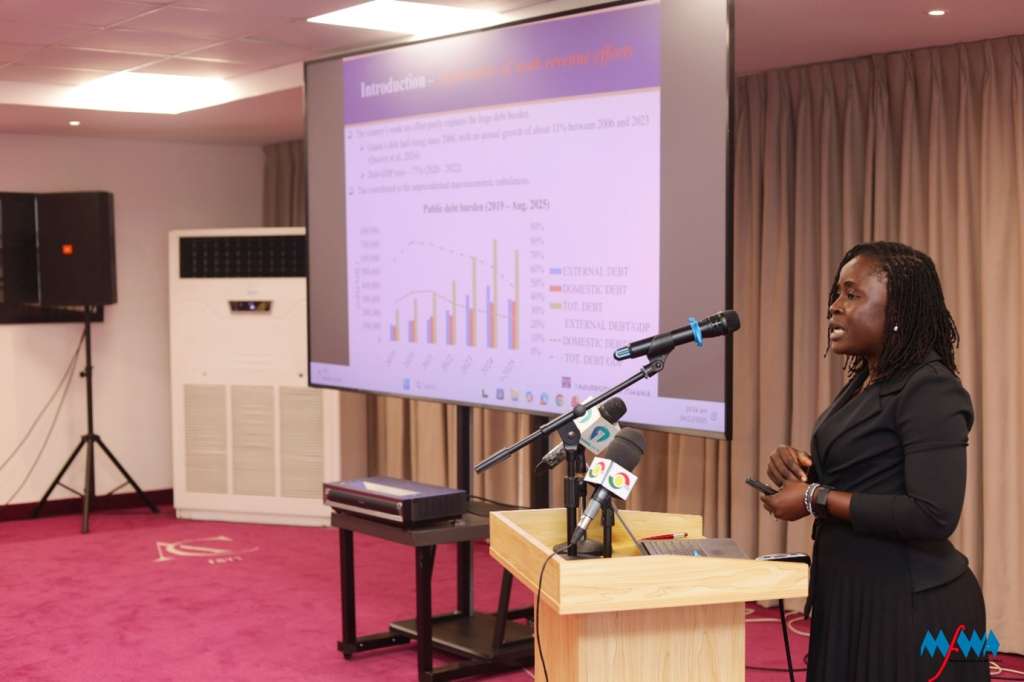
Presenting the study findings, Dr. Gloria Afful-Mensah, Senior Lecturer at the Department of Economics, University of Ghana, and Lead Consultant for the study, revealed that Ghana’s tax effort is the weakest among its lower-middle-income peers. “For example, between 2013 and 2023, Ghana’s tax revenue-to-GDP ratio averaged about 12%, compared to countries like Kenya, which recorded about 15%,” she noted.
Although Ghana recorded some improvement in tax effort in 2024 and 2025, Dr. Afful-Mensah stressed that performance remains well below the country’s medium-term revenue target of 18–20% for the 2024–2027 period.
Through presentations and panel discussions, participants identified weak tax education as a major driver of misconceptions around taxation and tax administration in Ghana. Discussions challenged several widely held beliefs, including the assumption that all forms of tax avoidance are legal. Participants noted that overly aggressive tax avoidance often constitutes illicit financial flows (IFFs). Another popular narrative, that Ghana’s informal sector is undertaxed was also debunked, with evidence showing that many informal sector operators are, in fact, overburdened with taxes.
The dialogue further revealed that Ghana’s fragmented and multi-layered tax administration system complicates compliance and creates opportunities for tax evasion, rather than improving efficiency. Similarly, claims that Ghana’s corporate sector is overtaxed were refuted, as the country’s corporate income tax rate remains among the lowest within its lower-middle-income peer group.
Participants also noted that while IFFs are gender-neutral in form, their impacts are gendered, disproportionately affecting women and vulnerable groups. Stakeholders concluded that tax authorities have underutilised the media’s power to inform and educate the public. Stronger collaboration between the media and the GRA, they argued, would demystify taxation, improve compliance, and support better-targeted tax policies.

Opening the dialogue, Abigail Larbi Odei, Manager of MFWA’s Media, Democracy and Good Governance Programme, expressed concern that Ghana’s persistent revenue gaps continue to limit investments in critical infrastructure and social services, particularly those benefiting vulnerable groups.
She noted that MFWA has responded to this challenge through innovative interventions over the past three years, with the tax dialogue marking a new frontier in the Foundation’s work.
“Today’s dialogue forms part of MFWA’s efforts, with support from DANIDA through Oxfam in Ghana, to promote a just society where citizens, especially women and youth, live in a more equal, accountable, and peaceful country that leaves no one behind,” she said. She added that MFWA had trained over 100 financial, business, and economic journalists on IFFs and Reserve-Based Lending (RBL), and had produced digital illustrations, videos, and infographics to demystify complex tax and financial issues for the public.
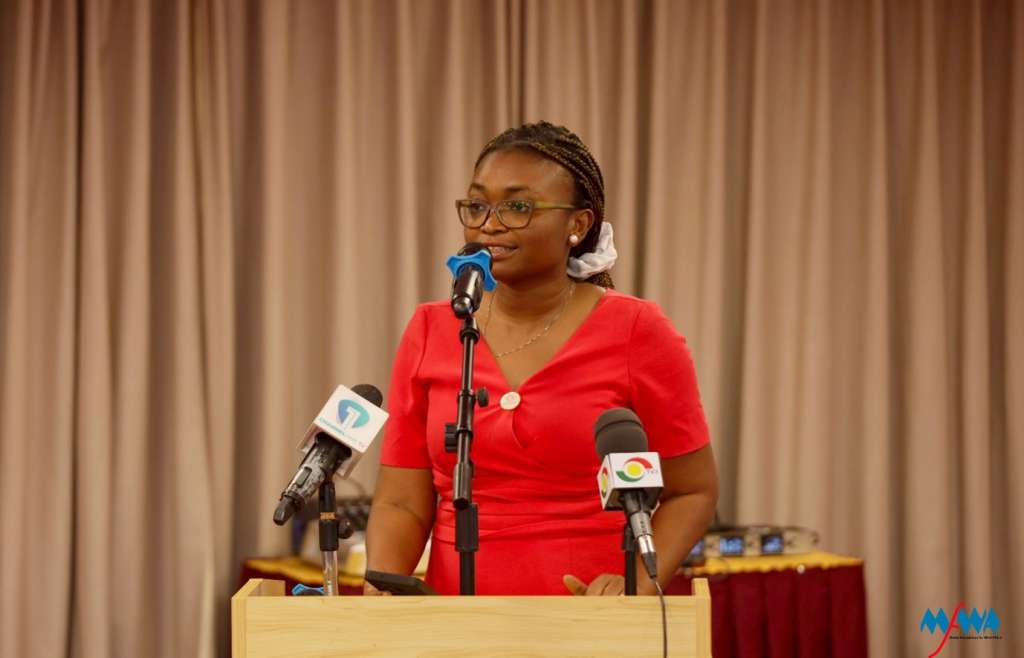
Dr. Angela Azumah Alu, Fiscal Policy Advisor at Oxfam in Ghana, welcomed the dialogue and reaffirmed Oxfam’s commitment to its longstanding partnership with MFWA. She expressed confidence that the discussions would generate practical recommendations to strengthen Ghana’s domestic revenue mobilisation. “We believe the conversations held here will lead to actionable recommendations that can improve our tax system as a country,” she said.
Panel discussion and recommendations
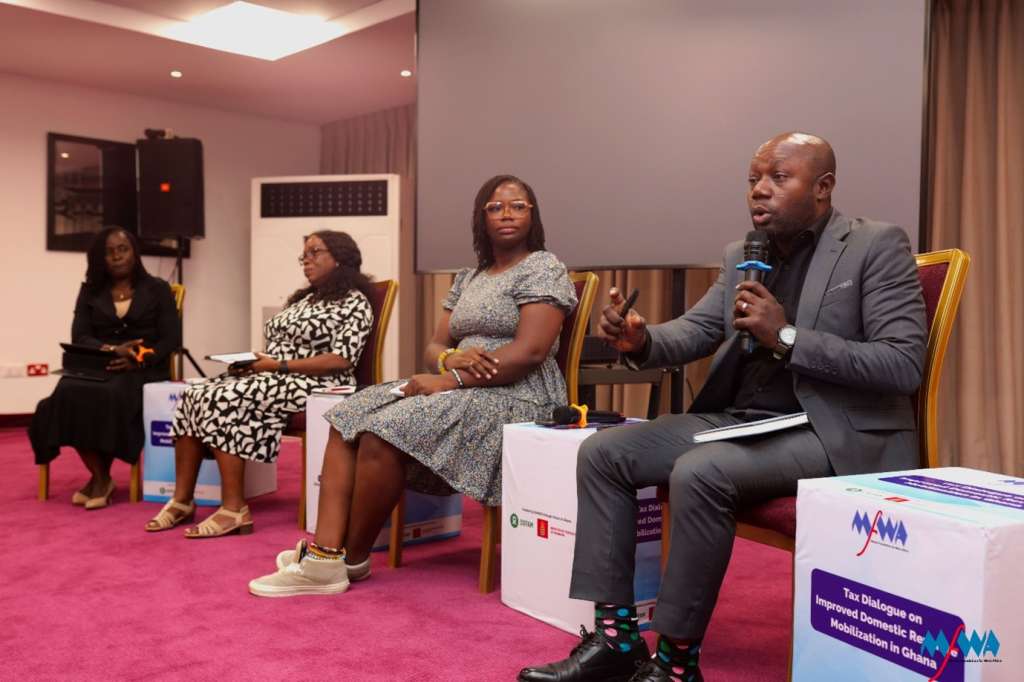
A panel discussion featuring tax experts and IFF practitioners provided multi-stakeholder perspectives on Ghana’s tax gap. Panelists included Maxwell Ntiri (Association of Ghana Industries), Jennifer Moffatt (BudgIT Ghana), Patricia Blankson Akakpo (Network for Women’s Rights Ghana), and Dr. Dominic Naab (Ghana Revenue Authority). Beyond media–GRA collaboration, participants made the following key recommendations:
- Review corporate tax incentives to ensure they are supported by rigorous cost–benefit analyses and do not create loopholes for tax avoidance.
- Address VAT revenue losses, estimated at up to 60%, by reassessing and rationalising tax exemptions.
- Reform agricultural taxation, given that the sector contributes about 20% to GDP but less than 1% to tax revenue, compared to higher returns in peer countries such as Côte d’Ivoire.
- Adopt nuanced approaches to informal sector taxation that reflect sectoral diversity and protect low-income earners.
- Commit to raising the tax-to-GDP ratio to at least 18% to sustain international confidence and development support.
- Strengthen efforts to reduce IFFs to meet SDG 16 target 4 by 2030.
- Improve public communication on tax utilisation, enabling citizens to see how tax revenues translate into development outcomes.