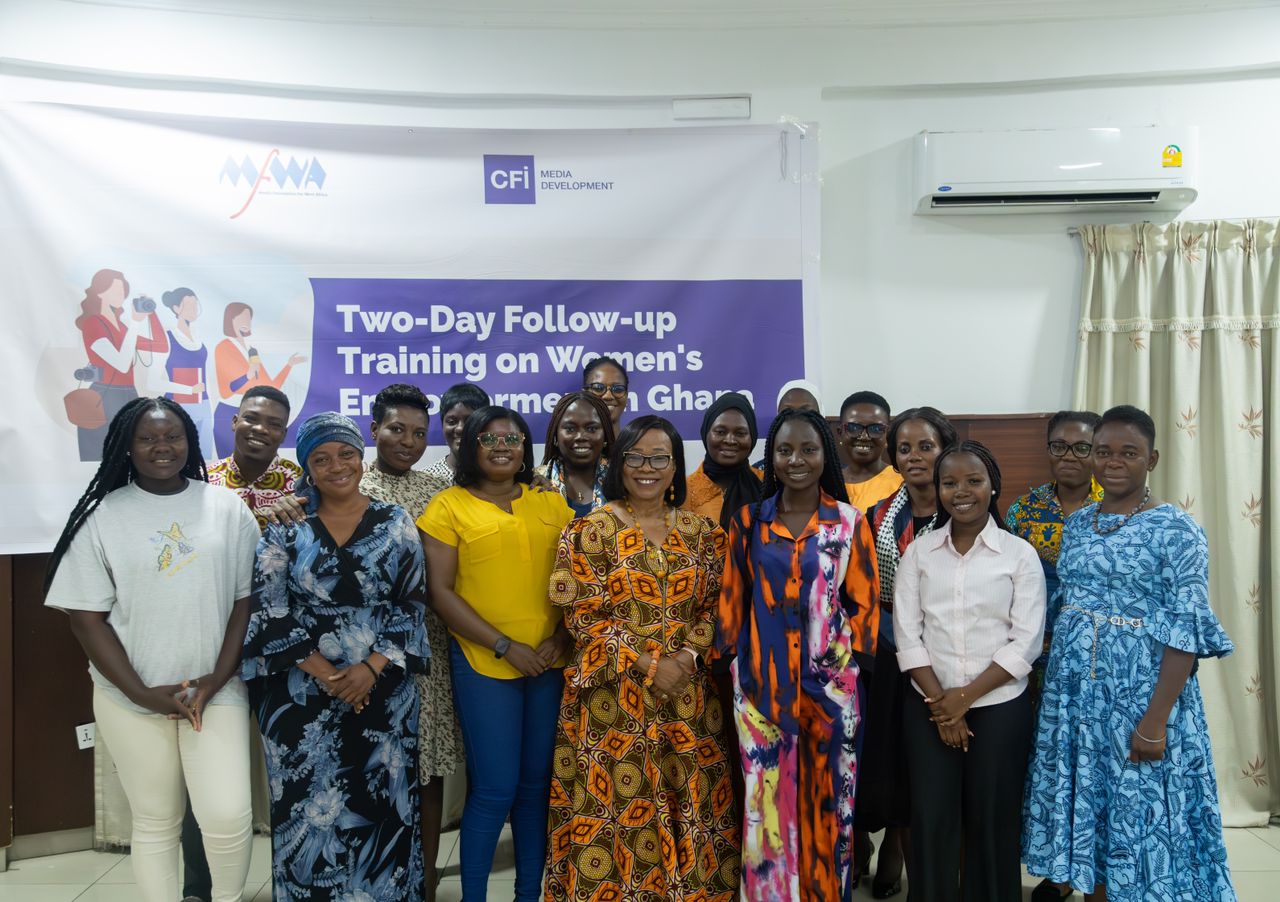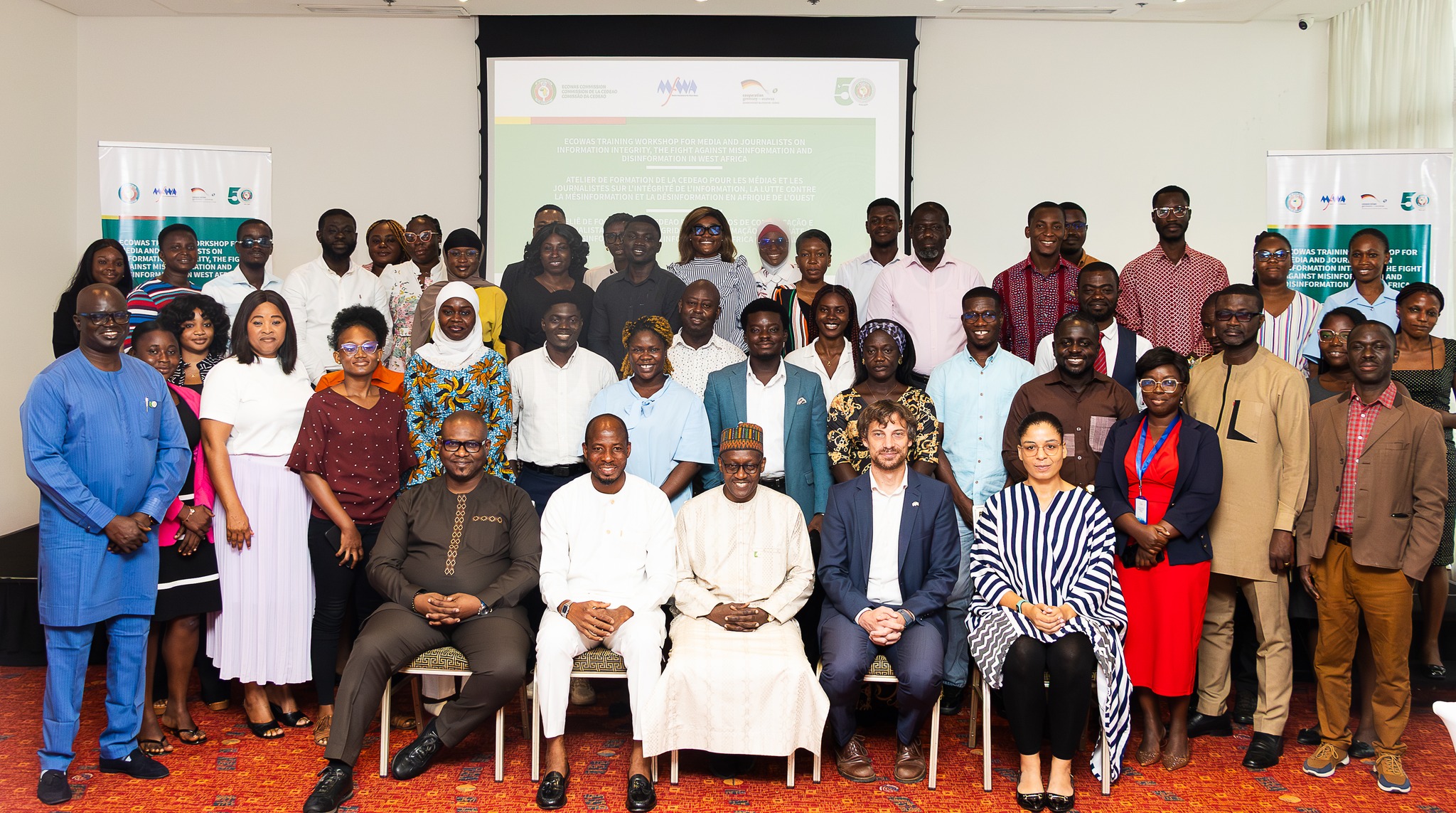
The Media Foundation for West Africa (MFWA), in partnership with the ECOWAS Commission and the German Development Cooperation (GIZ), has provided professional capacity enhancement training to 500 journalists across West Africa.
The participants were drawn from Benin, Carbo Verde, Cote d’Ivoire, The Gambia, Ghana, Guinea, Guinea Bissau, Liberia, Senegal, Sierra Leone, Togo, and Nigeria. Implemented through a series of two-day trainings from March 2025 to January 2026, the initiative supported media practitioners in the 12 countries. Reporters, editors and media managers were equipped with practical skills in fact-checking, digital verification, ethical journalism and the responsible use of emerging technologies.
Participants learned to practice and promote information hygiene; including identifying and countering manipulated content, coordinated disinformation campaigns and misleading narratives circulating on social media and other online platforms.
The trainings also emphasised the discipline of newsroom verification and reinforced the values of scrupulous editorial scrutiny; necessary for promoting news credibility, preventing misinformation and disinformation, and challenging harmful content and anti-democratic narratives.
The trainings further addressed the growing use of artificial intelligence and digital tools in news production, highlighting both the opportunities for innovation and the risks associated with automated content such as deepfakes and algorithm-driven amplification of false information. Participants were encouraged to adopt ethical and transparent practices when using technology in their reporting.
Beyond individual skills enhancement, the initiative also fostered cross-border collaboration among journalists to enable coordinated regional responses to disinformation that often transcends national boundaries.
The trainings were implemented in line with the MFWA and ECOWAS special Memorandum of Understanding (MoU), a four-year strategic partnership signed on December 5, 2023, to strengthen cooperation on media, democracy and regional development across West Africa.
Explaining the significance of the initiative, Kojo Impraim (PhD), Director of the Media for Democracy and Good Governance Programme at the MFWA, noted that the trainings respond to increasing concerns about the impact of false and misleading information on public trust, democratic processes, peace and social cohesion in the region.
“To address these challenges, we must strengthen regional collaboration—enhancing civic activism, fact-checking, and information integrity to protect our democracies. The MFWA, in partnership with ECOWAS and GIZ, is committed to this cause, building on existing agreements to combat disinformation, foreign interference, and violent extremism,” he said.
Dr Impraim emphasised that “the media remains a pillar of democracy, peace, and social cohesion,” adding that a “well-trained press can harness its influence to empower citizens, foster informed public dialogue, and counter the threats posed by disinformation and harmful narratives.”
MFWA and its partners have reaffirmed their commitment to continue supporting journalists and media organisations across West Africa to uphold high professional standards and promote credible information in the digital age.