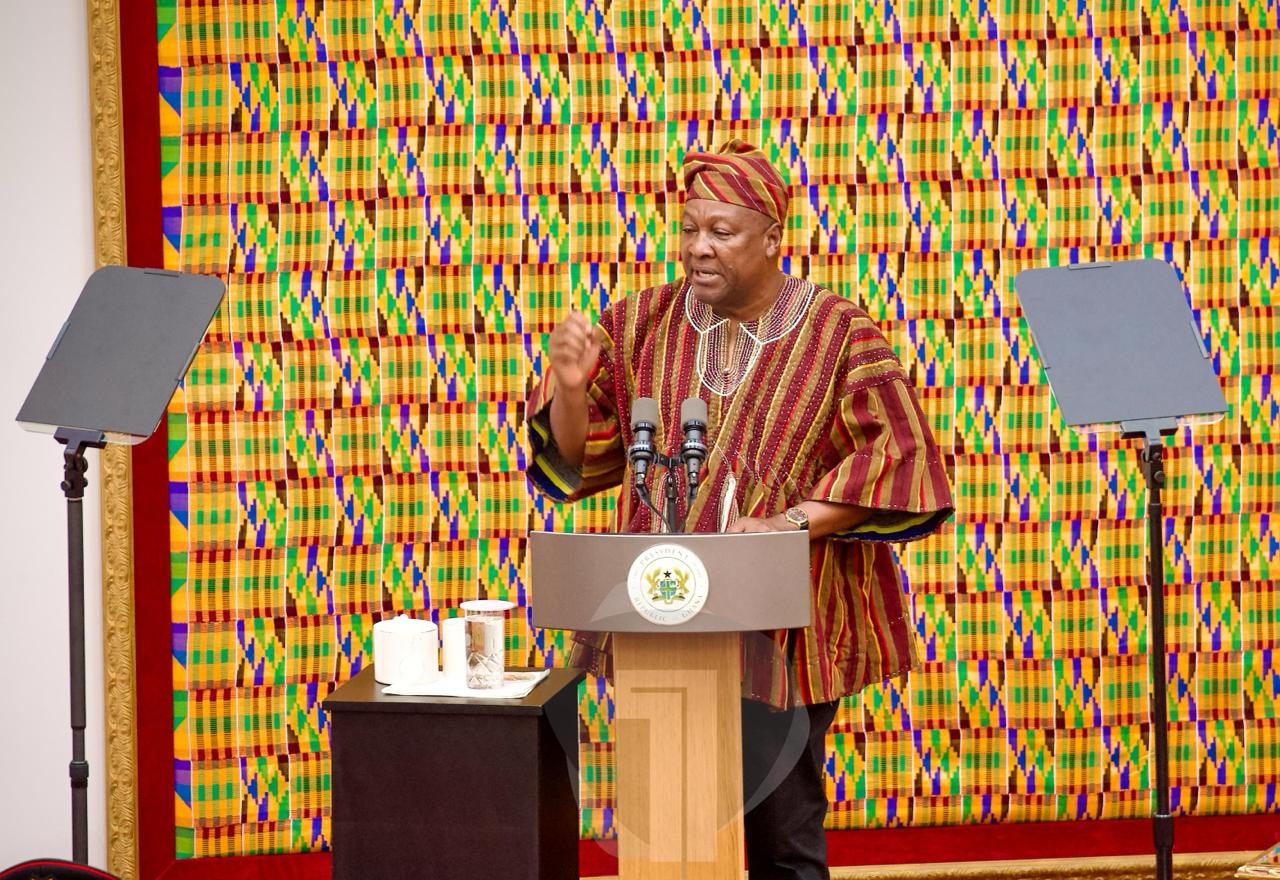
President John Dramani Mahama has announced that his government is considering “the reintroduction of the Media Development Fund…to support media development in Ghana”. He made this intention known in his 2026 State of the Nation Address (SONA) delivered to Parliament on Friday, February 27.
This statement of intent is welcome. But if it is to succeed, its implementation must be marked by structural autonomy, operational clarity and resource commitment.
A promising initiative that stalled
The Media Development Fund (MDF) was first announced on September 9, 2011, when then–Vice President Mahama outlined plans for its establishment at the Ghana Journalists Association (GJA) Awards. Later that year, on November 16, 2011, the Finance Minister informed Parliament that an amount of GH¢1 million had been allocated to the Fund in the 2012 Budget Statement. The Fund was expected to become operational in 2012. But it was never fully operationalised.
The MDF was conceived as a government-seeded but multi-stakeholder mechanism to strengthen professionalism, build institutional capacity and promote ethical journalism. The government was to guarantee further allocations while envisioning contributions from private sector actors and development partners.
To protect editorial independence while ensuring institutional oversight, the Fund was to be administered by a Board of Trustees under the auspices of the National Media Commission (NMC), with the Board constituted in consultation with key stakeholders, particularly the Ghana Journalists Association (GJA). Assurances were given that the Fund would not be used as a tool to influence media content.
The stated objectives were laudable: improve the professional output and competence of media organisations and practitioners, strengthen human resource capacity, promote ethical journalism, and support media work that advances human rights, democratic governance, rule of law, transparency and national development.
But the delivery was ineffective. The absence of clear operational structures, opacity of disbursement guidelines and a lack of accountability frameworks contributed to the Fund’s stagnation.
Key questions as reintroduction is reconsidered
While President Mahama’s renewed commitment signals recognition of the critical role of the media in democratic governance, significant questions remain unanswered. It is unclear whether the reintroduced MDF will operate under the same modalities outlined in 2011. What legal and governance safeguards will be instituted to guarantee operational independence? How will sustainable financing be assured beyond initial allocations? What accountability framework and reporting mechanisms will guide disbursements? When will the Fund be formally established and operationalised?
Clarity on these issues will be essential to ensure that the revived MDF avoids the implementation failures that plagued its first iteration.
State media revitalisation and journalist safety
President Mahama also disclosed that the government is developing plans to revitalise state-owned media institutions, many of which he acknowledged are grappling with chronic underfunding and deteriorating infrastructure. He stated that his recent tour of the state media houses revealed the urgency of reform and reinvigoration of operations.
Particularly significant is the President’s acknowledgement of persistent attacks on journalists by security personnel. As a longstanding member of the GJA, President Mahama said he was troubled by the abuses and had directed the leadership of security agencies to reorient their officers towards more professional and accommodating conduct and to sanction errant personnel.
The way forward
The reconsideration of the Media Development Fund presents an opportunity to establish a transparent, independent and sustainably financed mechanism to support media development in Ghana. However, for the initiative to succeed, it must be anchored in clear legal and operational frameworks, robust stakeholder consultation, and credible guarantees of independence from political influence.
Without these safeguards, the risk remains that the Fund could once again fail to move beyond policy announcement to practical implementation.