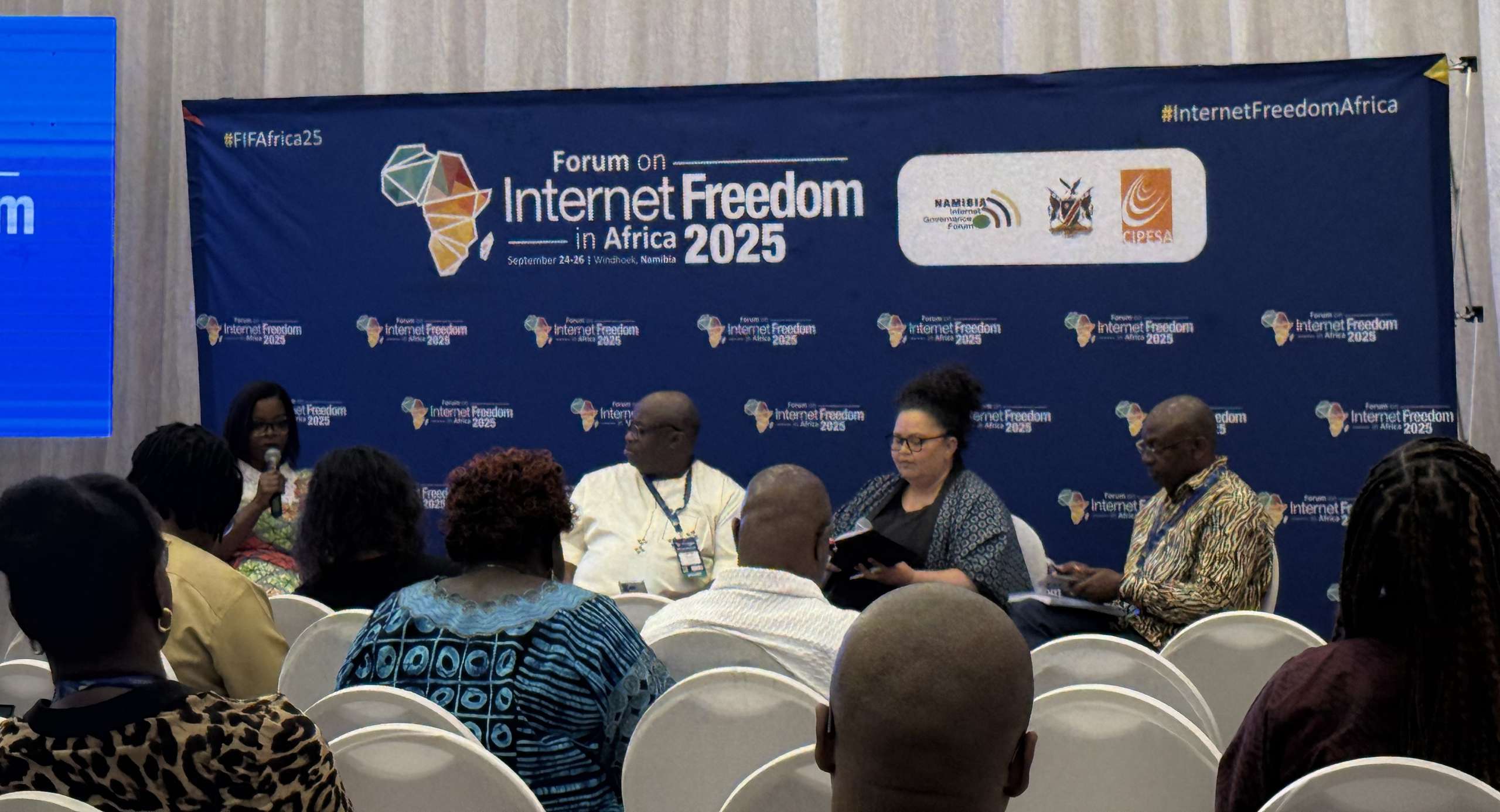
Stakeholders from across Africa have urged the prioritisation of meaningful access to information (ATI) as central to any efforts at advancing internet freedom.
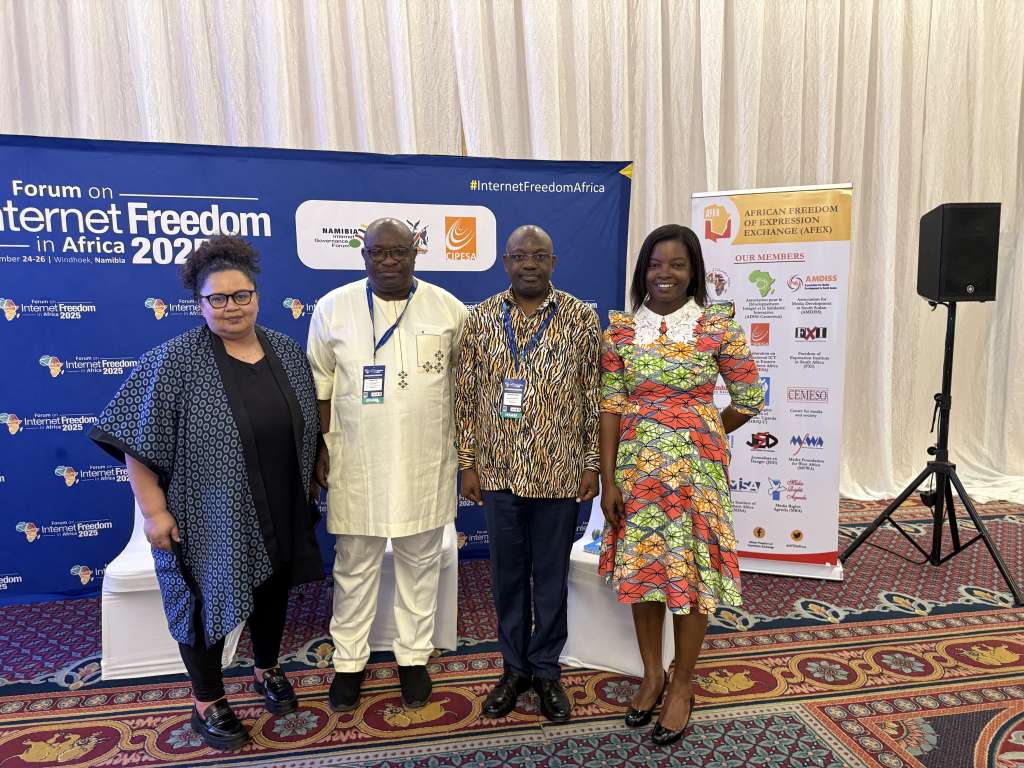
This call to action emerged from a session at the 2025 Forum on Internet Freedom in Africa (FIFAfrica25) convened by the African Freedom of Expression Exchange (AFEX), of which the Media Foundation for West Africa (MFWA) serves as both a member and the Secretariat. The forum was held in Windhoek, Namibia, from September 24 to 26, 2025, and was organised by the Collaboration on International ICT Policy for East and Southern Africa (CIPESA). It brought together policymakers, civil society actors, and digital rights advocates from across the continent.
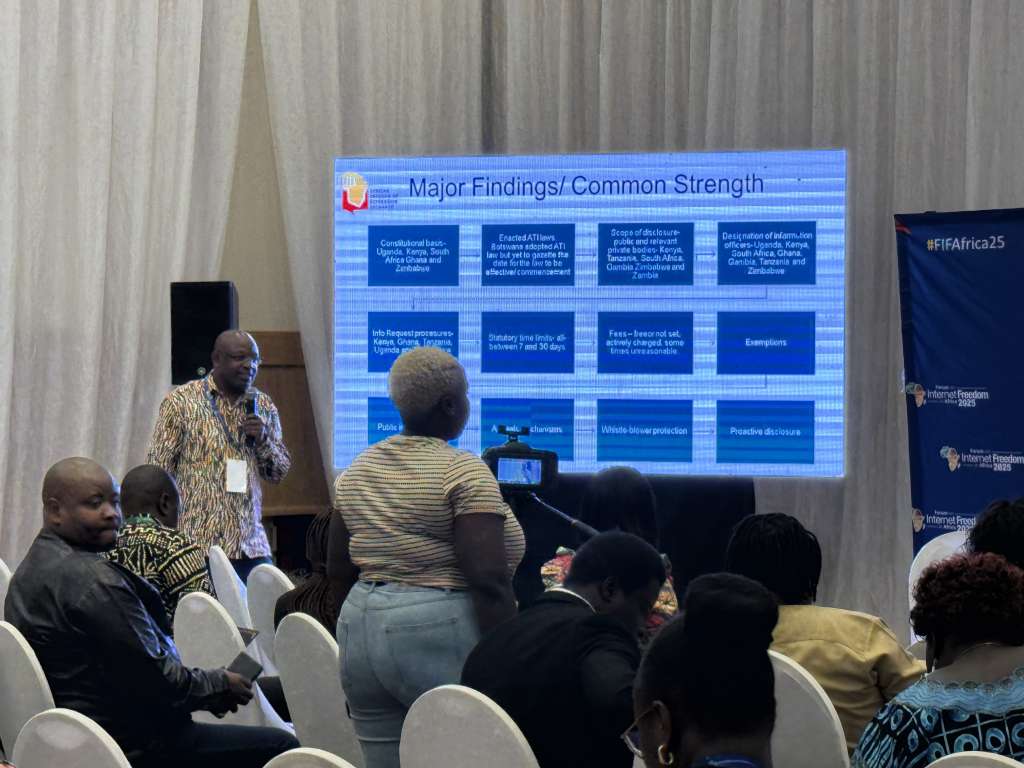
The AFEX-led session focused on the persistence of barriers to ATI, notably the high cost of access, and highlighted their far-reaching implications for accountable governance, civic engagement, and inclusive development.
These concerns were examined through the lenses of digital governance and technology, civic space and participation, and development and social impact. Participants noted that citizens deprived of timely and accurate information are disempowered; thus disabling them from making informed decisions and holding authorities accountable; and from effectively using digital platforms and tools to engage duty-bearers and exacting national development outcomes.
Experts highlighted the deleterious and far-reaching “cost of ignorance,” pointing to critical information gaps in sectors such as health, education, and infrastructure, which fuel mismanagement and inefficiency. Examples cited include: Malawi, where ATI requests revealed irregularities in textbook distribution; Uganda, where medicine stock data exposed systemic gaps in malaria treatment protocols; and Kenya, where sanitation procurement records uncovered contract mismanagement.
By contrast, Namibia’s proactive disclosure framework was referenced to demonstrate how accessible information could strengthen public oversight, deepen civic participation, and deliver good governance outcomes. What these illustrate, they concluded, is that journalists, civil society actors, and the public generally must be empowered to engage in open debate, monitor public resources, and demand downward accountability.
While noting the potential of digital portals and platforms to enable these outcomes, stakeholders also acknowledged that fissures within the digital and e-governance architectures continue to impede progress. At the same time, they cautioned that technology alone is insufficient; it must be complemented by strong institutional frameworks, effective regulatory oversight, and sustained public awareness campaigns.
Participants stressed that without strong ATI regimes, internet freedom would remain functionally illusory; unable to translate the affordances of access into meaningful civic power.
About AFEX
The African Freedom of Expression Exchange (AFEX) is a continental network of some of the most prominent freedom of expression and media rights organisations in Africa that are also members of the global free expression network, IFEX. The network is currently made up of 15 member organisations spread across West, East, Central, and Southern Africa.
Some of the members operate in more than one country in a particular region. AFEX seeks to promote freedom of expression and human rights on the continent through advocacy and campaigns, capacity building to ensure effectiveness of members and other free expression groups in the region. The Media Foundation for West Africa (MFWA) is the Secretariat of AFEX.