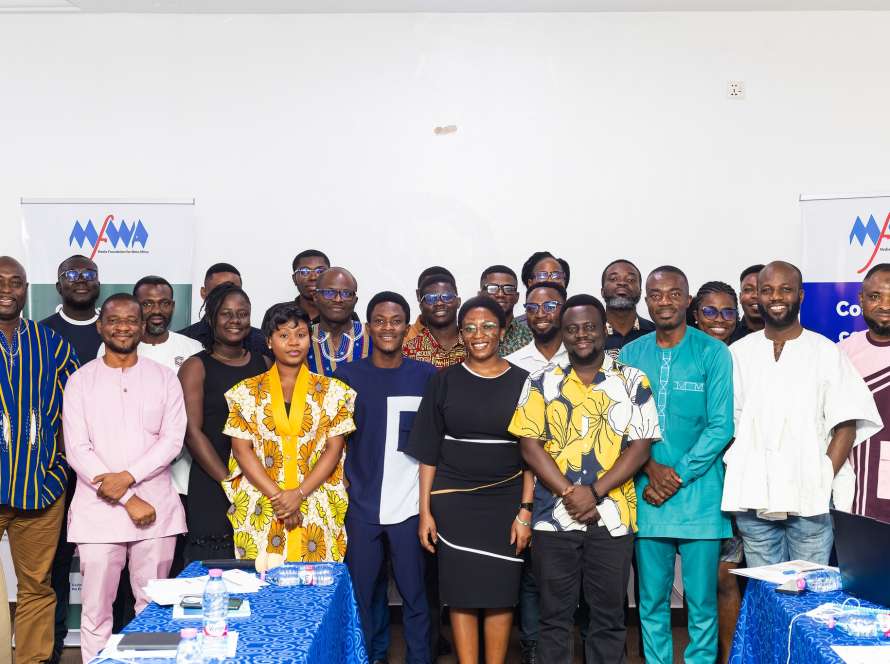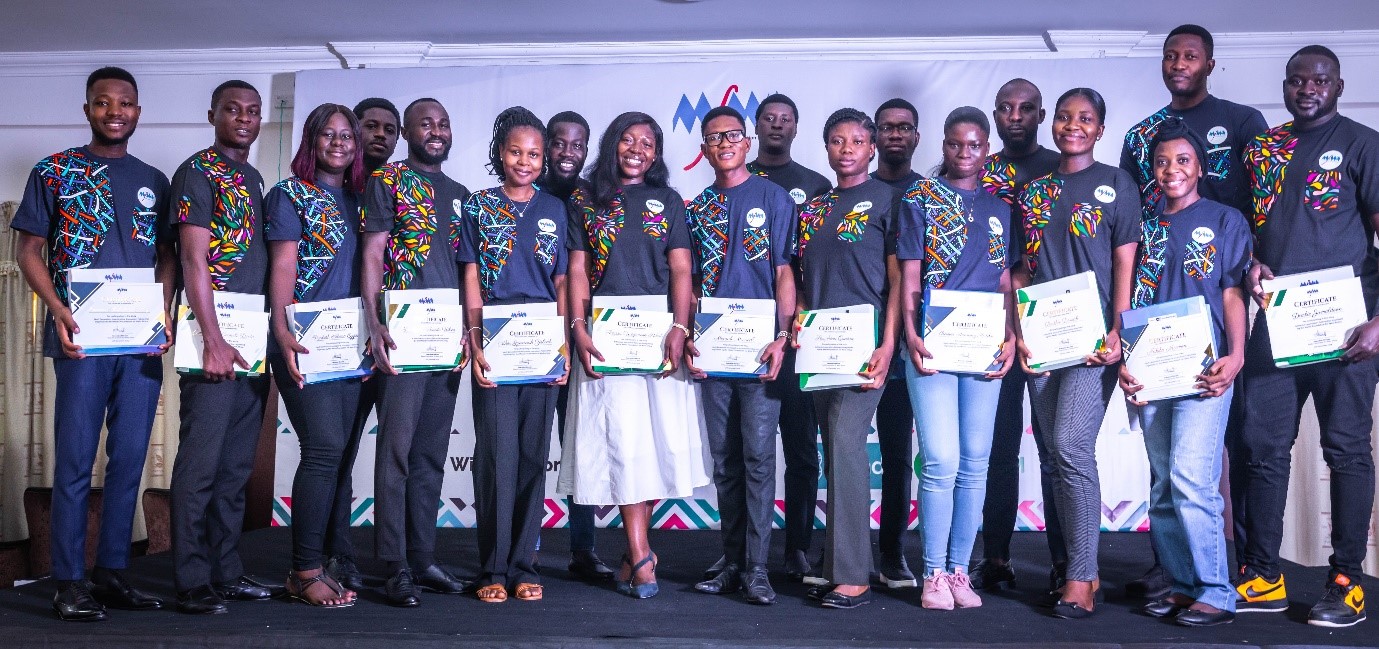

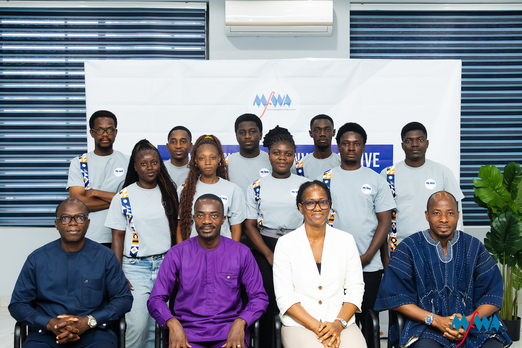
The Media Foundation for West Africa (MFWA) has opened the eighth edition of its flagship training and mentorship programme for early career journalists, the Next Generation Investigative Journalism (NGIJ) Fellowship at a ceremony in Accra.
On Tuesday February 3, 2026, a cohort of ten journalists from across Ghana was inducted into the three-month Fellowship, which runs from February to April, 2026.
The Fellows are: Maame Efua Duker, with Sompa Media; Jennifer Ayeyore Azure of Dreams FM; Derrick Nimako, JoyNews; Moses Appiah Abaah, A1 Radio; Nana Ntiako Dacosta, a freelance journalist; Joshua Narh, with Africa Feature Network; Gabriel Jackson-Ocloo, a freelance journalist; Prinsella Vera Aidoo, a freelance journalist; and Jajon Dei, with Accra-based JoyNews.
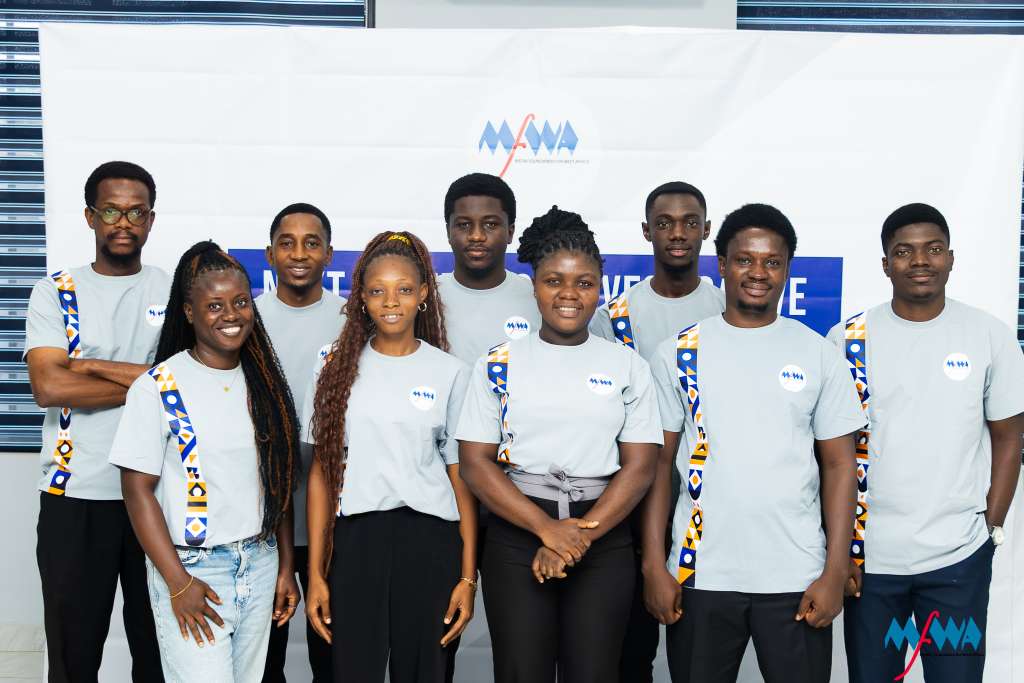
During the Fellowship, participants will receive comprehensive training and mentorship in anti-corruption reporting, data journalism, fact-checking, and the effective use of Ghana’s Right To Information (RTI) law.
The NGIJ Fellowship is implemented under MFWA’s project, ‘Countering corruption through accountability journalism and improved freedom of expression environment in Ghana.’ The project is part of the Participation, Accountability, Integrity for Resilience Democracy (PAIReD) programme, commissioned by the German Federal Ministry for Economic Cooperation and Development (BMZ), co-financed by the European Union and the Swiss State Secretariat for Economic Affairs (SECO), and implemented by GIZ in cooperation with the Ministry of Finance.
Like previous cohorts, the Fellows will receive personal mentorship from investigative journalists with The Fourth Estate, MFWA’s award-winning investigative journalism initiative.
An opportunity to build capacity
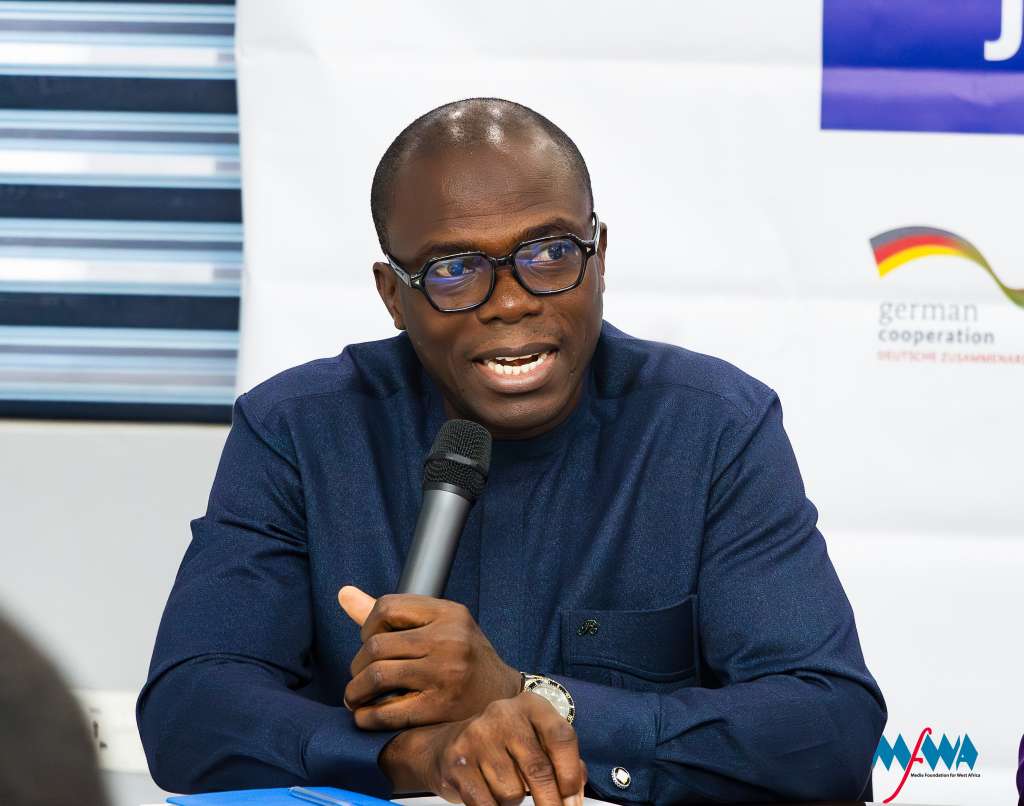
Welcoming the Fellows, Sulemana Braimah, Executive Director of the MFWA, described the Fellowship as a great opportunity for young journalists to develop the capacities needed for impactful careers.
“For young people who are really passionate about journalism, this is a great opportunity to build your capacities so that you can make impact,” he said.
Mr Braimah urged the Fellows to make full use of the opportunity to learn from award-winning journalists at The Fourth Estate and to strive for excellence when they return to the field. He also cautioned against the fantasised notion that investigative journalism is sneaky undercover work by masked adventurists; pointing out that investigative journalism is actually more about critical thinking and asking questions.
“Investigative journalism has unfortunately been misconstrued as undercover journalism. Undercover work really ought to be the exception, or the last resort,” he noted. “Any good journalism is investigative journalism; and this can be as little as crosschecking information.”
Investigative journalists are not born, they are groomed
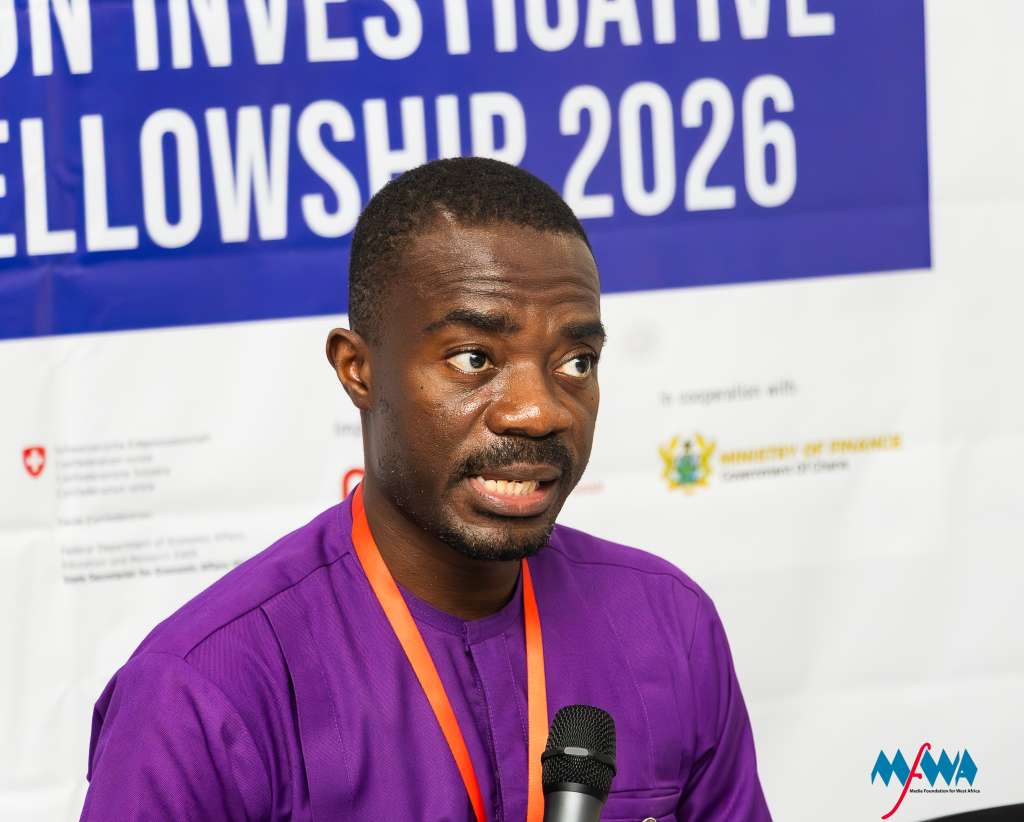
Representing the GIZ at the ceremony, Mr. Kweku Lartey Obeng, Head of Component, Strengthening Anti-Corruption Actors of the Participation, Accountability and Integrity for a Resilient Democracy (PAIReD) project reaffirmed their commitment to partnering the MFWA in the NGIJ Fellowship, describing it as a critical pipeline for the nurturing future investigative journalists.
“When I think of the future of investigative journalism in Ghana, I do not worry about the stories. They exist, and they always will because power always needs watching and corruption always needs exposing,” he said. “What I think about [is]… who will tell these stories when today’s leading investigative journalists are no more.
“Great investigative journalists are not born. They are grown, mentored, supported and equipped,” he said.
Mr. Obeng urged the Fellows to fully embrace the opportunity to learn from the experienced practitioners, noting that they represent the next generation that Ghana will depend on to hold duty-bearers accountable to the people.