When The Fourth Estate, the award-winning accountability journalism project of the Media Foundation for West Africa (MFWA), began scrutinising the contract between the National Lottery Authority (NLA) and KGL Technology Limited, the goal was simple: follow the money and test whether the deal served the public interest.
What the investigation uncovered raised serious red flags; the multimillion-dollar contract governing lottery operations and revenue arrangements contained serious discrepancies that stuck out like a sore thumb.
Questions that quickly became obvious included: the legal basis and structure of the agreement, the scope and duration of the contract, revenue-sharing formulas, fees and commissions, exclusivity clauses and potential contingent liabilities to the State. There was also the concern about whether the arrangement complied with the Constitution, the Public Procurement Act and the National Lottery Act.
Beyond the legal questions, the reporting also raised concerns about transparency, performance obligations, data ownership, audit rights and provisions that could potentially limit regulatory oversight or disadvantage the State.
By laying out the documentary evidence and analysing the financial implications, the investigation sparked renewed public scrutiny over whether the contract guaranteed value for money and adequately protected Ghana’s fiscal interests.
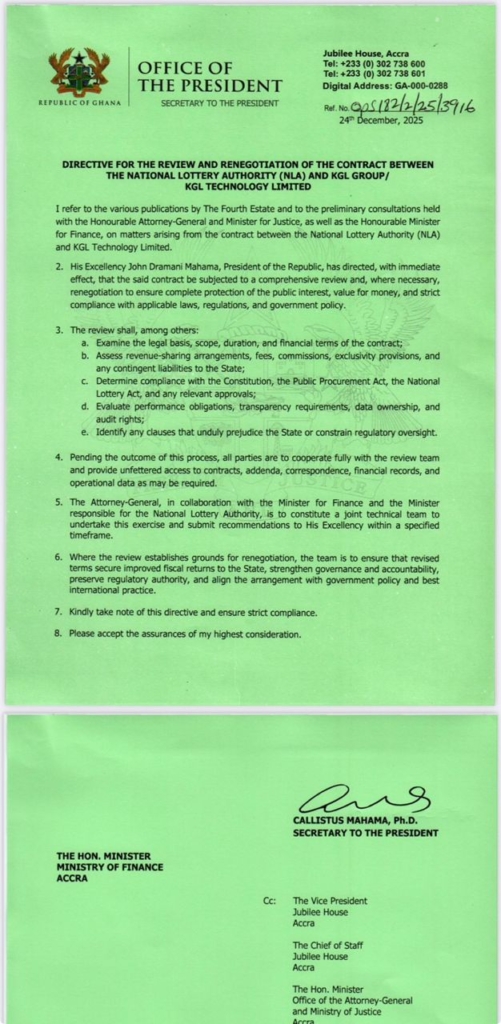
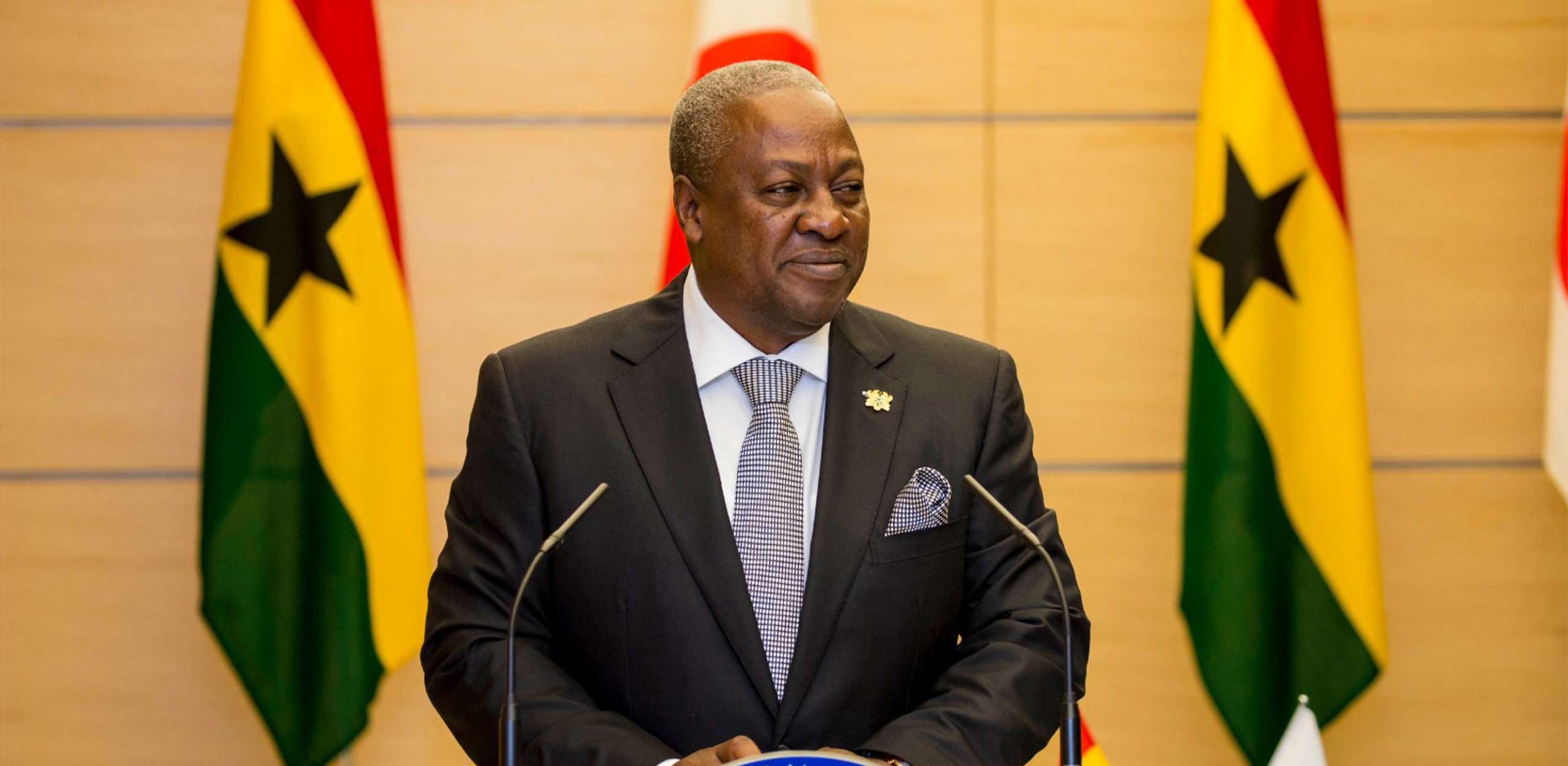
On December 24, 2025, President John Dramani Mahama responded decisively. In a directive signed by the Secretary to the President, he ordered an immediate and comprehensive review of the NLA-KGL contract. The directive, explicitly referenced the “various publications by The Fourth Estate” as the basis for the presidential action; and “directed, with immediate effect, that the said contract be subjected to a comprehensive review and, where necessary, renegotiation to ensure complete protection of the public interest, value for money, and strict compliance with applicable laws, regulations, and government policy.”
The President tasked the Attorney-General, in collaboration with the finance minister and the sector minister responsible for the NLA, to establish a joint technical team to: examine the legal basis, financial terms and duration of the contract; assess revenue-sharing arrangements, commissions and exclusivity clauses; determine compliance with all relevant laws and required approvals; and, review performance standards, transparency obligations and audit provisions.
The directive also instructed all parties involved to grant the review team unrestricted access to contracts, correspondence, financial records and operational data.
Where grounds for renegotiation are found, the President directed that revised terms must improve fiscal returns to the State, strengthen governance and accountability, protect regulatory authority, and align the agreement with international best practices.
Accountability in action
The President’s directive represents a direct governance response to public-interest investigative journalism by The Fourth Estate. Evidence-based accountability journalism triggered executive scrutiny at the highest level of government. A contract once shielded from public view is now subject to legal and financial reassessment.
The development underscores the important role of investigative journalism; not merely as watchdog, but as a catalyst for institutional correction. By placing the results of rigorous reporting within the public domain, The Fourth Estate compelled power to respond.
For the MFWA, the outcome affirms a core principle of accountability journalism: when verified facts raise questions about financial propriety and the public interest, governance can be compelled to answer.