
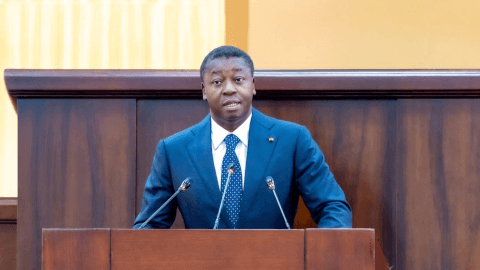
At the end of 2025, authorities in Togo granted presidential clemency to a number of detainees, including civil society actors and government critics, in a move announced during the State of the Nation address on December 3, 2025, by the President of the Council of Ministers, Faure Gnassingbé. The decision was formalised by a decree adopted on December 30, 2025.
The clemency affected approximately 1,511 prisoners. Among those released were several individuals widely regarded as critical voices or engaged in civic activism.
These include Abel Yawo Atitso, Secretary-General of the student union Syndicat des Étudiants du Togo (SEET), along with other SEET members Abdoul Zoulkaneini Lamboni and Julien Komandéga Kataka. The three were arrested on September 3, 2025, reportedly by plainclothes officers, with no official explanation provided for their detention.
Also released were Armand Agblézé and Oséi Agbagno, activists affiliated with the citizen movement Tournons la Page, who had been arrested on August 22, 2025.
Chimène Akou Apevon, arrested on August 28, 2025, while returning from work, was among those granted clemency. She had been remanded in custody on September 2 and detained at Lomé Civil Prison on charges including disturbing public order, incitement to violence, undermining state security, and attempting to destabilise state institutions.
Other beneficiaries include Abdoul Aziz Goma, a Togolese-Irish businessman and human rights defender who had been arrested in 2018 and sentenced in February 2025 to ten years’ imprisonment for “undermining national security.”
The clemency also extended to Honoré Sitsofé, also known as Affectio, a poet reportedly arrested in Lomé by plainclothes officers after publishing a poem on social media, as well as midwife and activist Grace Koumayi Bikoyi, who was arrested at her home on October 3, 2025.
The Media Foundation for West Africa (MFWA) welcomes the release of these civil society actors and activists. However, the MFWA calls on the Togolese authorities to review the cases of all remaining individuals who remain in detention in connection with their opinions or civic engagement, and to subsequently ensure the respect for fundamental rights, including freedom of expression and freedom of assembly.