
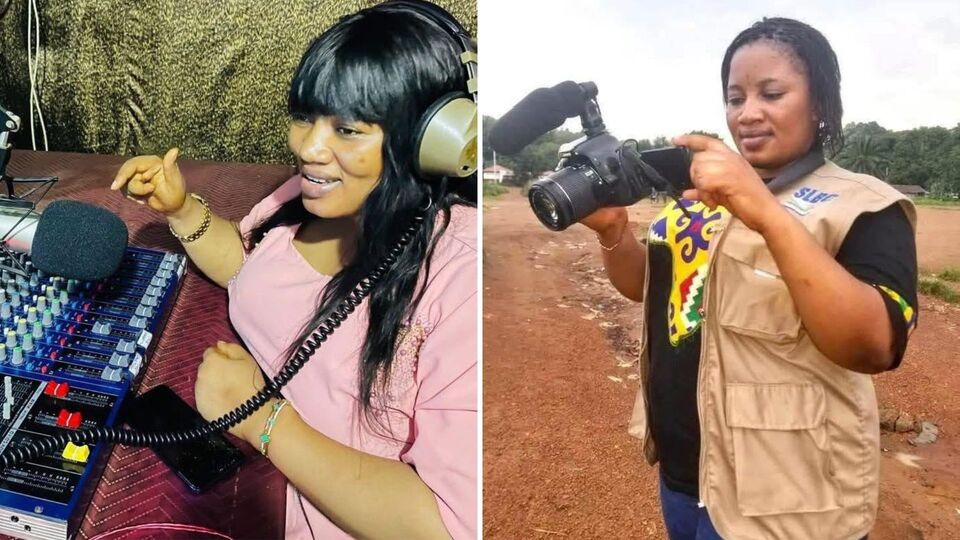
The Independent Media Commission (IMC) of Sierra Leone has issued a ruling requiring the Sierra Leone Broadcasting Corporation (SLBC) to provide compensation to Umu Thoronka, a former journalist with the organisation. This decision stems from a formal complaint lodged by Thoronka on August 16, 2024 regarding her termination. The IMC reached this conclusion during its meeting on February 25, 2026, following a series of three hearings conducted by a designated Complaint Committee.
Umu Thoronka was dismissed from SLBC in July 2024 after sharing a TikTok video highlighting the difficulties faced by a woman who posed a question to the President about the rising cost of living during a Presidential Town Hall meeting. In response to this dismissal, Women in the Media Sierra Leone (WIMSAL), in collaboration with Robert F. Kennedy Human Rights, filed a petition to the ECOWAS Community Court, asserting that Thoronka’s termination exemplifies ongoing issues of sexual harassment, intimidation, and gender discrimination that she has experienced at SLBC since 2017.
The initial IMC Complaint Commitee hearing took place on November 30, 2024, in Makeni City, where Paul Kamara Esq. represented Thoronka and informed the Complaint Committee of her absence from the country, having authorised him to act on her behalf. He reiterated her allegations that her termination was unlawful.
Paul Kamara dismissed the press release issued by SLBC on August 20, 2024, which sought to justify the dismissal. He presented evidence confirming Thoronka’s employment at the SLBC Regional Office in Makeni, including her appointment letter, and argued that her dismissal was both unlawful and unconstitutional.
During the hearings, Sinneh Thoronka, the Station Manager of SLBC Makeni, was invited to respond but declined, stating that his position as an employee limited his ability to address the issue. Consequently, the Complaint Committee adjourned the session and requested the attendance of SLBC’s Director General at a subsequent meeting scheduled for December 10, 2024. However, this session did not occur due to the Director General’s absence.
The third and final hearing was convened on November 11, 2025, in Freetown, attended by representatives from the Sierra Leone Association of Journalists (SLAJ), WIMSAL, and Thoronka’s legal counsel. The invited Director General of SLBC was absent once more. Thoronka’s counsel reiterated his client’s complaint, emphasising that she was dismissed without any prior warning or due process, and requested the Commission’s intervention to provide justice. Unfortunately, there was no response from SLBC, as the Director General was once again absent.
After reviewing the evidence, the Complaints Committee made several observations based on the temporary appointment contract issued to Umu Thoronka. The Committee found that Thoronka had been engaged as a contract freelancer at the SLBC regional office in Makeni and had provided services to the broadcaster for approximately ten years. Her most recent contract took effect on September 1, 2021 and was valid for four months.
The contract stipulated that either party could terminate the agreement by providing one week’s notice. However, the Committee found that SLBC’s Human Resource Manager failed to formally terminate the contract when it initially expired. Instead, Thoronka’s termination was communicated verbally through a phone call and without the required one week’s notice.
The Committee concluded that SLBC failed to exercise due diligence in handling the termination process. Based on these findings, the IMC ruled that SLBC must compensate Thoronka with a negotiable sum.
The Media Foundation for West Africa (MFWA) welcomes the IMC’s ruling in Umu Thoronka’s case against SLBC. The organisation urges the regulator and other media stakeholders to work together to ensure that all media outlets in Sierra Leone implement clear policies and training on termination procedures and gender sensitivity to foster a more inclusive environment. Compensating Thoronka not only addresses her specific case but also sets an important precedent for justice and accountability in media organisations throughout Sierra Leone.