
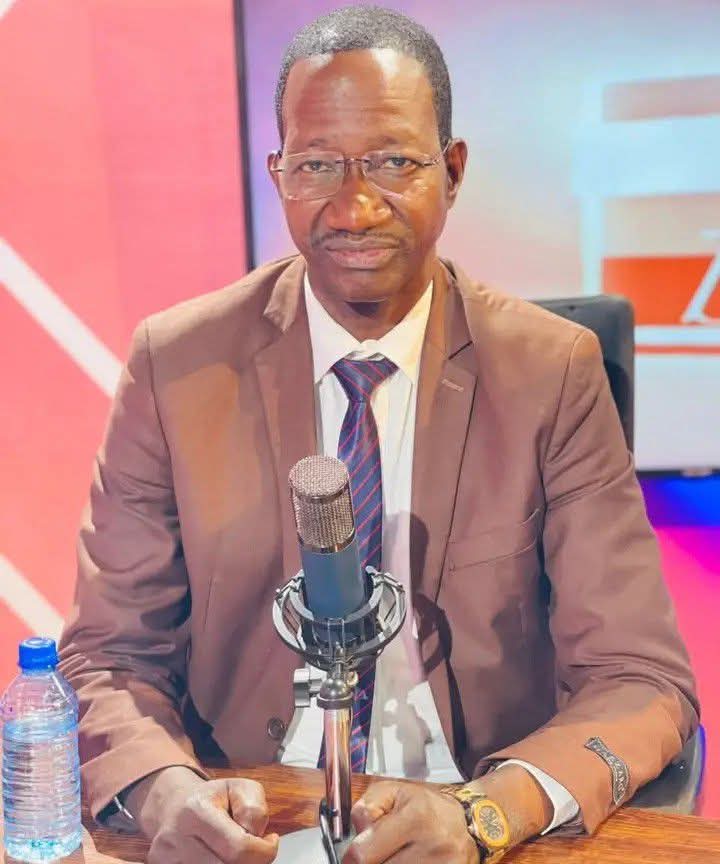
Youssouf Sissoko, editor-in-chief of the newspaper L’Alternance was arrested at his home in Bamako on 5 February 2026 and taken to the National Cybercrime Unit for questioning.
His arrest followed the publication of an article in the 200th edition of L’Alternance, released on 2 February 2026, entitled: “General Tiani, overcome with emotion, accuses Macron, Ouattara and Talon.” The article, signed by Sambou Sissoko, a political analyst living in exile, refers to statements made by Niger’s President, General Abdourahamane Tiani, after the attack on Air Base 101 near Diori Hamani International Airport on the night of 28 January 2026. In those remarks, President Tiani allegedly implicated foreign leaders, including Emmanuel Macron (France), Patrice Talon (Benin) and Alassane Ouattara (Côte d’Ivoire) in the attack.
Although the article was authored by an external contributor, proceedings have been initiated against Youssouf Sissoko in his capacity as publication director. Following his hearing, the prosecutor at the National Cybercrime Unit placed him under remand. He faces charges including dissemination of false information, undermining the credibility of the state, and insulting a foreign head of state in connection with an article deemed defamatory. His trial is scheduled for 9 March 2026.
The Association of Private Press Publishers (ASSEP) expressed outrage at the arrest in a press statement and declared its solidarity with Sissoko. Reaffirming its commitment to freedom of expression and press freedom as guaranteed by the Constitution of 22 July 2023, ASSEP stated that it would monitor developments in the case closely.
Bandiougou Danté, President of the Maison de la Presse, criticised the procedure used in the arrest, stating that it contravenes the press law, which provides that individuals accused of press offences should be served with a summons to appear rather than subjected to immediate detention.
The arrest has renewed debate in Mali over press freedom and the scope of criminal responsibility borne by publication directors for content written by external contributors.
The Media Foundation for West Africa (MFWA) calls on the Malian authorities to ensure that justice is administered in a fair and equitable manner. MFWA emphasises that alleged press offences should be handled within the framework of press law and not under broader or recently introduced legislative provisions that may unduly restrict media freedom.