


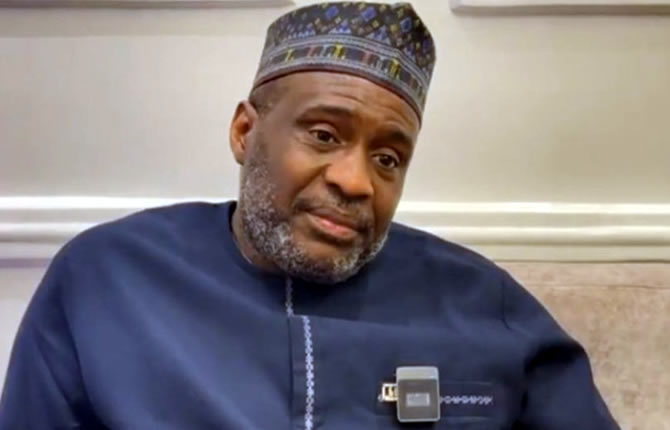
Former Malian Prime Minister Moussa Mara has been sentenced to two years imprisonment by the National Cybercrime Court after being prosecuted over social media posts expressing solidarity with political prisoners.
On 27 October 2025, the court convicted Mara on charges including “undermining state authority” and “inciting public disorder.” He was sentenced to two years in prison, with one year to be served without parole and the second year suspended.
Mara, who served as Prime Minister from 2014 to 2015, was arrested in Bamako on 1 August 2025 by the national cybercrime unit. His arrest followed several rounds of interrogation in July 2025. During that period, he was successively summoned to the Judicial Investigation Brigade, the Public Prosecutor’s Office at the Tribunal de Grande Instance of Commune IV, and the Police Commissariat of Commune IV in Bamako.
On 21 July 2025, prior to his arrest, Mara was prevented from leaving the country. According to available information, he was not formally notified of any judicial or military order restricting his movement, and no known travel ban had been placed on his passport at the time.
The charges stem from online messages in which Mara expressed what he described as “unwavering solidarity with prisoners of conscience” following visits to detained critics of the authorities. Prosecutors argued that the posts amounted to an attempt to undermine state authority and disrupt public order.
The case has been widely viewed as part of a broader tightening of civic space since the 2021 military takeover led by Gen. Assimi Goïta. Observers note that the use of broadly framed offences such as “undermining the credibility of the state” and proceedings before a specialised cybercrime court reflect increasing scrutiny of online expression and political commentary.
The Media Foundation for West Africa (MFWA) calls on the Malian authorities to respect constitutional guarantees of freedom of expression and to ensure that laws relating to cybercrime and state security are not applied in a manner that criminalises speech. MFWA urges the authorities to protect the right of citizens to express views, both offline and online, without fear of criminal prosecution.


