


The Press Union of Liberia (PUL) has raised concerns about a newly proposed bill titled the “Gender-Based Online Abuse and Harassment Act of 2026,” warning that it could undermine existing protections for freedom of expression.
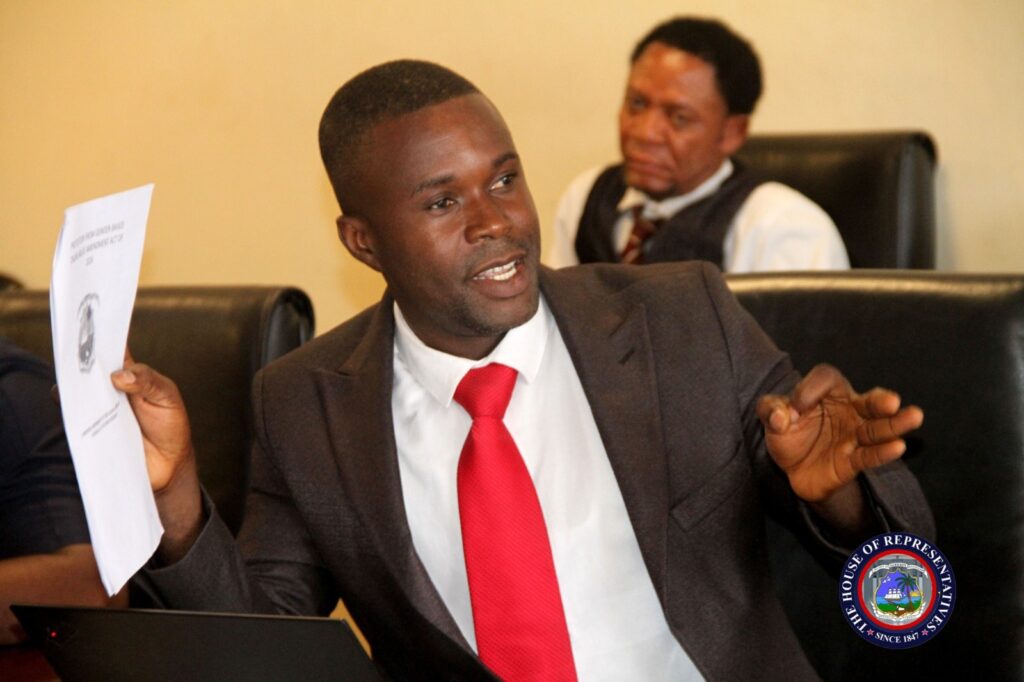
The concerns were expressed by PUL President Julius Kanubah during a public hearing held on March 9, 2026, at the Capitol Building in Monrovia, the seat of Liberia’s legislature.
The proposed legislation was introduced to the House of Representatives on March 3, 2026, by Representative Nyahn Flomo of Nimba County. The bill seeks to amend the Kamara Abdullah Kamara (KAK) Press Freedom Act of 2019 by adding provisions aimed at addressing online harassment and abusive speech on social media.
Under the proposed law, individuals who post insulting, obscene, or harassing messages online could face criminal penalties of up to two years’ imprisonment, fines ranging from 50,000 to 500,000 Liberian dollars (approximately USD 273 to USD 2,728), or both.
According to Kanubah, the proposed amendment risks undermining the KAK Press Freedom Act, which was adopted in 2019 to strengthen freedom of expression and press freedom in Liberia.
The KAK Act abolished several criminal penalties for speech-related offences, including criminal libel against the president, sedition, and criminal malevolence. These provisions had historically been used to prosecute journalists and suppress criticism of public officials. Their repeal effectively shifted speech-related disputes from criminal prosecution to civil remedies, marking a significant milestone for media freedom in Liberia.
The PUL warns that introducing new criminal penalties through amendments to the KAK Act could reopen the door to the criminalisation of speech offences that were deliberately removed by the 2019 reforms. The union also cautions that such provisions could be misused by powerful individuals to target journalists, activists, and critics of the government.
The organisation further notes that Liberia already has legal provisions addressing abusive behaviour and disorderly conduct, including Section 17.3 of the Penal Law of 1978. In addition, issues related to cyber harassment are currently being addressed in a draft Cybercrime Act under consideration by the legislature.
Legal experts have also urged caution. Kwame Clement, founding President and Dean of the Liberia School of Law, and Ralph Nyuma of the Independent National Commission on Human Rights have both stressed that laws regulating expression must be carefully designed to avoid misuse against journalists or government critics. They also emphasised that any such legislation should comply with Liberia’s international human rights commitments, including those under the African Charter on Human and Peoples’ Rights.
While acknowledging the need to address online harassment and abuse, the Media Foundation for West Africa (MFWA) shares the concerns raised by the PUL and urges lawmakers to ensure that any new legal framework remains consistent with the protections established under the KAK Press Freedom Act.
The MFWA also calls on the Liberian legislature to consult widely with media organisations, civil society groups, and digital rights experts before adopting legislation that may affect freedom of expression. Efforts to address online harm should focus on proportionate and rights-respecting measures that protect victims while preserving the gains Liberia has made in advancing press freedom.


