
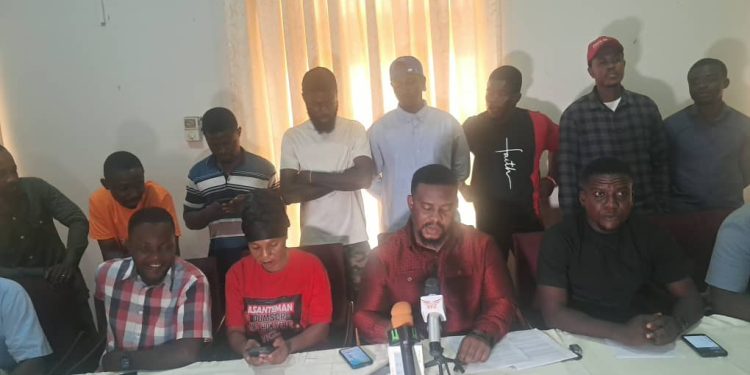
Wendell Nana Yaw Yeboah, a mobilisation officer at the activist group, Democracy Hub, has been arrested by the Criminal Investigations Department (CID) following a petition demanding a full probe into allegations he made on live radio accusing three Regional Ministers of involvement in illegal mining (galamsey). Yeboah made the claims on November 18, 2025, during an interview on Aluta FM (92.1 MHz), asserting that the Ministers for Ashanti, Eastern and Western Regions were complicit in galamsey activities.
The allegations quickly gained public attention and triggered widespread calls for proof. Later on November 18, Yeboah issued a formal retraction and apology, admitting that the claims were unsubstantiated and did not reflect the official position of Democracy Hub.
Despite the apology, the pressure group Ashanti Democrats submitted a petition to the CID on November 19 referencing the three ministers: Dr Frank Amoakohene (Ashanti Region), Rita Akosua Adjei Awatey (Eastern Region) and Joseph Nelson (Western Region). The petition, signed by Daniel Sasu Omari, Jerry James Suker and Darren Jackson Pra, described Yeboah’s allegations as false and damaging, and urged the CID to conduct a thorough investigation to protect the integrity of the office holders. The petition also called for the host and producer of the Aluta FM programme to be invited to assist with the inquiry.
Acting on the petition, the CID arrested Yeboah on November 26. He is currently in custody assisting with investigations and is expected to be arraigned on November 27, 2025. The specific charges have not yet been outlined, though similar cases have previously relied on Section 208 of the Criminal Offences Act and Section 76 of the Electronic Communications Act, provisions long criticised for enabling the criminalisation of speech.
This issue has reignited long-standing concerns about the use of criminal processes to address reputational disputes in Ghana, especially in matters involving political speech. While false claims can have serious consequences, the resort to arrest and prosecution for speech-related issues highlight an ongoing tension between combating misinformation through heavy-handed means and safeguarding free expression. Civil society groups continue to call for reforms that prioritise civil remedies over criminal sanctions in such cases, arguing that criminalisation risks chilling critical commentary and discouraging scrutiny of the powerful.
The MFWA urges the Ghana Police Service to ensure that Yeboah’s due process rights are fully respected, and calls on the government to accelerate review of speech-related offences that mirror the logic of the repealed criminal libel laws in Ghana. Ensuring proportionate and rights-respecting approaches to handling misinformation is essential to maintaining public trust, protecting civic space, and upholding Ghana’s reputation as a champion of media freedom in the region.