
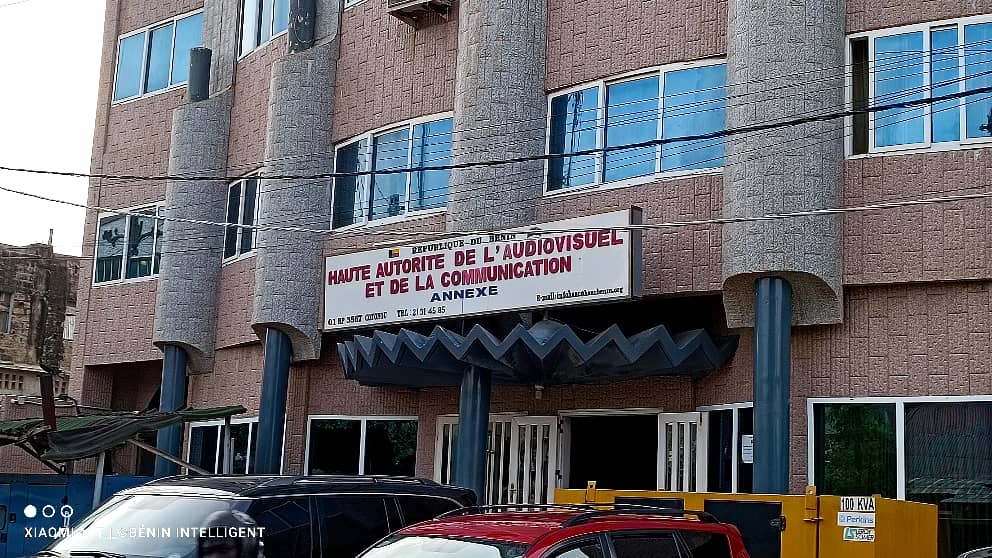
On November 13, 2025, Benin’s High Authority for Audiovisual and Communication (HAAC) issued a series of sweeping decisions targeting both individual journalists and media organisations. The regulator withdrew the professional press cards of 130 journalists and suspended eight radio and television outlets, citing the need to “clean up” the sector.
According to the HAAC, the decision followed a detailed audit of the national database of accredited journalists. The regulator reported that dozens of journalists failed to respond to official letters sent as part of the verification process. Others did not meet the statutory conditions for holding a press card, which include demonstrating that journalism constitutes their primary source of income, presenting the requisite educational qualifications, and submitting recent journalistic work. The regulator also noted that many cardholders were no longer active in the profession.
The November 13 decision resulted in the withdrawal of press cards from 123 print journalists and seven radio journalists, effectively stripping them of legal recognition as media professionals. In parallel, the HAAC issued sanctions against eight broadcasters. Radio Mifon FM lost its assigned frequency after failing to go on air for nearly four years. Couffo FM, Aïfa FM, Urban FM, and Nostalgie FM received similar sanctions for prolonged inactivity despite repeated warnings, which the HAAC considers a violation of the obligations agreed between licence holders and the regulator.
Three television stations, Canal 2 Star, Imalè Africa Television, and Tunde Agric TV, also had their broadcasting licences revoked due to persistent unavailability or intermittent airing of content. The decisions were taken under the framework of Benin’s Constitution, the Organic Law on the HAAC, the Information and Communication Code, and the Digital Code, which collectively empower the regulator to oversee media accreditation and compliance with broadcasting standards.
Despite these restrictive measures, the HAAC simultaneously announced the issuance of 287 new press cards as part of its updating exercise. The regulator has framed this as evidence of its commitment to professionalising the sector and ensuring that only qualified practitioners remain accredited.
While the Media Foundation for West Africa (MFWA) recognises the importance of regulatory oversight and the need to maintain high professional standards, the scale and abruptness of the sanctions raises concerns. A clean-up exercise of this magnitude should be accompanied by public and transparent dialogue, support measures, transparent timelines, and clear avenues for journalists and media outlets to regularise their status.
Professionalisation cannot be achieved only through punitive measures. Strengthening Benin’s media sector requires sustained engagement, capacity-building, and regulatory processes that upholds international best practices while ensuring compliance with national laws. The MFWA urges the HAAC to prioritise dialogue, transparency, and proportionality as it continues to implement reforms in the media landscape.