
In the month of June 2026, Freedom of Expression and Safety of Journalists in West Africa received a significant boost as the ECOWAS Community Court of Justice on June 22 ruled in favour of Nigerian journalist Jide Oyekunle.
The Court found the Nigerian police liable for assault on the journalist following his arrest and treatment during his coverage of the 2024 #EndBadGovernance protests in Abuja. The landmark ruling by the regional Court is a testament to how regional and international human-rights mechanisms bolster protections for press freedom and the safety of journalists, beyond national constitutional arrangements.
June also witnessed a considerable reduction in the recorded incidents of freedom of expression violations by nearly half (nine), compared with the number recorded in May (16).
Despite these gains, the use of legal, regulatory, and coercive measures by both state and non-state actors to suppress independent journalism and dissent persisted, posing a significant threat to democratic governance.
For instance, two news editors in Mali were remanded in custody for sharing their opinions and concerns over some national issues, while the call-in segment of a popular radio programme in Mali that allowed citizens to phone in and express their views on national issues was suspended for two months. In Nigeria, two separate peaceful citizens’ protests aimed at expressing concerns about poor governance turned violent, leading to assaults on some protesters, ultimately halting the protests.
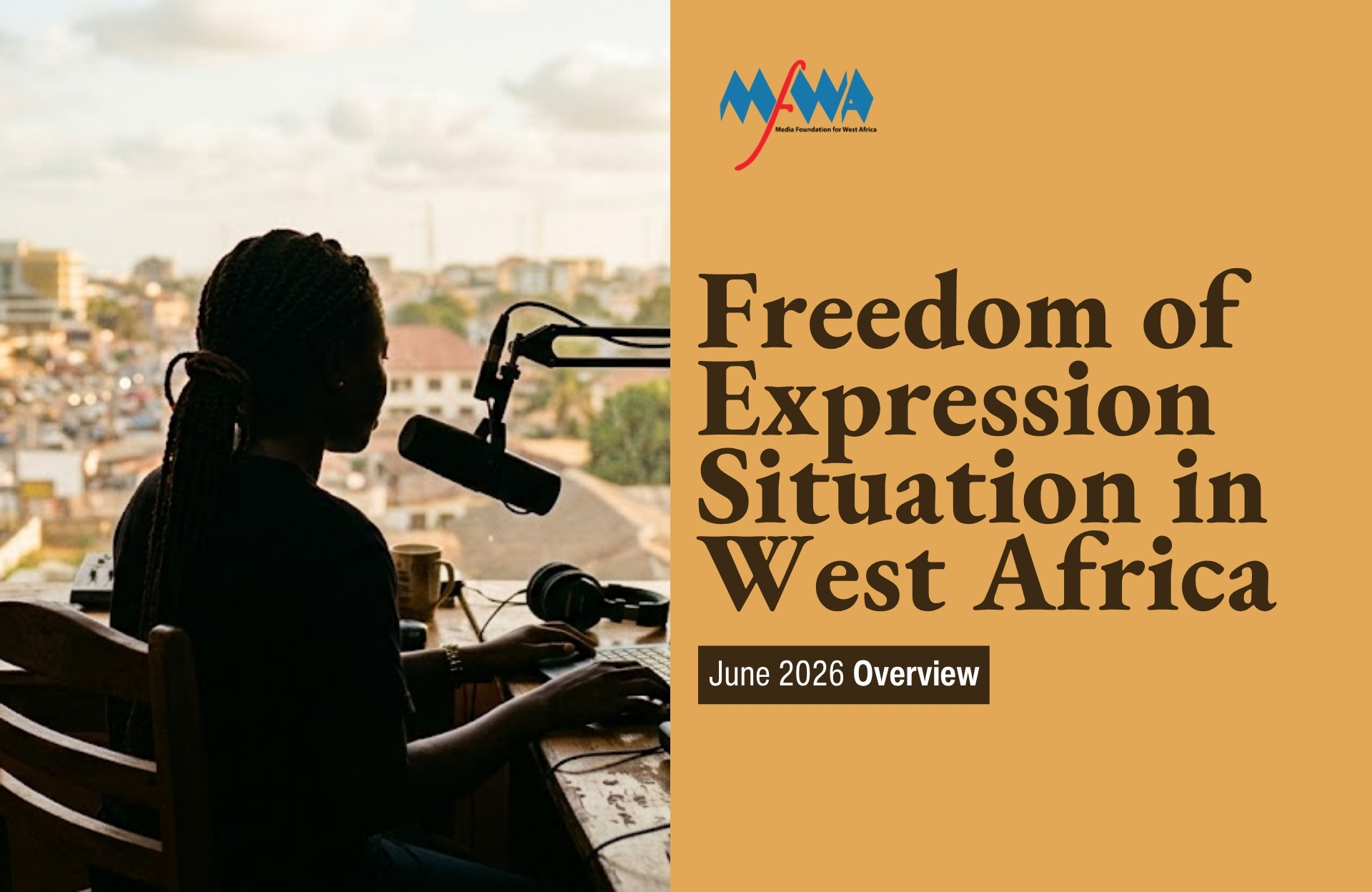
This June 2026 report is produced with support from the 11th Hour Project of The Schmidt Family Foundation to draw attention to the freedom of expression situation in West Africa. The report is compiled from data gathered through daily monitoring of the freedom of expression environment in the 16 countries by MFWA’s monitors, correspondents, and national partners.
Read the full report below
Loading Viewer...
Access File