
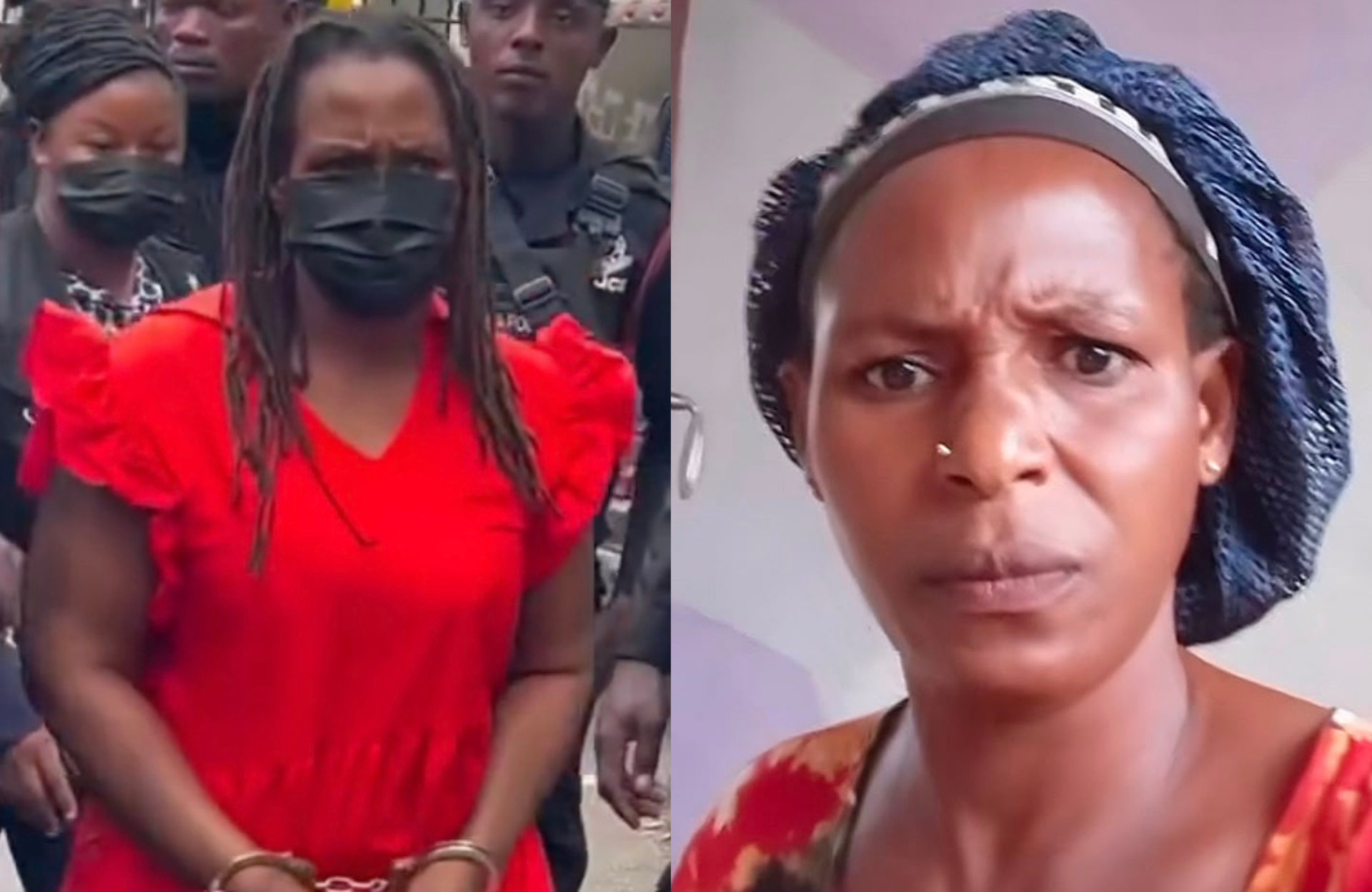
The Accra Circuit Court has sentenced 43-year-old TikToker, Camilla Alhassan, to one year in prison for sharing false claims about President John Dramani Mahama.
In a series of videos posted between June 30 and July 5, 2026, Camilla claimed that President Mahama had sacrificed 32 cows to secure political power, and alleged that the government’s initiative to distribute sanitary pads to victims of the June 29 flood was intended to conceal these alleged sacrifices.
Camilla was subsequently invited by the Criminal Investigation Department (CID) over the claims made in her TikTok videos. For failing to honour the summons, she was arrested on July 10, 2026, brought before the Accra Circuit Court 1 the same day, and charged with Offensive Conduct and Publication of False News under Sections 207 and 208 of Ghana’s Criminal Offences Act, 1960, respectively.
Camilla was found guilty and sentenced to one year’s imprisonment on the charge of Offensive Conduct conducive to breaches of the peace (section 207, Act 29) only. This offence relates to the derogatory or insulting comments made about the President in her videos.
In an interview with the media, her lawyer, Kwadwo Gyamfi-Bonsu, stated that the charge of Publication of False News was not upheld by the Court on the grounds that it falls under the jurisdiction of a higher court. He also stated that the court rejected the request for leniency by the defence, including pleas for a fine rather than a custodial sentence. The court argued that punishment was necessary to deter the increasing occurrence of the use of abusive language and the spread of false information on social media in Ghana.
While Offensive Conduct under Section 207 does not carry an explicitly stated penalty, misdemeanours under Ghana’s Criminal Offences Act generally attract a maximum sentence of three years’ imprisonment. Camilla’s one-year sentence, while below this, remains a significant custodial penalty.
Camilla’s arrest adds to a growing list of social media influencers detained under Sections 207 and 208 of Ghana’s Criminal Offences Act, 1960 since the start of the year. Though legal, the provisions have been widely condemned by the MFWA and other civil society organisations as disproportionate tools for addressing speech-related offences.
On May 26, 2026, TikTok content creator Mahama Aminat was arrested over alleged threats directed at President John Mahama and the First Lady, Lordina Mahama.
On April 7, 2026, Ghanaian pastor William Gyimah was arrested and remanded after being charged with making death threats against Vice President Naana Jane Opoku-Agyemang in a video that went viral on TikTok.
Isaac Boafo, a 45-year-old content creator known online as “Duabo King,” was arrested on March 1, 2026, by officers from the Police Intelligence Directorate at the Ashanti Regional Police Command, following a viral TikTok video in which he allegedly made false claims about police officers stationed at the Kumasi Central Command Police Station.
The MFWA reiterates its long-standing call for the review and reform of Section 76 of the Electronic Communications Act and Section 208 of the Criminal Offences Act. We also call on the relevant authorities to consider extending clemency to Camilla, in view of the disproportionate nature of a custodial sentence for conduct of this kind, and to explore non-custodial alternatives as her case proceeds through the appellate process.
While reiterating our support for freedom of expression and our preference for civil rather than criminal remedies in speech-related disputes, the MFWA strongly condemns disinformation and hate speech, and urges social media users, particularly content creators and social media influencers, to exercise responsibility and refrain from hostile, disinformation, or dangerous speech.