
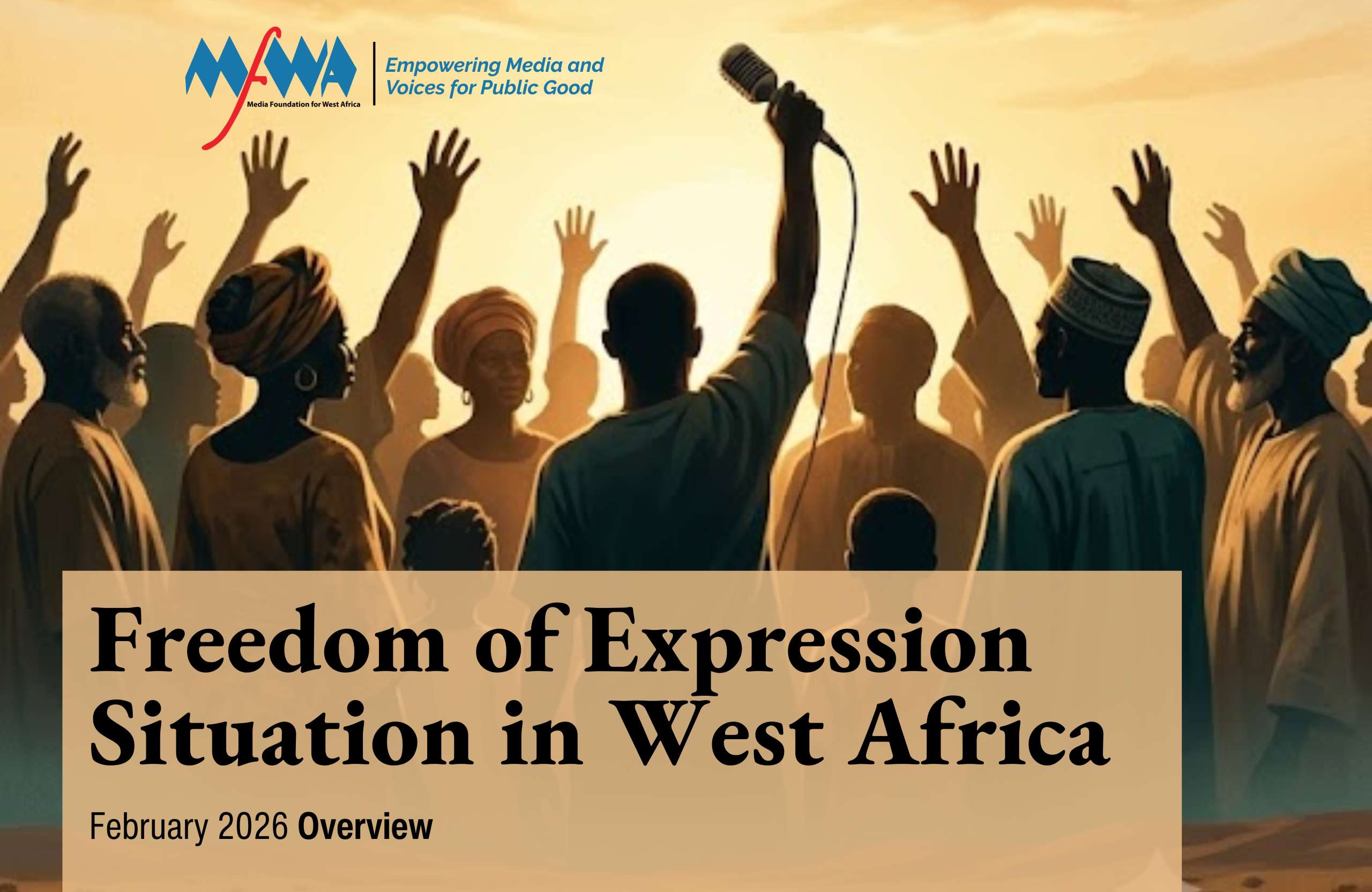
Freedom of expression and civic participation across West Africa remain under pressure in 2026. Over the past five years, this has been the stark reality, as the region has witnessed persistent violations of fundamental civic freedoms (both online and offline), with month-on-month fluctuations in violations.
Sadly, restrictions on civic space are evident in both democratic and military-led countries and are characterised by attacks on journalists, restrictive laws, regulatory sanctions, selective enforcement of false publication laws, and increasing pressure on critical and dissenting voices.
The attacks on freedom of expression in West Africa spilt over into February 2026 with eleven (11) violations documented across five countries: Senegal, Sierra Leone, Togo, Mauritania, and Mali. February witnessed a significant crackdown on civic and political expression as protests and rallies by students and opposition political parties were met with restrictive measures by governments and security agencies, curtailing the exercise of fundamental civic freedoms. Notable incidents included the arrests and detention of a flagbearer aspirant of Sierra Leone’s main opposition party, All Peoples Party (APC), Zainab Sheriff, and the arrest of editor in chief of the L’Alternance newspaper in Mali, Youssouf Sissoko; as well as threatening messages received by investigative journalist, Roger Amemavoh, in Togo after reporting on land and construction disputes in the Laté Kopé neighbourhood.
The documented cases of freedom of expression violations were a sharp increase over the frequency documented in the preceding month (9 violations recorded in January), with journalists, politicians, students, and media commentators facing fines, suspensions, arrests and detentions, and threats.
This February 2026 report is produced with support from the 11th Hour Project of The Schmidt Family Foundation to draw attention to the freedom of expression situation in West Africa and seeks to draw attention to the freedom of expression situation in West Africa. The report is compiled from data gathered through daily monitoring of the freedom of expression environment in the 16 countries by MFWA’s monitors, correspondents, and national partners.
Read the full report below.
Loading Viewer...