
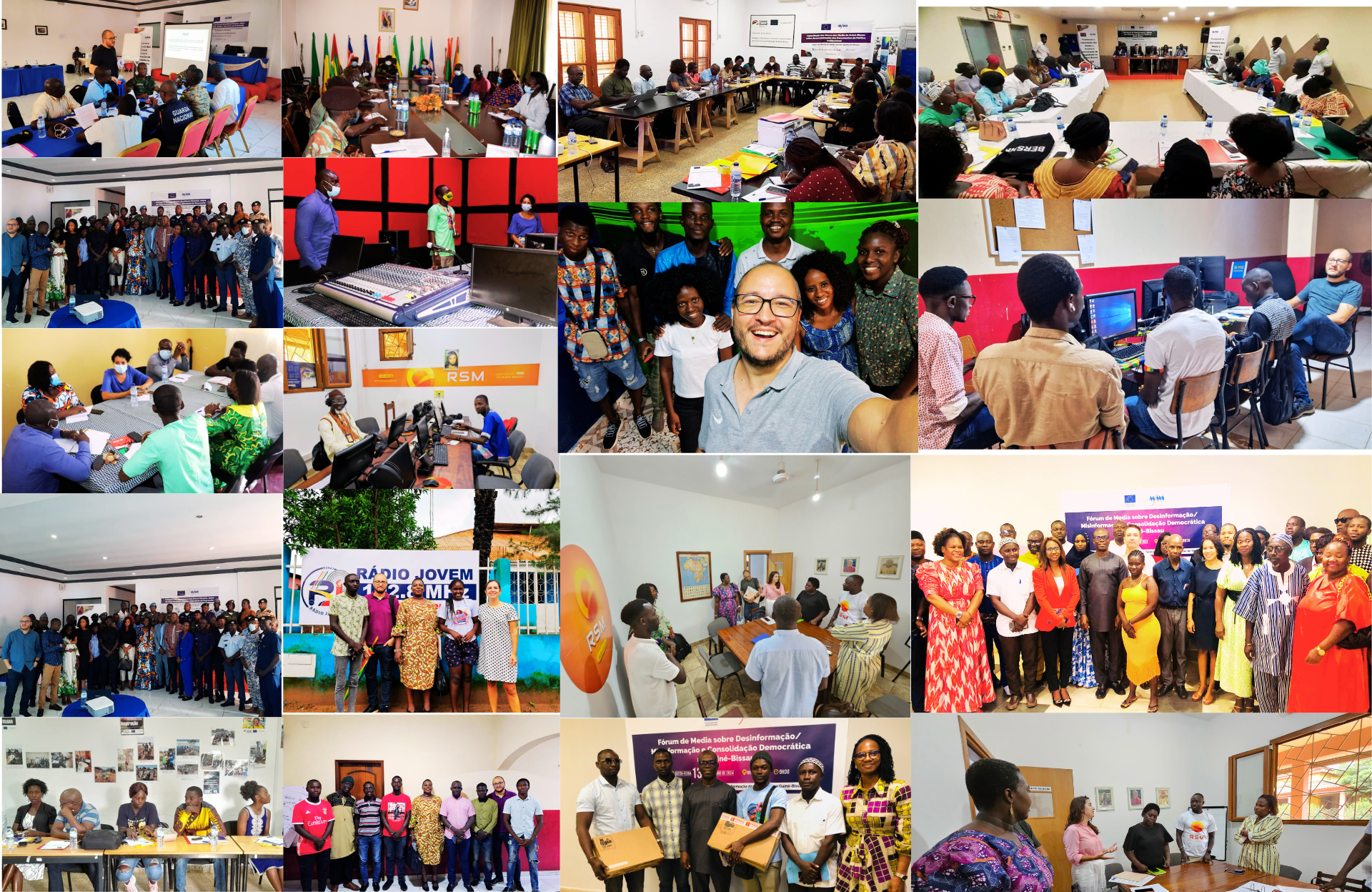
From June 2021 to November 2023, the Media Foundation for West Africa (MFWA), with support from the European Union (EU), implemented the project, ‘Promoting Media Freedom and Access to Quality Information in Guinea Bissau.’ The intervention sought to strengthen press freedom, improve access to reliable information, and foster a more enabling environment for independent journalism and civic participation in Guinea Bissau.
Why Guinea-Bissau?
Guinea Bissau occupies a unique position in West Africa’s media freedom landscape. Unlike countries such as Burkina Faso, Niger and Mali where military rule and insurgencies have severely constrained independent journalism and civic expression, Guinea-Bissau has not experienced the same levels of repression. Yet, it also falls short of the more open media environments like Cape Verde, Ghana and Senegal.
The country’s performance on the annually compiled global press freedom index from 2021 to 2023 attested to this. In that period, Guinea Bissau had stagnated at the ranking of 72nd out of 180 countries in 2021 and 2022, and then improved by two places to 70th in 2023.
A baseline assessment conducted by the MFWA revealed significant challenges. Key local media associations and actors (such as SINJOTECS, RENARC, AMPROCS, Ordem dos Jornalistas-OJGB) lacked the requisite institutional capacity to monitor and document violations of media and freedom of expression rights. State institutional actors (notably, the police, military, the regulatory bodies, the judiciary and the Human Rights Commission) had limited appreciation of international human rights standards and their normative role in safeguarding media and free expression rights. Journalists also faced capacity gaps in producing ethical, fact-based, and accountability-driven journalism. In addition, media associations had limited regional and international networks, weak online presence, and few mechanisms for mobilising external solidarity.
These challenges made Guinea Bissau a compelling case for the MFWA, which got funding support from the European Union to implement the project to help expand press freedom in the country.
What we did
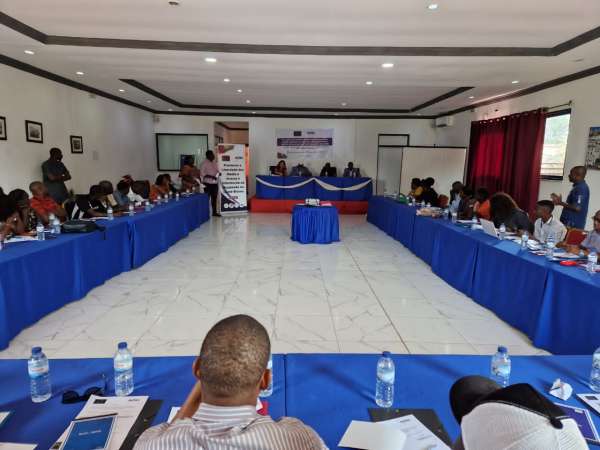
Recoginsing that restrictions on civic freedoms and weakness in journalistic practice were mutually reinforcing, the MFWA adopted a multi-stakeholder approach that engaged both media professionals and state authorities. Working closely with media actors, government institutions, security agencies, regulatory bodies, the judiciary, parliamentary committees and the National Media Council, the project fostered dialogue, collaboration, and shared ownership of reforms.
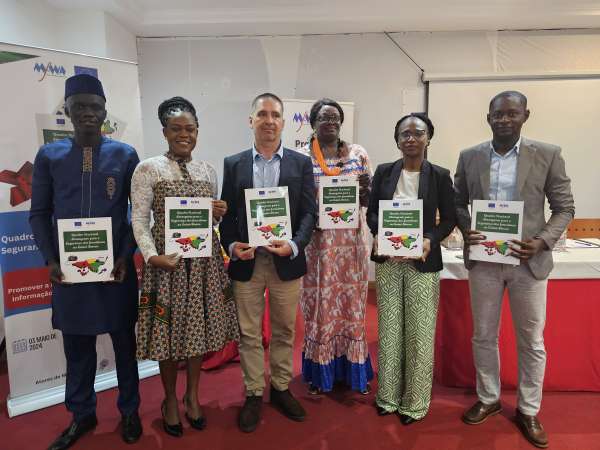
One of the most significant achievements was the launch of a National Comprehensive Framework on Safety of Journalists unveiled on World Press Freedom Day, May 3, 2024. The framework provides the country’s first nationally agreed-upon guide for protecting journalists and promoting a safer working environment for the media in Guinea Bissau.
The project also enhanced the capacity of media professionals from the main media associations (including SINJOTECS, RENARC, AMPROCS, Ordem de Jornalistas (OJGB)) to monitor media ethics, document violations, and advocate for accountability and reform.
To combat misinformation and strengthen access to credible information, the project empowered 60 Journalists and managers from 10 major media organisations, and 35 social media influencers, in fact-checking and media and information literacy (MIL). The MIL materials were produced in Portuguese, Creole, Balanta and Fula, ensuring that diverse communities could access reliable information in languages they understand.
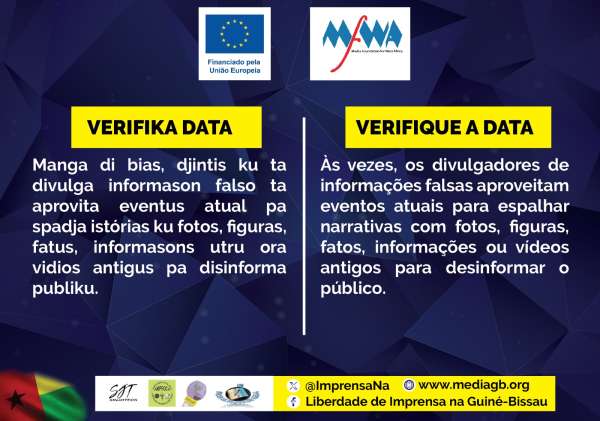
The project also produced several reports on press freedom and freedom of expression violations, which informed policy discussions among stakeholders.
To strengthen international solidarity and collaboration, the MFWA facilitated the membership of SINJOTECS with three international media development organisations: the West Africa Democracy Solidarity Network (WADEMOS), the Global Forum for Media Development (GFMD), and the African Freedom of Information Centre (AFIC). Dedicated websites were also built or developed for key media organisations, enhancing their visibility and capacity to document their work and engage regional and international partners.
As a demonstration of solidarity and support for independent and accountability journalism, the MFWA and the EU Delegation to Guinea-Bissau presented laptops and digital recorders to Radio Capital FM, a station that had suffered repeated attacks and regulatory challenges that forced its closure for a year, hindering public access to quality information.
The project also advocated for the protection of civic space, urging authorities to reconsider the ban on demonstrations or rallies and to uphold constitutional guarantees of freedom of assembly and expression. This was an advocacy that emphasized that the ban on demonstrations infringed on Article 54 (1-2) of Guinea Bissau’s Constitution.
Why this work matters
Media freedom is a cornerstone of democratic governance. Thus, by strengthening institutions, improving journalistic standards, and fostering dialogue between media actors and public authorities, the project helped lay the foundations for a more open, accountable, and inclusive public sphere in Guinea Bissau.
Importantly, the intervention addressed a longstanding gap in media development support for Lusophone West Africa, while exposing local stakeholders to international standards, opportunities and networks that can sustain future progress.
Perhaps the most enduring contribution of the project has been the creation of constructive channels of dialogue and collaboration between the media and state authorities; relationships that are essential for building trust, reducing tensions and advancing democratic norms.
The difference we made
The impact of the project was both tangible and immediate.
In all, the project directly benefited 350 people and reached an estimated 1.5 million more across Guinea-Bissau through media and information literacy broadcasts in Portuguese, Creole, Balanta and Fula, alongside flyers circulated on Facebook, WhatsApp and X (Twitter).
Among the most visible of these gains was the restoration back on air, of 77 out of the 79 radio stations that had been shut down for non-payment of license fees. Following sustained engagement between the MFWA, local media actors, and government authorities, a proposal was adopted allowing affected stations to settle outstanding debts through staggered payments, enabling them to resume broadcasting and continue serving their communities.
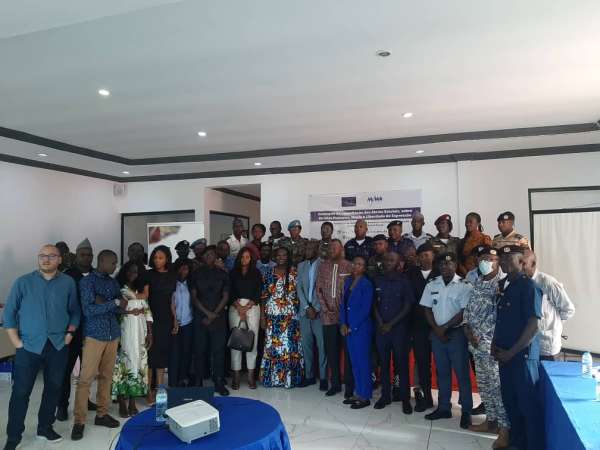
Additionally, the project invested in the people and institutions behind the media. More than 130 state actors received training on human rights, freedom of expression and media freedom, while media associations received practical skills for documenting violations and advocating reforms. To sustain this progress, a tailored training manual on media and freedom of expression rights was also developed.
SINJOTECS membership with three international media development organisations, which the MFWA facilitated as part of the project, has positioned Guinea Bissau’s journalists as members of international networks with whom they have solidarity and the opportunity for collaboration.
The National Comprehensive Framework on Safety of Journalists now serves as a national reference and a standard manual for all media practitioners in respect of staying safe as practicing professionals.
Lessons we learned
The project outcomes demonstrate that sustainable reforms are most effective when they are locally owned. While international standards guided the intervention, solutions were developed collaboratively with media organisations, public institutions, and other national stakeholders. This approach fostered a sense of local ownership, strengthened commitments, and increased the likelihood of long-term sustainability.
The experience also highlighted the value of inclusive, multi-stakeholder engagement, bringing media associations and actors, governmental authorities, and civil society organisations together helped break down barriers, build trust, and generate practical solutions that reflected local realities.
Finally, the project reaffirmed the importance of strong institutional frameworks. Effective journalism depends not only on individual capacity but also on systems, policies, and safeguards that enable media professionals to operate freely, safely and responsibly.
What next?
Building on the success of the first phase, the EU has extended its support through a second phase of the initiative. The MFWA now leads a consortium that includes Reporters Sans Frontières (RSF) and Fondation Hirondelle (FH), working to deepen reforms and address persistent challenges in media freedom, journalist safety, media regulation, capacity development, and media literacy. Together, the partners aim to consolidate gains made thus far and help build a more resilient, independent, and professional media sector in Guinea-Bissau.