
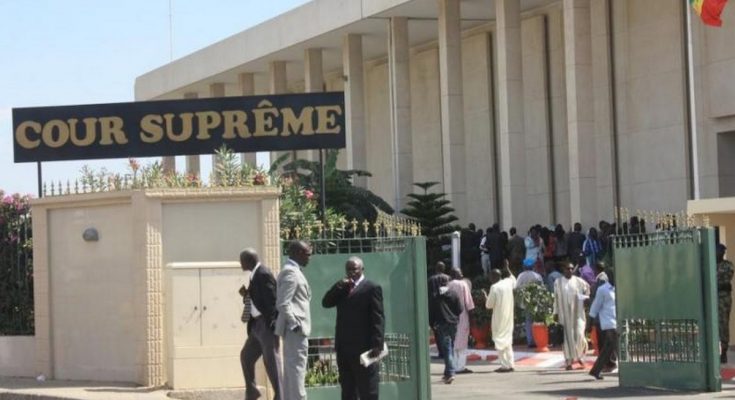
Senegal’s Supreme Court on May 2, 2025, rejected the final appeal of investigative journalist René Capain Bassène, upholding a life sentence for complicity in murder, attempted murder, and criminal association in connection with the 2018 Boffa-Bayotte massacre, in which 14 loggers were killed in a forest in southern Casamance.
The ruling exhausts Bassène’s domestic legal options, despite serious concerns raised by international press freedom and rights organisations about due process violations, coerced testimony, and flawed evidence.
The massacre occurred in the Boffa Bayotte forest near Ziguinchor, close to the Guinea-Bissau border. The attack was attributed to suspected members of the Mouvement des Forces Démocratiques de Casamance (MFDC), a separatist group that has waged a low-level insurgency in the region since 1982. Seven people were injured and three escaped.
Bassène was arrested on January 14, 2018, eight days after the killings, and charged alongside 22 others. He was first sentenced to life imprisonment on June 13, 2022, by the Tribunal de Grande Instance de Ziguinchor, along with MFDC faction leader César Atoute Badiate, who was convicted in absentia and remains at large, and Omar Ampoï Bodian, a suspected MFDC member.
Bodian was acquitted on appeal on August 29, 2024. Virtually all other co-defendants have been acquitted or released. Bassène remains the sole person still imprisoned in connection with the massacre.
Bassène has maintained his innocence throughout. His lawyer, Ciré Clédor Ly, appealed the conviction, but the Ziguinchor Court of Appeal upheld the life sentence on August 29, 2024. A final appeal to the Supreme Court (Court of Cassation) was rejected on May 2, 2025. Following the ruling, Bassène was transferred overnight to the Aristide Le Dantec Hospital in Dakar, where he was placed in a ward for sick detainees.
An independent investigation published in January 2025 found significant flaws in the case. Seven former co-defendants, all subsequently acquitted, told investigators they were coerced into implicating Bassène or forced to sign inaccurate interview records.
The investigation also documented allegations of beatings and electric shocks during interrogations. Testimony attributed to Bassène in official records contained factual inconsistencies and timeline contradictions.
Four witnesses, including Bassène’s wife, Odette Victorine Coly, and a neighbour who said he was with the journalist at a local football match, told investigators that Bassène was in the Kandialang neighbourhood of Ziguinchor at the time of the killings, approximately 10 kilometres from the forest. The prosecution relied on geolocation data from Bassène’s phone to place him at the scene, but his legal team’s request for call transcripts was refused.
Bassène is the author of three books on the Casamance conflict and was finalising a fourth, “Un conflit qui nourrit plus qu’il ne tue” (A Conflict That Feeds More Than It Kills), which examined how individuals on both sides had allegedly profited from the prolonged insurgency.
A review of court documents found that prosecutors cited Bassène’s journalistic work before and after the killings in arguments for his conviction, reinforcing concerns that his reporting was treated as evidence of criminality.
The Media Foundation for West Africa (MFWA) is deeply concerned by the continued imprisonment of René Capain Bassène, particularly given the acquittal of all co-accused, the documented evidence of coerced testimony, and multiple witness accounts placing him away from the scene of the killings.
The MFWA calls on the Senegalese authorities to order an independent and transparent review of the case, taking into account the serious concerns about the integrity of the investigation, the inconsistencies in the evidence, and the reports of coercion and fabrication in witness testimony.
The MFWA further appeals to the African Court on Human and Peoples’ Rights to take up this case as a matter of regional concern. Bassène’s continued detention, in the absence of credible evidence and following a process marred by documented irregularities, undermines Senegal’s standing as a leader in press freedom and the rule of law in West Africa.