


The Gambia Press Union (GPU), country partner of the MFWA, has renewed calls for the Gambian government to expedite the progress of processes to repeal anachronistic legal provisions from the colonial past; and to reverse new provisions passed under the erstwhile Yahaya Jammeh regime, considered antithetical to media and free expression rights.
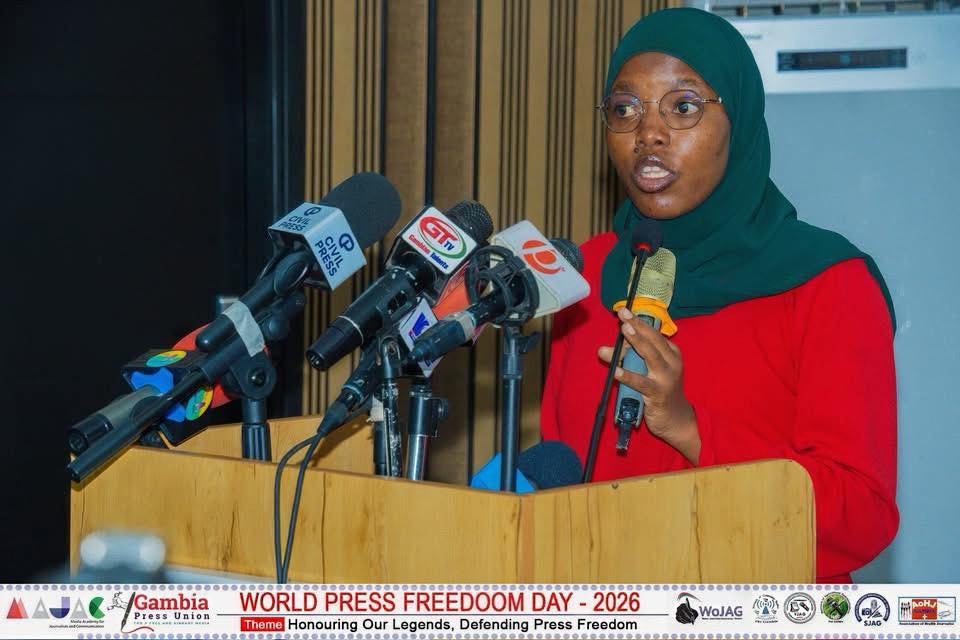
Addressing stakeholders to mark the 2026 World Press Freedom Day, GPU President, Isatou Keita, accused the government of lacking the political will to reform “restrictive laws that significantly put journalists under pressure and self-censorship.” She noted that some of the laws which the government had agreed to review under recommendations of the Truth, Reconciliation and Reparations Commission (TRRC) are still being used against journalists.
The GPU President also highlighted persistent threats to media independence; including selective placements of government advertisements, the lack of subvention for private media, harassment and arrests of journalists, legal threats and action against reporters, and the weak implementation of the Access to Information Act, 2021.
The Gambian government launched a media law reform process in 2018, promising to align national legislation with international standards on freedom of expression as part of the country’s broader democratic transition after the Yahya Jammeh junta era. A Media Law Review Committee, comprising government officials, journalists, civil society representatives, and legal experts submitted recommendations to repeal or amend several restrictive laws; including: the Information and Communications Act (2009); the Criminal Code (1933) (especially sections on defamation, sedition, and “false news”); the Indemnity Act (2001); and the Gambia Radio and Television Services (GRTS) Act (2004). The rest are the Telegraph Stations Act (1990), the Official Secrets Act (1922), and the Newspaper and Broadcasting Stations Act (1944).
Although the government accepted many of these recommendations in principle, implementation has stalled. Meanwhile, newer laws such as the Cybercrime Bill, 2023 and the Communication Bill 2025, include provisions that could restrict media and freedom and expression rights offline and online, and undermine investigative journalism.
The GPU president also criticised proposed media regulations that would empower the state-controlled Public Utilities Regulatory Authority (PURA) to register and license journalists, suspend or revoke their accreditations, moderate online media content, and licence digital news outlets.
She pointed out that these new measures contradict international standards on freedom expression. “The GPU would like to reiterate its call to the Gambia Government to abandoned its plan to impose a general state system of registration and licensing of journalists, and support media self-regulation by strengthening the Media Council of The Gambia (MCG),” she stressed.
The GPU urged the government to honour its reform commitments, implement the UN Plan of Action on the Safety of Journalists and the Issue of Impunity, and fully enact the recommendations of the Truth Commission.
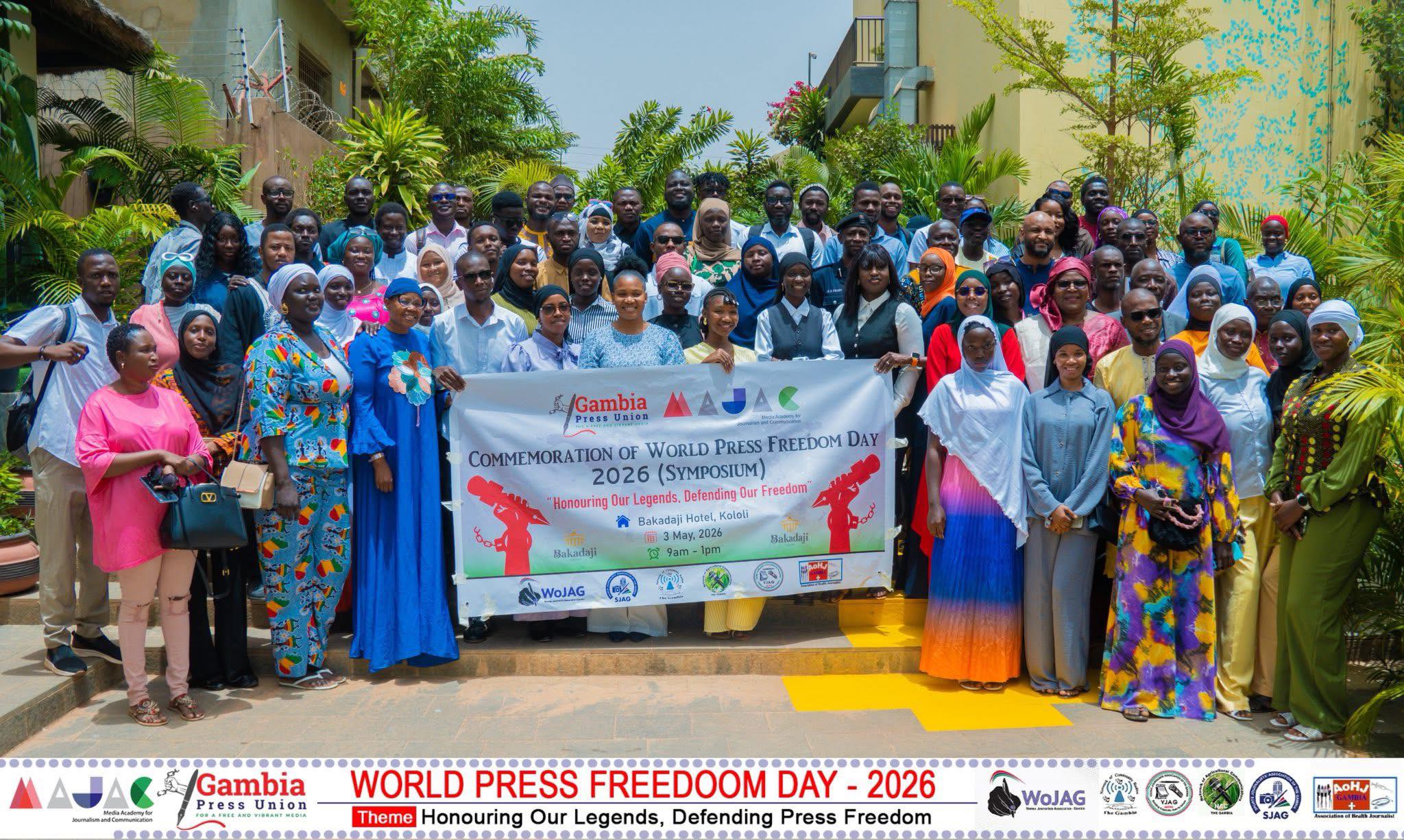
The 2026 World Press Freedom Day commemoration in the Gambia was held under the theme, “Honouring Our Legends, Defending Our Freedom.”

