
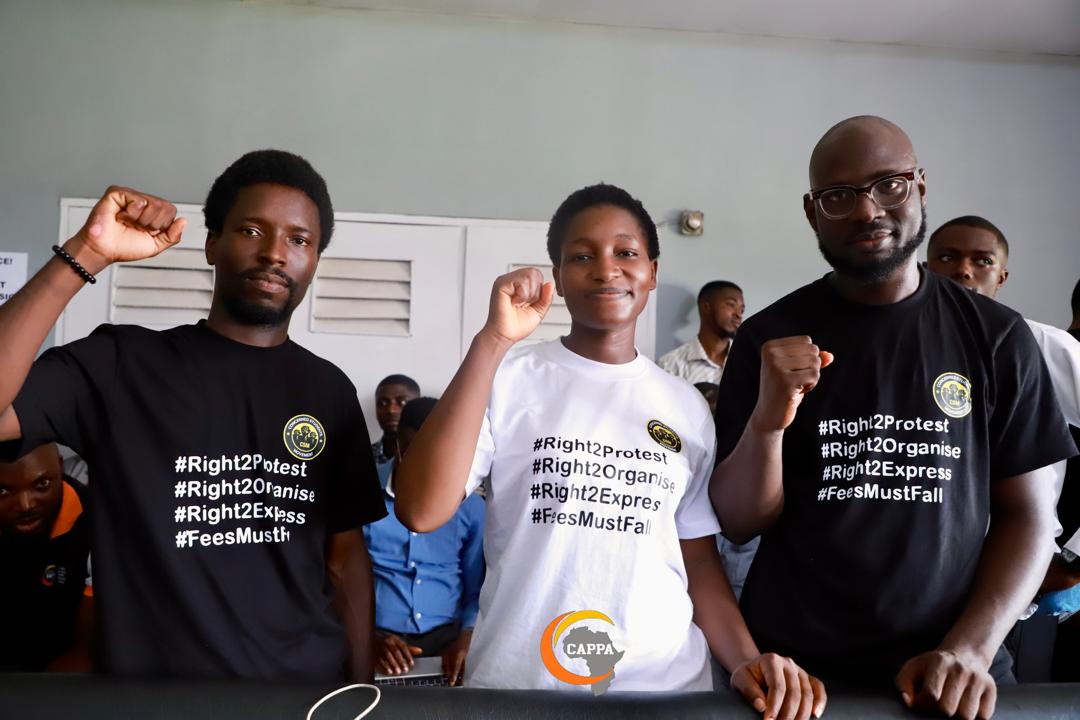
A Federal High Court in Ibadan, Oyo State, on Wednesday, April 15, 2026, has ordered the University of Ibadan (UI) to reinstate three students who were suspended for participating in a protest against a tuition fee increase in May 2024 during a school event.
The case was brought before the court after the affected students, Aduwo Ayodele, Gbadegesin Olamide Iyanuoluwa, and Linus Nice Adaoma, challenged the university’s decision, naming the institution and its Vice-Chancellor, Kayode Adebowale, as respondents.
They argued that the sanctions imposed on them were excessive and unconstitutional, and aimed at suppressing their right to peacefully express concerns about rising fees, while the university maintained that due process had been followed and described the students’ conduct as disruptive.
The protest, which focused on a significant increase in tuition fees, intensified when university security officers intervened. They later handed the protesters over to security operatives of Operation Burst (a joint security task force established by the government of Oyo State to respond to crime and security threats), who profiled them as suspected cultists.
According to court filings, the students were taken to a military facility in Agodi, Ibadan, where they were eventually released after officers expressed surprise at the situation. Subsequently, the university charged the students with misconduct and initiated disciplinary proceedings.
Ayodele and Gbadegesin were found guilty and handed a four-semester rustication, scheduled to begin in the second semester of the 2024/2025 academic year, effectively barring them from academic activities. Linus, on the other hand, was prevented from taking her oath of office as a member of the Students’ Representative Council on the grounds that she was facing disciplinary action.
Contesting the outcome, the students insisted that their protest was peaceful and that the punishment was disproportionate. They further alleged intimidation and procedural unfairness, claiming they were denied the opportunity to adequately present evidence in their defense.
In their suit, they asked the court to declare the disciplinary process unconstitutional, set aside the sanctions, and restrain the university from further punitive action.
In a judgment delivered on April 15, 2026, Justice Nkeonye Maha ruled in favor of the students, nullifying the four-semester suspension and holding that the university’s disciplinary process violated their constitutional right to a fair hearing. While acknowledging universities’ authority to discipline students, the court stressed that such powers must be exercised in accordance with due process.
The judge found that the failure to guarantee a fair hearing rendered the entire process invalid. The court also restrained the university from taking further disciplinary action against the students in relation to the protest, noting that there was no clear evidence that their actions disrupted the event.
The Media Foundation for West Africa (MFWA) views the court’s ruling as a strong affirmation of students’ rights to peaceful expression. Academic institutions such as the University of Ibadan must protect, not suppress, dissent. The use of disproportionate force and disciplinary measures against nonviolent protest creates a chilling effect on student participation in matters that concern their well-being.