
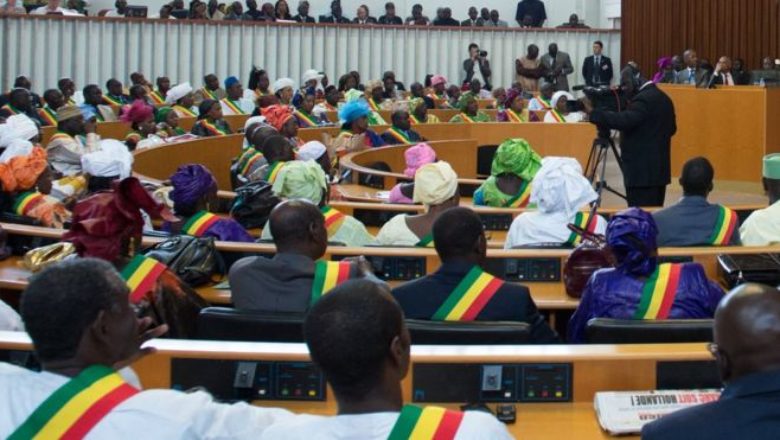
Senegal’s National Assembly on March 3, 2026, adopted a new law establishing the National Media Regulatory Council (CNRM), marking a significant shift in the country’s media governance framework. The reform seeks to update regulation in response to the rapid expansion of digital platforms, social media, and emerging challenges such as disinformation and artificial intelligence.
Unlike previous frameworks, the CNRM’s mandate extends beyond audiovisual media to cover print, online outlets, content creators, and foreign media accessible within Senegal. The government gave its assurance that the law “is neither a tool for censorship nor a restriction of freedoms,” but aims to protect freedom of expression within a responsible framework, guarantee reliable information, strengthen the protection of minors, and preserve social cohesion.
Until now, media regulation in Senegal was primarily handled by the National Audiovisual Regulatory Council (CNRA), created in 2006, and the Council for the Observance of Ethical and Professional Standards (CORED), established in 2009. While these bodies addressed aspects of broadcast regulation and professional ethics, their scope remained limited, particularly regarding digital platforms. The new law according to the government aims to fill this gap by introducing a more comprehensive regulatory system that reflects the current media ecosystem.
However, the MFWA’s national partner, Senegalese Union of Information and Communication Professionals (SYNPICS), and the Senegalese Council of Broadcasters and Press Editors (CDEPS) have expressed serious concerns denouncing in particular their exclusion from the process of drafting the bill.
The unions claim that it was not involved in the preliminary discussions, despite their role in defending the interests of media professionals. They deplore the lack of dialogue on issues deemed essential to the work of journalists and media professionals, and the fact that the bill was not shared with them before its adoption in an institutional context that has been tense since the change of government on March 24, 2024.
Criticism of the new law focuses mainly on the broad powers granted to the CNRM: administrative closure of media outlets, suspension of media, blocking of content, or cutting off access to platforms, with immediate enforcement of decisions without the possibility of appeal.
Furthermore, the unions point to concerning gaps in Article 31 of Chapter 4, regarding the CNRM’s operating rules, which grants it the authority to collect, through summons or directly on-site, any information and justification related to published content. Professional secrecy, in areas within its jurisdiction, cannot be invoked against the CNRM.
In a statement, the CDEPS described this new bill as a threat to press freedom. They claim the new bill disregards the safeguards provided by the Supreme Court as evidenced by recent rulings. In a December 11, 2025 ruling, the Court stated that “the creation of a media outlet is not subject to any prior authorisation” and that “media activity is a fundamental freedom.” A few months earlier, in June 2025, it had suspended an administrative order prohibiting the broadcasting of some media outlets.
The CDEPS also fears that some CRNM operations could be taken without formal notice, as the president of the CNRM alone can make certain decisions. The Council believes that the power granted to the CNRM to suspend a media outlet without prior notice is incompatible with the principles of press freedom, as guaranteed by the Constitution.
For the CDEPS, these provisions go beyond the scope of balanced regulation and could threaten the independence of the media, their economic viability, and democratic stability. It calls on all active forces, citizens, civil society, political parties, religious authorities, economic actors, and academics to mobilise in order to avoid, in its words, “a democratic regression.”
The Media Foundation for West Africa (MFWA) acknowledges the need to modernise media regulation in light of technological changes. However, the MFWA urges the authorities to ensure that the implementation of the new law is guided by transparency, proportionality, and respect for constitutional guarantees. The organisation also calls for sustained dialogue between regulators, media professionals, and civil society to ensure that reforms strengthen, rather than constrain, press freedom in Senegal.