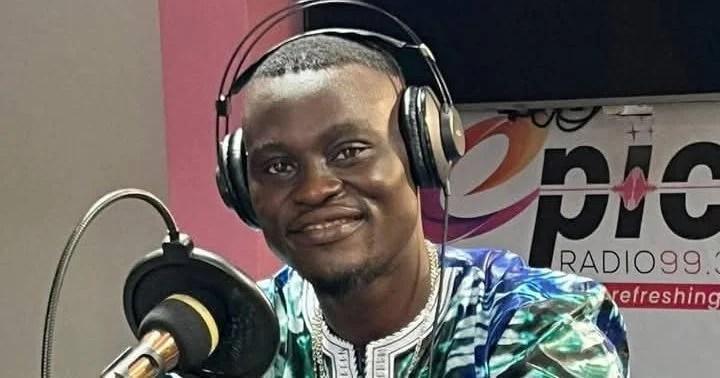

The court case involving journalist Latif Iddrisu of The Multimedia Group Limited, and the Inspector General of Police (IGP), with the Attorney General as co-defendant, remains unresolved more than eight years after the assault that triggered the suit.
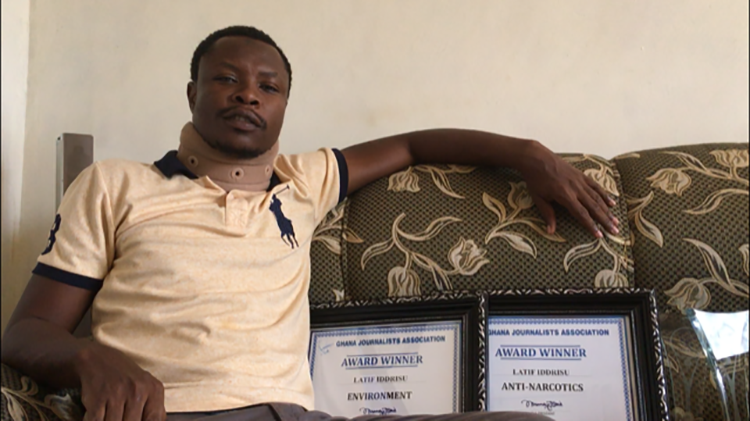
On 27 March 2018, Latif Iddrisu was reporting on protests at the Criminal Investigation Department (CID) headquarters in Accra when he was assaulted by police officers. According to his account, the incident occurred after he approached an officer to ask about the name of an anti-riot vehicle deployed to control the crowd. He was subsequently beaten, sustaining a fractured skull and other serious injuries.
In the immediate aftermath, the Ghana Police Service publicly assured that compensation would be provided. That commitment was later withdrawn. In response, Iddrisu and The Multimedia Group initiated legal proceedings against the IGP and the State, seeking damages and judicial redress.
What might ordinarily have been a relatively straightforward civil action has been marked by repeated adjournments, changes in presiding judges and procedural interruptions. By early 2026, four different judges had handled the matter at various stages, contributing to its prolonged duration. The extended timeline has drawn attention to structural inefficiencies within the judicial process, particularly in cases involving alleged misconduct by state security agencies.
On 27 January 2026, the defence formally opened its case at the Family Court in Accra. A key police witness, however, was unable to provide substantive clarification on central elements of the IGP and the State’s defence. Notably, the witness struggled to confirm details surrounding an alleged identification parade purportedly conducted to identify officers involved in the assault.
During cross-examination, the witness repeatedly stated that he did not recall specific dates, documentation or procedural steps. No documentary evidence was tendered in court to corroborate the existence or outcome of such a parade. According to Iddrisu, the police witness testified that an identification parade had taken place and that the journalist had failed to identify his alleged attackers. Iddrisu publicly rejected this claim, describing it as false and maintaining that no such parade was conducted.
The case has also been delayed on several previous occasions due to the absence of state attorney or police witnesses, despite prior agreement on hearing dates. Each adjournment has extended the litigation timeline and deferred resolution.
Throughout the proceedings, the Media Foundation for West Africa (MFWA) has monitored the case and characterised it as illustrative of broader concerns about journalist safety and accountability in Ghana. The organisation condemned the 2018 assault and called for a prompt and impartial investigation. It has further highlighted subsequent incidents affecting Iddrisu, including an attack in May 2025 by political party supporters and security personnel while he was reporting live at the Economic and Organised Crime Office (EOCO) in Accra.
Beyond this individual case, monitoring reports have documented recurring incidents of intimidation, physical assault and impunity affecting media practitioners. Journalists pursuing civil remedies often incur substantial legal expenses, medical costs and income losses while cases proceed slowly through the courts. Prolonged proceedings can have deterrent effects, discouraging victims from seeking judicial accountability.
The ongoing litigation remains a significant test of the justice system’s capacity to address allegations of police misconduct and to safeguard freedom of expression. As the trial continues into 2026, its outcome will carry implications not only for Latif Iddrisu, but also for institutional accountability and the protection of journalists operating in Ghana.