
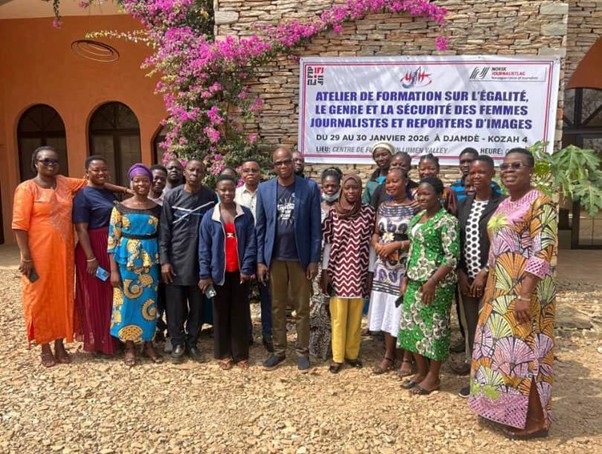
The Union of Independent Journalists of Togo (UJIT), through its Togolese Observatory for the Image of Women in Media (OTIFEM), has reaffirmed its commitment to gender equity and the protection of women in the media by organising a two-day capacity-building workshop in Djamdè, Kozah 4 commune, in the Kara region.
Held from January 29 to 30, 2026, the training brought together male and female journalists and image reporters under the central theme: “Equality, Gender and the Safety of Women Journalists and Image Reporters.” The workshop was officially opened by the Deputy Mayor, Emile Bamazi. Through this initiative, UJIT sought to equip female journalists with practical skills and tools to strengthen their professional safety and promote gender equity within media organizations.
The training began with in-depth discussions on the fundamentals of gender and equality, led by resource person and UJIT’s financial secretary, Ms. Ida Badjo, in which she clarified these concepts within the context of journalism. She emphasised that gender equity must be reflected in everyday newsroom practices, including fair distribution of tasks and equal remunerations. “The issue of gender implies total equity in daily work,” she noted.
The training also addressed discrimination and inequality in the workplace. In a session titled “Accepting Difference and Fighting Discrimination,” Mrs. Patricia Adjisseku used interactive methods to demonstrate how bias influences professional relationships. She encouraged media organisations to eliminate discrimination and harassment, and foster equal and respectful collaboration between men and women.
Beyond raising awareness, the program reminded participants of their professional rights. A session on “The Rights of Journalists” highlighted the rights to: inform and to seek information in the public interest; equal access to employment opportunities; protection against sexual harassment; and discrimination based on sex, religion, or ethnicity. Participants also examined available professional safeguards legal remedies in cases of abuse.
Recognising and responding to the growing risks, especially for women, in digital spaces, the second day focused on digital safety and anti-bullying strategies. Discussions covered the protection of personal data, secure use of social media, and practical ways to prevent workplace harassment and online abuse.
Participants were equipped with skills to navigate the digital landscape more safely and confidently. To measure progress and consolidate learning outcomes, organisers conducted a pre-test at the beginning of the workshop and a final evaluation at the end.
In his closing remarks, Eli Goka-Adokanu, Secretary General of UJIT, said the initiative reflects a broader commitment to press freedom. “Protecting journalists, especially women, is a global challenge,” he noted, emphasising that access to essential protection tools is fundamental to safeguarding journalism in Togo.
The workshop ended with the presentation of certificates to participants, marking the end of the January 2026 session and signaling a significant step forward in strengthening the security, representation, and empowerment of women in Togolese media.