


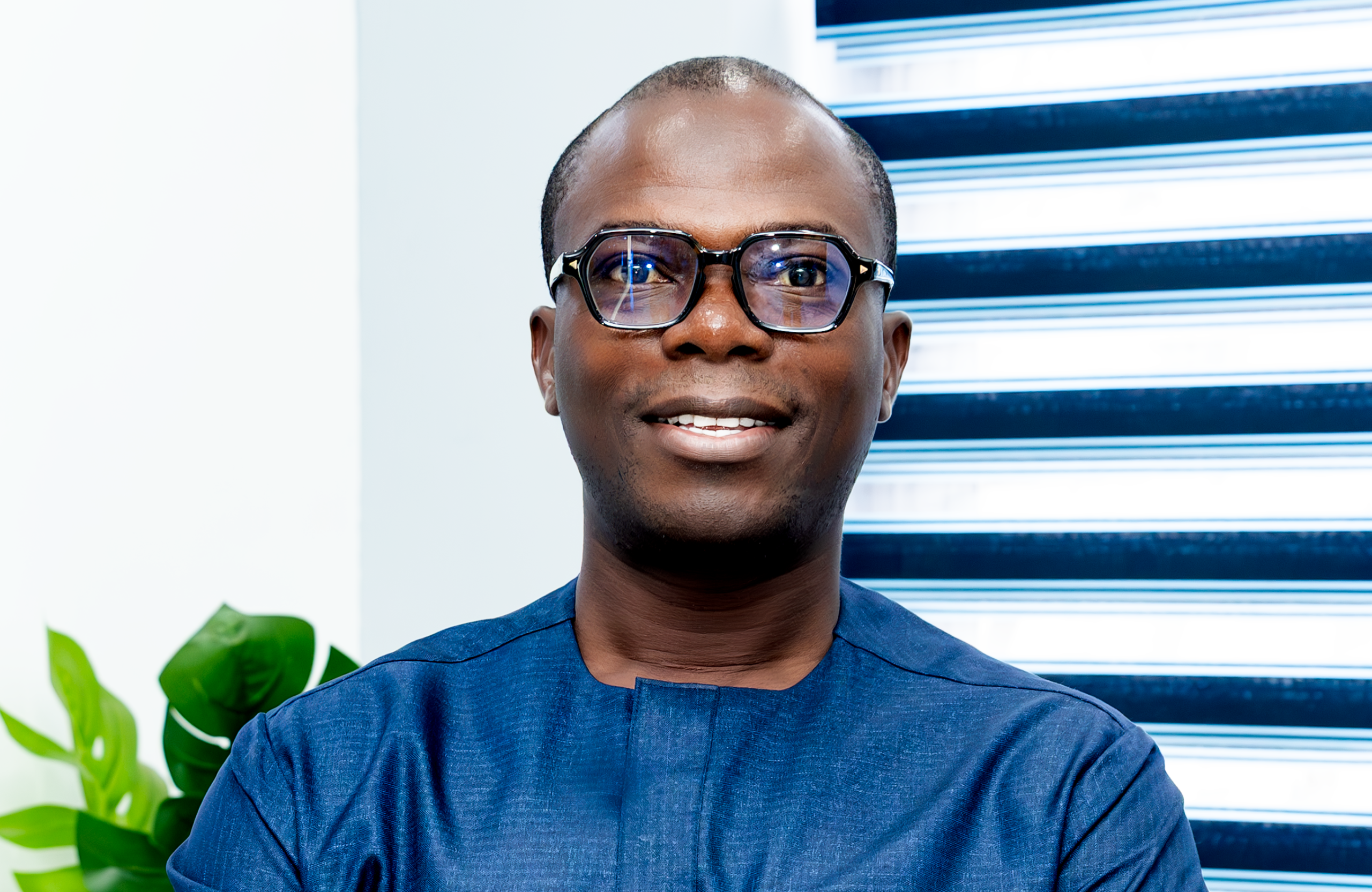
The Executive Director of the Media Foundation for West Africa (MFWA), Sulemana Braimah, has called on the Economic Community of West African States (ECOWAS) Commission to spearhead a regional effort that ensures global Big Tech firms compensate local media for content used by, or consumed via their platforms.
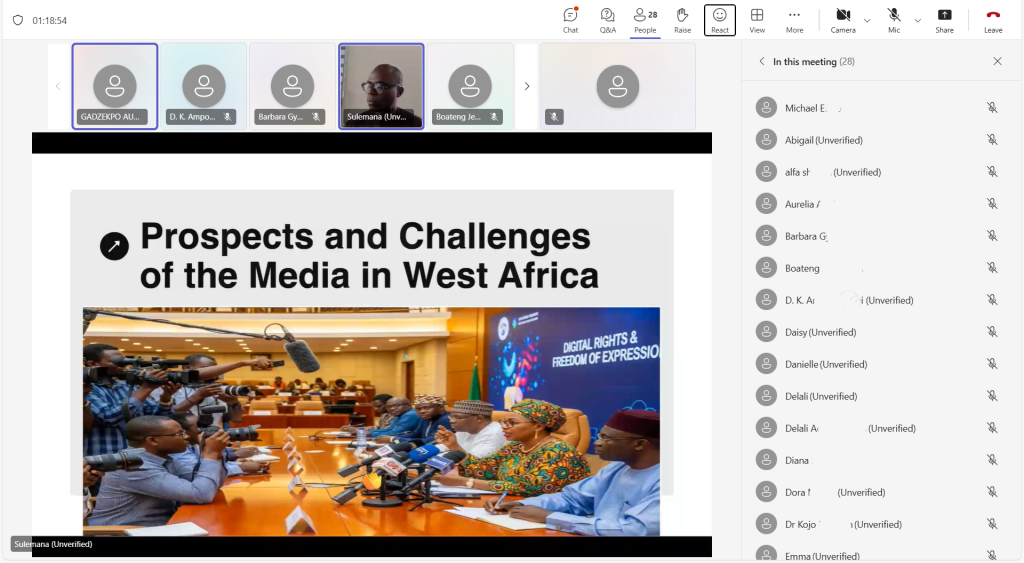
Speaking at a virtual PhD seminar hosted by the Department of Communication Studies at the University of Ghana on February 13, Mr Braimah argued that ECOWAS holds significant, and largely untapped, collective leverage. If strategically deployed, he said, that leverage could secure a sustainable revenue stream for news organisations across West Africa, many of which are struggling to survive in an increasingly hostile economic environment.
He called on the ECOWAS Commission to develop a binding regional framework that would require digital platforms such as X, Facebook and TikTok to pay for news content distributed or consumed through their services. Acting individually, he suggested, West African states often lack the bargaining power to influence multinational technology firms. Acting collectively through ECOWAS, however, the region could negotiate from a position of strength.
Mr Braimah framed the proposal as a structural response to what he described as the most existential threat facing journalism in the region, financial collapse. While acknowledging other pressures, including legal harassment through strategic lawsuits against public participation (SLAPP), the misuse of cybercrime and national security laws, deliberate digital disruptions, physical attacks on journalists and professional shortcomings within the media itself, he argued that economic fragility remains the central crisis.
The reality facing many news organisations is that of steady decline of advertising revenues while digital monetisation efforts remain weak and uneven. In several countries, state advertising and other forms of public support have either stalled or been withdrawn. In that context, he warned, newsrooms are being hollowed out, investigative capacity is shrinking, and editorial independence is increasingly vulnerable to political and commercial pressure.
The idea of requiring technology companies to share revenue with news publishers, Mr Braimah noted, is no longer theoretical. Variations of such frameworks have been introduced or tested in Canada and other jurisdictions, demonstrating that global platforms can be required to negotiate compensation arrangements with media organisations.
Beyond platform payments, Mr Braimah outlined a broader reform agenda aimed at strengthening the resilience of the media ecosystem in West Africa. He called for the decriminalisation of defamation and the repeal of vague “false news” provisions that enable arbitrary prosecution.
He urged governments to end the misuse of cybercrime and national security laws against journalists, to ensure accountability for attacks on media workers, and to refrain from internet shutdowns and digital censorship. He also emphasised the need to strengthen independent media regulation and judicial oversight, support media business diversification and sustainability, and expand regional monitoring and protection mechanisms for journalists.
Without structural reforms and new revenue models, Mr Braimah cautioned, the region risks a steady erosion of independent journalism. And without independent journalism, he argued, democratic governance itself becomes more fragile.


