
Senegalese authorities have arrested two senior media figures and suspended the broadcast signals of their outlets following the airing of interviews linked to the high-profile legal case of media mogul Madiambal Diagne, triggering widespread concern within the country’s media sector.
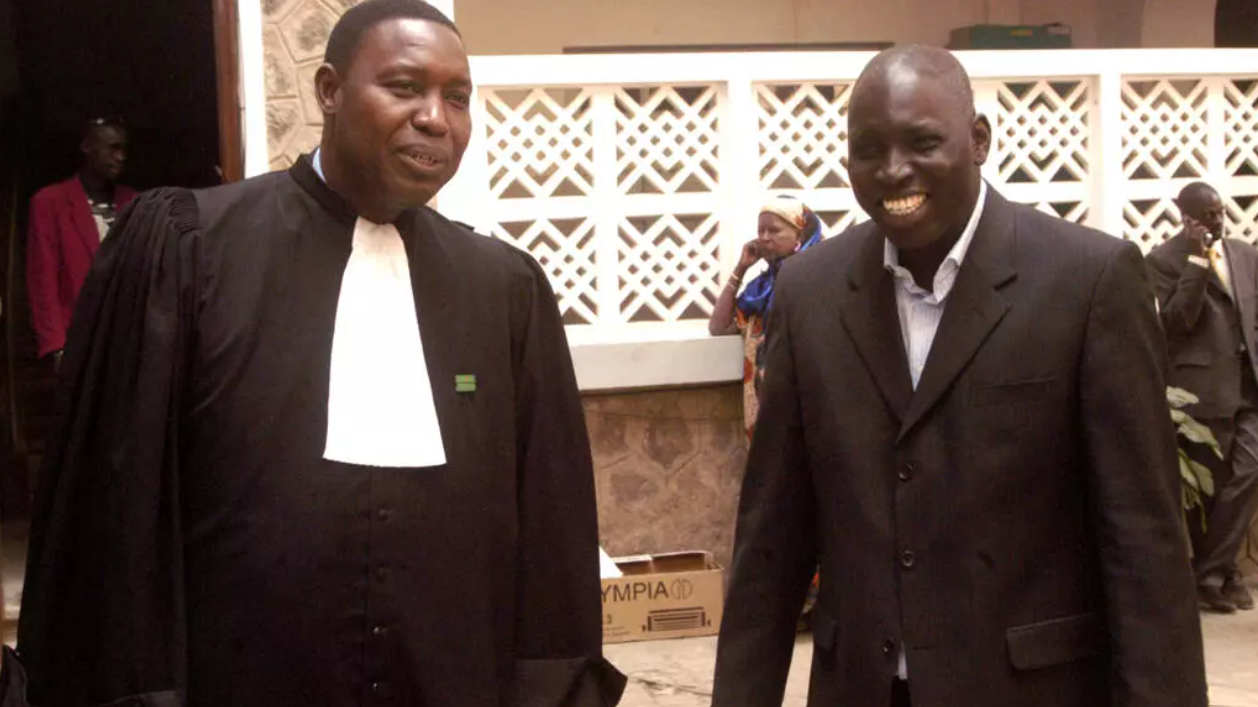
On the evening of Tuesday, October 28, 2025, Maïmouna Ndour Faye, General Manager of the private television channel 7TV, was arrested by police officers who forcibly entered the station’s premises in Ouakam, a western district of Dakar. Her arrest occurred shortly after 7TV broadcast a report featuring Madiambal Diagne, a businessman and founder of the Avenir Communication group, who is being prosecuted by Senegalese authorities for alleged embezzlement of public funds, fraud, and money laundering amounting to over 21 billion CFA francs (approximately USD 35 million). Diagne is currently under judicial supervision in France, while Senegalese authorities consider him a fugitive and have issued an international arrest warrant.
Less than 24 hours later, on the morning of Wednesday, October 29, police officers arrested Babacar Fall, Editor-in-Chief of Radio Futurs Médias (RFM) and sports correspondent for RFI, shortly after he concluded a live telephone interview with Diagne. The arrest took place at the Futurs Médias headquarters and reportedly stunned staff members due to the speed and manner of the intervention.
According to media reports and statements from legal counsel, both arrests were linked to accusations of endangering state security and undermining the authority of the judiciary. Maïmouna Ndour Faye was reportedly placed in custody under Article 80 of the Senegalese Penal Code, a provision frequently criticised for its broad scope and use against critical voices. Babacar Fall was briefly detained but released later the same day without charge, reportedly due to lack of evidence and for medical reasons.
In addition to the arrests, the broadcast signals of both 7TV and Radio Futurs Médias were abruptly cut off. At the time of writing, no official statement has been issued by the authorities explaining either the interruption of the signals or the legal basis for the arrests.
The actions have sparked strong reactions across Senegal’s media landscape. The Council of Broadcasters and Press Publishers of Senegal (CDEPS) condemned what it described as a heavy-handed intervention by security forces, while the journalists’ union SYNPICS expressed deep concern over measures it said undermine democratic norms. Several radio and television stations reportedly disrupted regular programming to discuss and protest the arrests.
Press freedom advocates have stressed that the fact that an individual is under judicial investigation does not, in itself, prohibit journalists from interviewing them, particularly on matters of public interest. Senegal’s Press Code guarantees journalists the right to access information and conduct investigations without hindrance.
The Media Foundation for West Africa strongly condemns the arrest of Maïmouna Ndour Faye, the brief detention of Babacar Fall, and the suspension of the broadcast signals of 7TV and Radio Futurs Médias. The forced entry into media premises, the lack of transparent official communication, the reliance on state security provisions, and the apparent targeting of journalists for carrying out their professional duties constitute disproportionate measures that risk intimidating the press.
The MFWA calls for the immediate and unconditional release of Maïmouna Ndour Faye, the restoration of the broadcast signals of 7TV and RFM, and an end to the use of security-related laws to suppress journalistic work. The authorities must uphold Senegal’s constitutional and international obligations to protect press freedom and ensure that journalists can report on matters of public interest without fear of arrest, censorship, or reprisal.